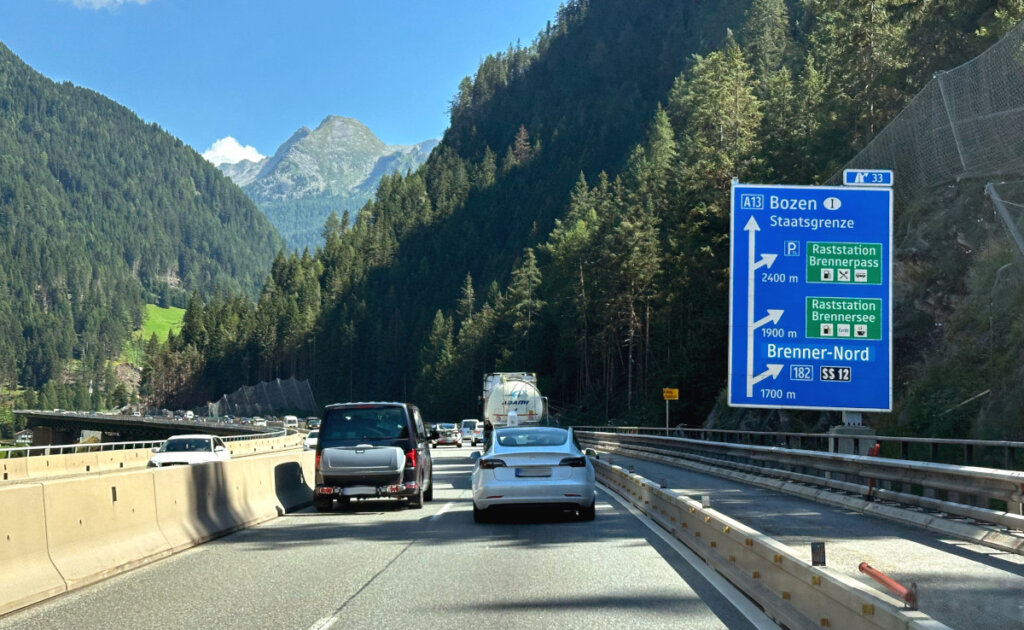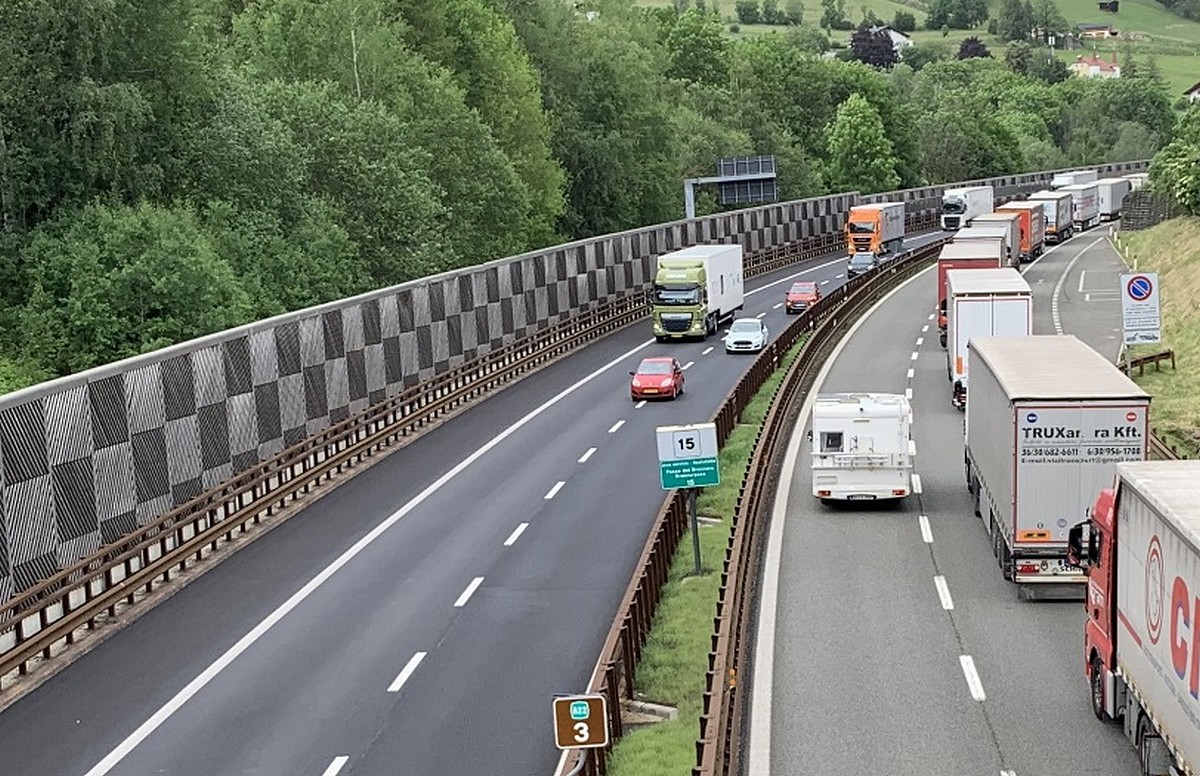

Against a backdrop of growing public pressure, Bavaria, South Tyrol and Trentino have launched a feasibility study into variable HGV tolls on the Brenner corridor. Higher charges during peak periods and lower rates at quieter times are being examined as an alternative to the traffic bans and block clearance measures that have long frustrated freight operators on one of Europe’s busiest Alpine freight routes.
The study will assess whether a variable toll system for freight traffic on the Brenner axis would be technically, legally and economically feasible, and whether it could help reduce congestion on a corridor that carries more than two million lorries each year.
Launched in May following an initial meeting between the three regions, the study is expected to be completed by the end of 2026.
Under the concept being examined, HGVs would pay higher tolls during periods of particularly heavy traffic, such as peak hours and busy travel days, while lower rates would apply during quieter periods. The intention is to encourage operators to move journeys away from the busiest times and ease pressure on the Brenner motorway.
According to South Tyrol, initial simulations suggest that a substantial increase in tolls during peak periods could discourage some journeys during those time windows. The study will therefore examine how such a system could be structured, what forms of time-based and price-based differentiation would be legally permissible, how transport companies might respond to different toll levels, and what effects the measures could have on traffic flows, the environment and the wider economy.
Bavarian Transport Minister Christian Bernreiter said growing traffic volumes were making the Brenner corridor increasingly difficult to manage.
“The Brenner is both a main European artery and a bottleneck,” Bernreiter said. “Measures such as block clearance and night driving bans are not the solution. We must continue the dialogue on how to ensure good Brenner transit. A variable toll could play an important role in this.”
South Tyrol’s mobility councillor Daniel Alfreider also stressed that transport policy on a shared Alpine corridor could only be effective if it was coordinated across borders.
“Unilateral measures are not effective on a common route such as the Brenner,” Alfreider said, calling for closer cooperation between neighbouring regions.
Austria is notably absent from the study, despite the fact that Tyrol operates many of the restrictions that have generated the greatest opposition from the freight industry, including block clearance measures, sectoral driving bans and night-time restrictions.
South Tyrol said Austria’s exclusion was linked to the ongoing legal dispute between Italy and Austria over Tyrol’s transit restrictions. The case is currently before the European Court of Justice.