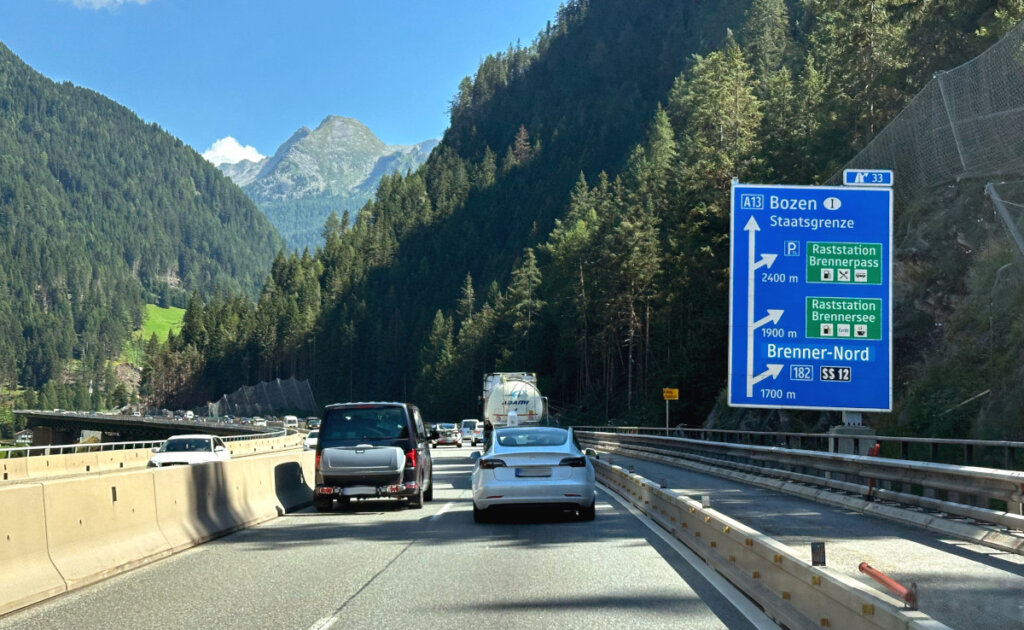
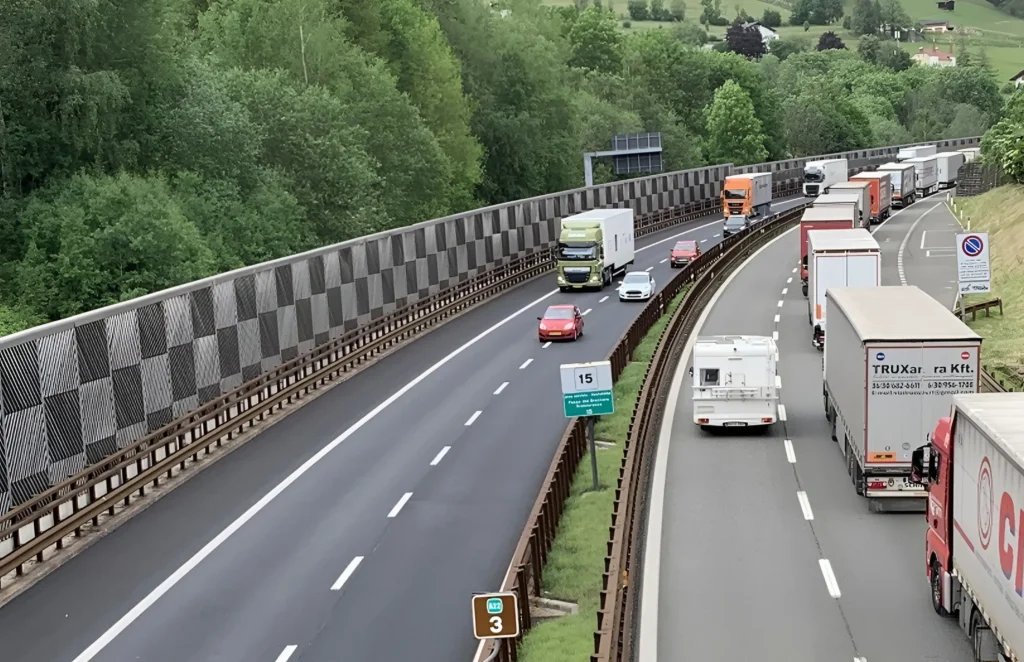
Italy’s legal challenge to Austria’s truck traffic restrictions on the Brenner corridor reached the European Court of Justice on 21 April, as judges in Luxembourg heard case C-524/24, Italy v Austria. The dispute concerns four Tyrolean measures on the Inn Valley and Brenner motorways: the night traffic ban, sectoral traffic ban, winter traffic ban and truck “dosing” system.
The hearing did not produce a ruling. It was the oral stage of the case, with the court examining Italy’s complaint that Austria’s restrictions unlawfully hinder freight movement on one of Europe’s most important north-south road corridors.
Italy’s position is that the Tyrolean measures restrict the free movement of goods inside the EU. According to an IRU-backed statement issued ahead of the hearing, Italy filed the case on 30 July 2024, and the European Commission is supporting the action as an intervener. The same statement says Austria is accused of infringing EU law through measures including the sectoral ban and Blockabfertigung-style traffic controls.
Austria and Tyrol argue that the restrictions are necessary to protect air quality, mobility, infrastructure and residents in a heavily burdened Alpine transit region. Austrian regional broadcaster ORF Tirol reported before the hearing that Tyrol would back its defence not only with lawyers but also with experts in air quality and mobility, underlining that the case is being fought as an environmental and public-interest issue as well as a transport one.
That clash is at the heart of the case: whether a member state may impose far-reaching truck restrictions on a major international freight corridor in order to protect local communities and the environment, or whether those measures go too far and breach the rules of the single market.
Read more: Brenner truck slot plan back on the table
The first reaction from the Tyrolean side after Tuesday’s hearing was upbeat. Austrian tabloid Krone reported that Tyrol described itself as “vorsichtig optimistisch” after the oral hearing.
There is still no judgment, and that will come later. ORF Tirol reported before the hearing that the next step after the oral proceedings would be the Advocate General’s opinion, with a final ruling potentially coming in autumn 2026 or, if the process takes longer, in early 2027.