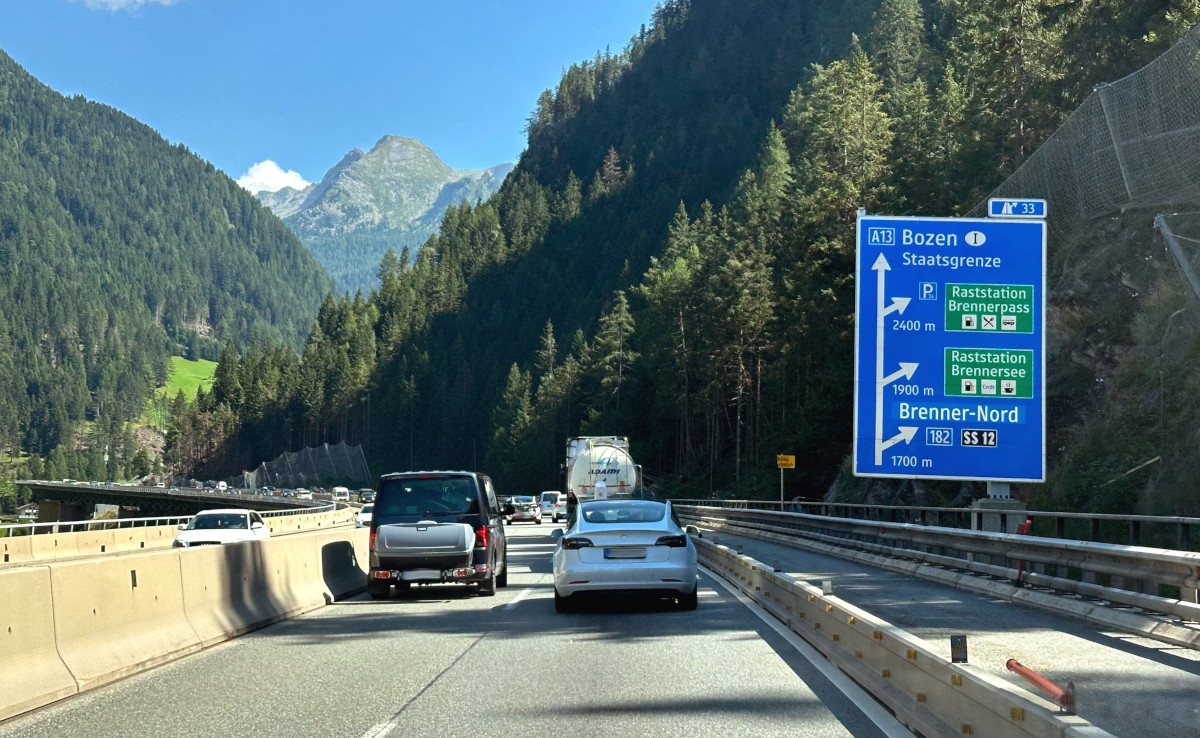

Advocate General Manuel Campos Sánchez-Bordona argued that the night-time driving ban, sectoral driving ban and winter driving ban on the Inntal and Brenner motorways were incompatible with EU rules. He did not, however, question the legality of the region’s block-clearance system, which periodically limits the number of lorries allowed to proceed.
The opinion is non-binding, and the Court’s final judgment is expected by the end of 2026. Although judges frequently follow the reasoning of advocates general, they are not required to do so.
Tyrol’s authorities said they would prepare for all possible outcomes before the judgment. They are open to amending the existing bans but reject the prospect of abandoning their broader policy of limiting transit traffic.
Tyrol open to changes but determined to retain policy
Tyrol’s transport minister, René Zumtobel, said he was surprised by the advocate general’s conclusions. He said about 2.5 million lorries used the Brenner Pass each year, more than all other Alpine crossings combined.
Zumtobel told German transport newspaper DVZ that the Brenner Pass was the cheapest route in Europe for road freight.
In his view, the opinion did not necessarily mean that the three measures in question would have to be abolished. Campos Sánchez-Bordona assessed them according to their suitability, necessity and proportionality. The first two criteria were considered to have been met, while his concerns related primarily to proportionality.
“That is why we may have to fine-tune the bans, but not necessarily abandon them,” Zumtobel said.
The regional government adopted a similar position. Tyrol’s governor, Anton Mattle, said it would continue to protect residents, infrastructure and the environment from the effects of heavy transit traffic.
“Tyrol will not back down over transit traffic. We believe that protecting people, nature and infrastructure matters more than the free movement of goods,” Mattle said.
Stricter air-quality rules could support Tyrol’s position
A central element of Tyrol’s response is the EU’s revised air-quality directive, under which the permitted nitrogen dioxide limit is to be reduced from 40 to 20 micrograms per cubic metre by 2030.
Zumtobel argued that the advocate general had not considered the forthcoming requirements because they did not form part of the case under review. Member states will nevertheless be required to implement the directive.
Tyrol intends to use the stricter air-quality limits as a possible basis for retaining the current restrictions or introducing further measures affecting road freight.
EU law specialist Walter Obwexer also said the lower pollution limits could become important in defending the night-time driving ban.
Zumtobel said regional and federal experts would analyse the advocate general’s opinion while Tyrol developed measures linked to the new environmental limits. He added that road traffic was the main source of nitrogen dioxide emissions and that meeting the tighter thresholds would require further targeted action.
Block-clearance system not challenged in opinion
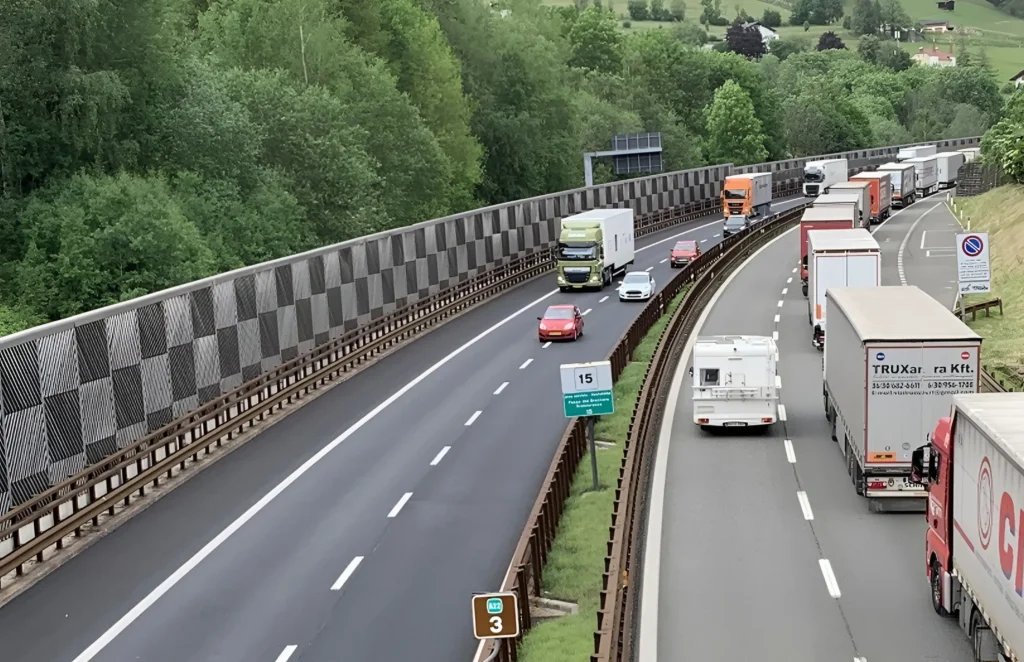
For hauliers, one of the most significant elements of the opinion is that the block-clearance system was not found to be incompatible with EU law. The mechanism limits the number of lorries that may enter the Inntal motorway on specified days and at particular times.
Tyrol says the measure is intended to maintain safety and traffic flow. Zumtobel said the region did not intend to extend block clearances automatically throughout the year but would use them as often as necessary to achieve that objective.
Bavaria’s transport sector takes a different view. Sabine Lehmann, managing director of the Bavarian Freight Forwarders Association, said she feared that Tyrol could use block clearances more frequently following the advocate general’s opinion.
Lehmann said fewer than 30 restriction days were listed in the traffic management calendar, although the number was already expected to exceed 50 during the year. She also noted that Tyrol had indicated that it could introduce extraordinary measures when it considered them necessary to protect residents from transit traffic.
Bavaria’s transport minister, Christian Bernreiter, welcomed the advocate general’s assessment of the night-time, sectoral and winter driving bans but called for clearer rules governing the use of block clearances.
“In Bavaria, we regularly face long tailbacks caused by the block-clearance system,” he said.
Bernreiter also noted that the advocate general considered the measure permissible only in exceptional circumstances and on a limited scale. He said he hoped the Court’s judgment would provide a clear legal interpretation for all parties.
Tyrol backs digital traffic management and rail freight
Tyrol says its plans extend beyond driving bans and block clearances. Zumtobel supports the creation of a digital system to manage lorry flows along the entire Brenner corridor.
The region has offered neighbouring authorities a free digital slot-booking system. Zumtobel said it could become one of Europe’s most important freight traffic management projects.
The region’s main priority, however, remains transferring more freight to rail.
“The best way to improve air quality is rail transport,” Zumtobel said.
About €10 billion has been invested in the Brenner Base Tunnel, half of it provided through EU funding. Tyrol’s authorities argue that the project will not achieve its full potential without adequate access routes, terminal infrastructure and a more balanced cost relationship between road and rail transport.
The dispute over road restrictions therefore increasingly overlaps with a broader question: whether the countries along the Brenner corridor are ready to transfer more freight to rail.
Industry warns rapid shift to rail is not feasible
Transport industry representatives broadly support the development of rail freight but warn that the existing infrastructure cannot rapidly absorb a substantial transfer of volumes from the road network.
Lehmann criticised the pace of work on the German access routes to the Brenner Base Tunnel.
“What is happening with the access routes is a tragedy. We did not do our homework on the Gotthard route, and now we are seeing the same problem with the northern Brenner approach,” she said.
Alexander Friesz, president of the Austrian Central Association for Freight Forwarding and Logistics, also argued that insufficient capacity made a substantial transfer of freight to rail unrealistic at present. He said this was unlikely to change in the foreseeable future unless Germany accelerated work on infrastructure serving the base tunnel.
Friesz called on Austria, Germany, Italy and the EU institutions to develop measures that complied with European law and remained workable for transport operators.
Italy welcomes opinion as Tyrol awaits judgment
The advocate general’s opinion was welcomed in Italy. Trentino governor Maurizio Fugatti described it as favourable, while Italian hauliers’ association ANITA said it confirmed Italy’s position in the dispute over transit traffic through Tyrol. Italy’s transport minister, Matteo Salvini, called it an “Italian success”.
Tyrol stressed that the case had not yet been decided. Regional officials said the final judgment rested with the Court of Justice and that, until it was delivered, the region would continue preparing its legal arguments and possible amendments to the restriction system.
Even an unfavourable judgment may not end Tyrol’s policy of limiting transit traffic. It could, however, require changes to the legal basis, scope and practical application of individual restrictions.