Every December, the same pressures stack up. Demand for toys, food, drink and electronics surges, warehouse networks run at full stretch, and thousands of extra rest breaks must be taken on roads where secure HGV parking is already scarce. Police and NaVCIS say that combination reliably produces a spike in cargo thefts, and 2025 is shaping up no differently.
Officers have warned repeatedly that cargo thefts rise sharply in the run-up to Christmas. Thieves target trailers carrying fast-moving goods that can be resold quickly: perfumes, alcohol, white goods, confectionery, clothing, and electronics. In one force area, thefts almost doubled last year during December compared to the rest of the year.
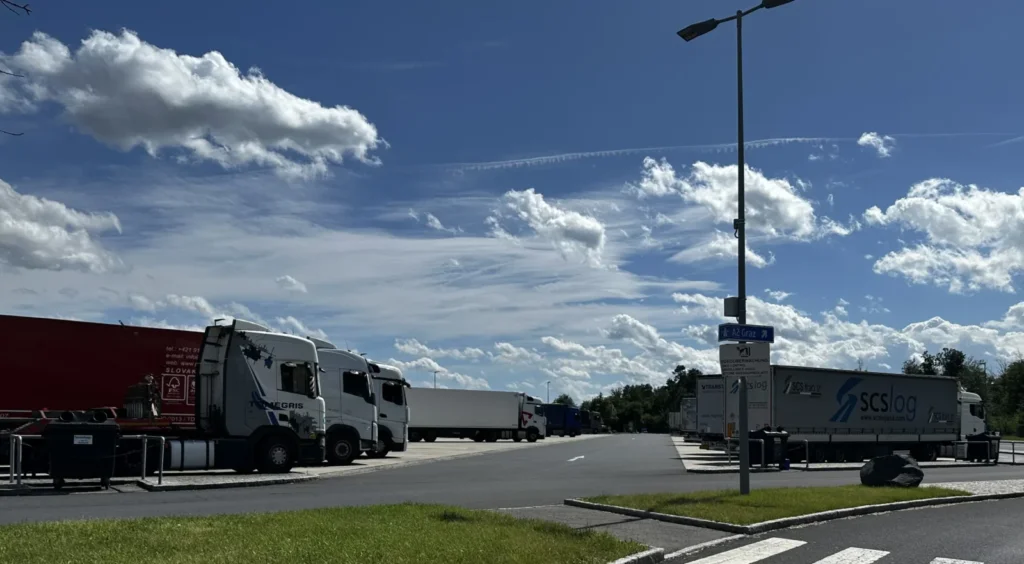
That increase is not driven by chance. Thieves go where lorries must go, the places drivers are forced to stop to take legally required rest breaks. December’s heavier traffic and tight delivery schedules magnify this. When services are full by early evening and secure sites are at capacity, drivers often have little option but to park wherever space remains.
Where thieves strike: the evidence from 2024–2025
Data from police forces and industry partners paint a consistent picture:
- Around 46% of UK cargo thefts now occur in lay-bys, according to Cambridgeshire Police.
- A further 27% happen at motorway service areas, especially overnight.
- TAPA and insurer analyses show that nearly 40% of all cargo thefts across Europe take place at unsecured roadside parking or rest areas.
These are not marginal numbers. For many drivers, the most dangerous point of a Christmas shift is simply the place they sleep.
And the scale of the problem is growing. NaVCIS’ 2025 freight-crime data already record more than 1,800 incidents this year, with losses exceeding £37m and an average loss per incident of more than £20,000. That follows a sharp rise in 2024, when UK truck-related cargo theft losses were estimated at £111m, up 66% on the previous year.
Across Europe, the trend is similar. TAPA EMEA estimates annual cargo theft losses at around €8.2bn, with roughly €2.5m of goods stolen every day in the region.
Why December parking is worse
The problem is systemic, not seasonal — but December magnifies every weak point in the network. As delivery volumes rise, truck parks fill earlier each evening, with the best spaces at major services often gone long before many drivers arrive. With few alternatives available, lay-bys become the default resting place, despite being among the most targeted locations for overnight theft.
Shorter daylight hours and reduced staffing make it harder to keep an eye on parked vehicles, while last-mile depots and retail hubs draw in extra seasonal staff and subcontractors, increasing traffic and squeezing already limited secure parking near big distribution sites. And throughout all this, drivers have no freedom to go hunting for a safer option. When the tacho says stop, they must stop — even in places thieves are known to watch.
Tactics thieves use during the festive period
Intelligence from NaVCIS and police forces shows several recurring methods during the winter peak:
- Curtain-slashing at night to identify or remove valuable goods.
- Theft of entire trailers from service areas or industrial estates.
- Hook-up thefts, where a tractor unit pulls away a parked or dropped trailer.
- Targeting of vehicles carrying Christmas-critical goods, from alcohol and cosmetics to toys and food.
- Monitoring of overcrowded parking areas to identify vehicles expected to remain stationary for the full overnight break.
Some high-profile cases in recent years underline how quickly thieves act. A trailer of cheese worth around £50,000 was taken from a motorway services just before Christmas; in another case, 400 kegs of Guinness vanished mid-December from a distribution site. Such incidents are unusual in scale, but not in method.
What drivers can realistically do
Police are clear that the responsibility for reducing freight crime does not sit with drivers alone. The UK’s shortage of secure HGV parking, repeatedly highlighted by NaVCIS, TT Club and TAPA, is a major structural problem. But in the short term, officers recommend several practical steps:
Choosing a parking location
- Use secure truck parks-wherever possible.
- If evening capacity is likely to be tight, consider stopping earlier than usual in December.
- Avoid isolated lay-bys near urban edges or industrial estates where feasible.
Parking defensively
- Park doors-to-wall, against a barrier, or between other vehicles to restrict access to the rear doors.
- Choose a well-lit area and, where possible, a location visible from the cab.
- Report suspicious behaviour such as people filming trailers, slow-circling vehicles or unusual interest in parked HGVs.
During and after breaks
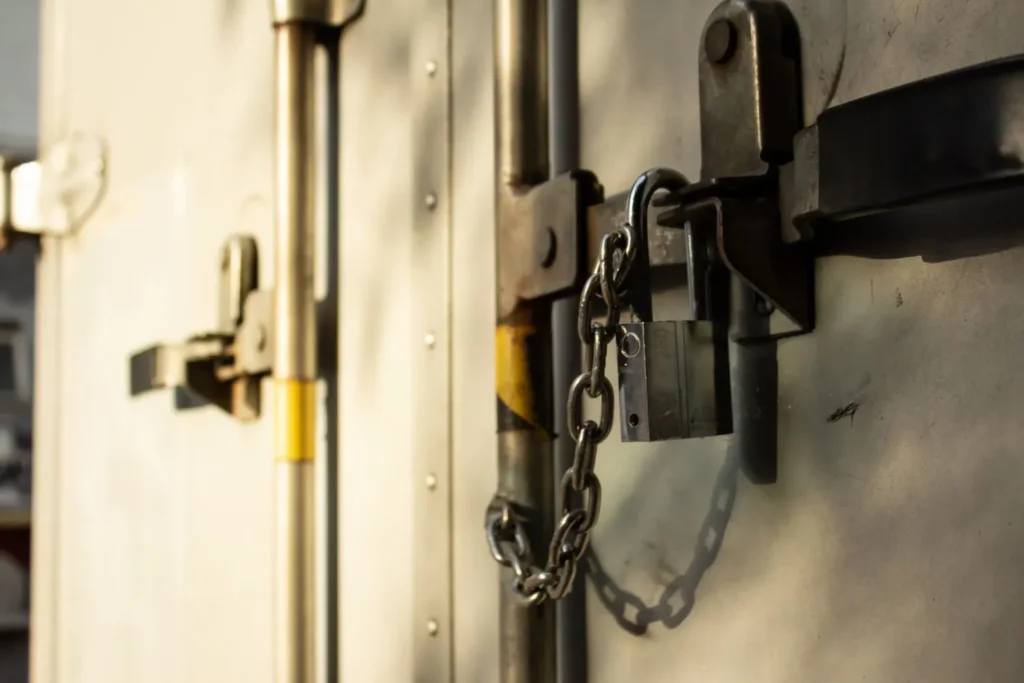
- Check curtains, seals, straps and locks before leaving the vehicle and again before driving off.
- If drivers notice tampering or attempted entry, report it to police or NaVCIS as soon as possible. These reports help establish patterns used to tackle organised groups.
A high-risk month on top of a high-risk year
As December progresses, the combination of peak seasonal demand, a chronic shortage of secure parking and well-organised criminal groups will again place drivers in a difficult position. Many thefts will not happen because drivers made mistakes, but because suitable parking was unavailable when the tacho required a stop.
For lorry drivers, the most effective defence this month is awareness: choosing the safest available space, parking in a way that makes access difficult, and reporting anything out of place. For industry and policymakers, the message is equally clear — until more safe, secure HGV parking is built, the “parking roulette” of the Christmas period will continue.