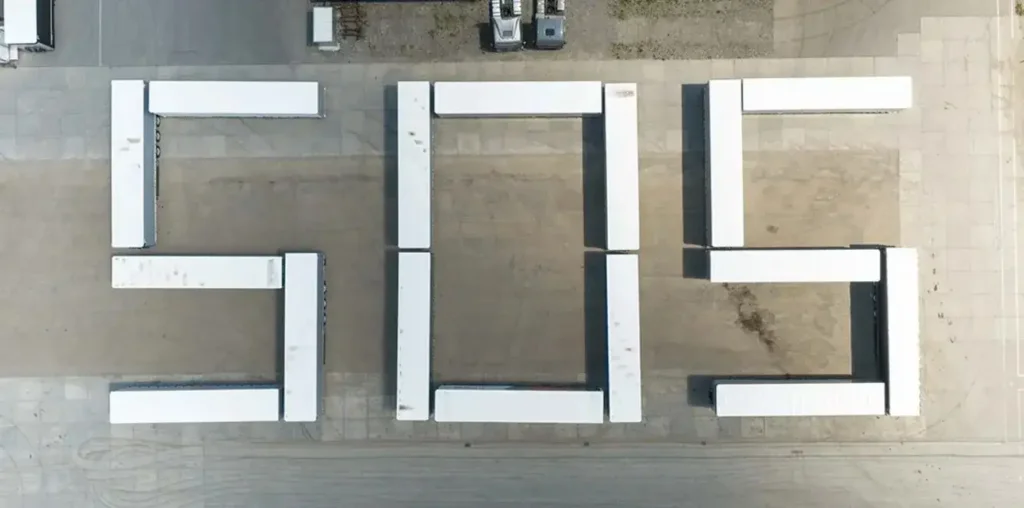
The situation at the borders quickly caused visible disruption to freight traffic. At the heart of the protest is a growing dispute over the rules governing the stay of non-EU drivers in the Schengen Area, as well as systemic problems in Bosnia and Herzegovina’s transport sector.
The action was organised by the “Logistika BiH” Consortium, which brings together carriers and logistics operators. The plan assumed blocking outbound freight traffic while keeping inbound vehicles and passenger traffic moving.
In practice, the protest was implemented unevenly. In some regions, local authorities introduced restrictions, citing the need to ensure supply continuity and public safety. Nevertheless, serious disruption occurred at some border crossings, including the formation of queues of trucks.
In Svilaj, freight traffic was halted and queues reached up to around 1.5 kilometres. Passenger transport and the carriage of sensitive goods proceeded without major disruption; however, the situation showed how quickly local blockades can affect the flow of loads in the region.
Dispute over Schengen rules and stay limits
The main source of tension remains EU rules on the stay of third-country nationals. Under the current rules, drivers from Bosnia and Herzegovina may stay in the Schengen Area for a maximum of 90 days within any 180-day period.
Carriers argue that in practice these regulations make it impossible to work in international transport. They stress that professional drivers operate in a mode of continuous journeys, and that short entries into EU countries are an integral part of their job, not a tourist stay.
In addition, the Entry/Exit System (EES), which from October 2025 will gradually replace passport stamping with electronic registration of border crossings, increases the level of control and – according to the industry – extends processing times at border crossings.
Statement from the Bosnia and Herzegovina Logistics Consortium
Before the protests began, the “Logistika BiH” Consortium published an extensive statement in which it emphasised that the current situation is the result of years of institutional neglect and a failure to implement agreed solutions.
The organisation indicated that over recent months it had taken part in talks with representatives of the administration and public institutions; however – as noted – none of the sector’s key problems have been genuinely resolved.
The statement also stressed that the lack of progress concerns both the national and international levels. The consortium draws attention to the situation of drivers who, after exceeding 90 days of stay in Schengen, receive entry bans despite having the required qualifications and permits.
Among the most important demands were, among others, a clear definition of the status of professional drivers in the European Union, the ability to carry out international transport without interruption, and tax solutions, including a refund of part of the fuel excise duty and improved VAT refunds.
The consortium also points to systemic problems in the country, including long waiting times at borders, reaching – according to its data – several hours, and the lack of a uniform and predictable administrative system.
Rising tensions and risks to supply chains
Industry representatives warn that maintaining the current restrictions may lead to further escalation of protests, including the possibility of expanding the blockades.
At the same time, employers’ organisations and some public institutions are calling for avoiding actions that could disrupt supply chains. They point out that road transport accounts for the vast majority of goods flows in the region, and disruptions could affect not only Bosnia and Herzegovina’s economy but also trade with the European Union.
The situation remains fluid
At present, the blockades are partial and do not cover all border crossings in the country. In some locations, traffic is flowing without disruption, while in others delays and capacity restrictions persist.
The coming days will be crucial in assessing whether the protests will take on a broader form and whether talks will take place between carriers and public institutions that could help ease tensions at the borders.