The nine-month project, led by Voltempo with Connected Places Catapult and Berkeley Coachworks, identifies two priority use cases for early deployment: hub-to-hub motorway trunking between logistics centres, and short intermodal shuttle operations linking ports, railheads and distribution hubs.
The findings were presented at Voltempo’s Autonomous conference in Birmingham on 18 May, attended by fleet operators, OEMs, government representatives and technology providers.
According to the consortium, these two use cases offer the clearest starting point because the routes are predictable, the interfaces at either end can be controlled, and the operational benefits can be measured more easily than in open-ended delivery work.
The report argues that autonomous freight will not arrive evenly across the road transport sector. Instead, it is expected to start where operational complexity is lowest and the business case is strongest.
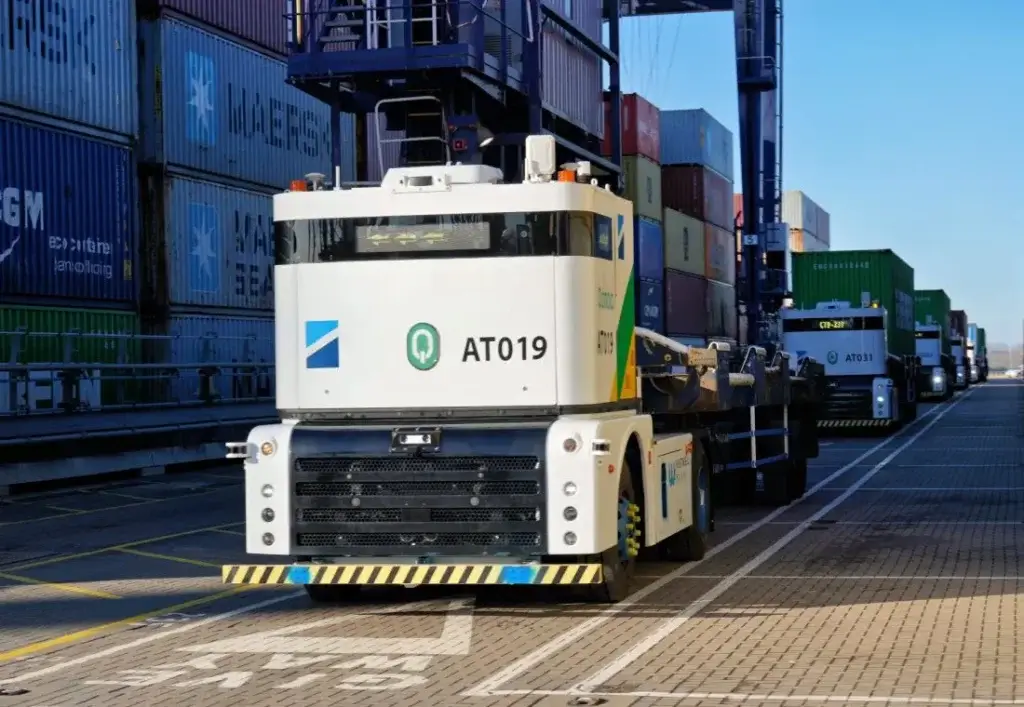
For hub-to-hub trunking, that means repeatable routes on the Strategic Road Network between major logistics hubs. For intermodal shuttles, it means high-frequency, low-speed movements, typically under 5 kilometres, between ports, railheads, inland terminals and nearby distribution sites.
Urban deliveries were considered less suitable for early deployment because of the complexity of city traffic, kerbside restrictions and interactions with vulnerable road users.
The report says private-site operations in ports, airports, yards and industrial campuses already provide the strongest UK evidence base, as autonomous vehicles can operate under site rules, controlled interfaces and dedicated connectivity.
Trials targeted from 2027
The consortium says the next phase should move from feasibility work towards structured real-world deployment trials, with UK autonomous freight trials targeted from 2027 onwards.
The report says early trials should not treat autonomy simply as a vehicle upgrade. Instead, they would need full operating models covering remote supervision, handovers, exception handling, maintenance, emergency response, incident reporting and data access.
It also calls for trial consortia involving fleet operators, shippers, vehicle manufacturers, autonomy providers, infrastructure owners and insurers.
Regulation still has to catch up with freight operations
The study says the Automated Vehicles Act 2024 provides the legal foundation for authorising self-driving systems and clarifying responsibility when an automated system is in control.
However, it adds that freight deployment will depend on secondary legislation and implementation rules that translate the Act into repeatable requirements for authorisation, operator licensing, in-use monitoring, incident response and data access.
The report also highlights the need for road and infrastructure readiness, including road marking quality, work-zone practices, digital connectivity and interfaces at depots, ports and terminals.
Payload and cost claims
Voltempo and its partners have also been working on concepts for a new category of autonomous HGV, including lightweight “smart trailer” configurations.
According to the consortium, such designs could deliver 15% more payload while reducing overall vehicle weight by around 10%. It also claims the concepts could eventually remove more than 22,000 heavy vehicles from UK roads and reduce fleet operating costs by up to 37%.
The report’s market modelling suggests that hub-to-hub trunking and intermodal shuttle operations could together represent an addressable autonomous fleet of around 65,820 vehicles at full uptake. Under an optimistic uptake scenario, it estimates a possible annual autonomous-as-a-service revenue opportunity of £7.9 million in 2030, rising to £1.26 billion in 2035 and £1.58 billion in 2040.
Michael Boxwell, Corporate Development Officer at Voltempo, said the project had focused on where autonomous freight could deliver “genuine operational value” for UK fleets and what conditions would be needed to make deployment practical.
“What’s become clear is that this is no longer a future concept,” he said. “The technology, legislation and commercial interest are all moving forward quickly, and with continued grant funding available to support trials, the UK is ideally positioned to take advantage and lead from the front.”
Sir Vince Cable, chair of the eFREIGHT Autonomous consortium, said the UK had “a genuine opportunity to help shape the future of autonomous freight rather than simply importing solutions developed elsewhere”.
“The next step is to move from feasibility work towards structured real-world deployment trials,” he added.