
Update, 10:50 on 1 July 2026: one-week grace period for some operators without toll boxes
The launch of the Dutch HGV toll has also brought a last-minute concession for a limited group of operators affected by delays at toll box provider NedLinq.
According to Transport en Logistiek Nederland (TLN), customers who applied for a contract or toll box with NedLinq before 1 July but have not yet received one will be allowed to use the road without a fine until 7 July, provided they can prove they acted in time. The affected registration numbers have been passed to the RDW, TLN said.
The official Dutch truck toll website gives similar guidance. It states that operators who tried to arrange a contract or toll box through NedLinq before 1 July, but have not yet succeeded and can demonstrate this, may continue driving from 1 July and will not be fined up to and including 7 July.
NedLinq is expected to email affected customers about the arrangement. Operators who have not received an email by 1 July but are still experiencing problems are advised to contact NedLinq directly.
The concession does not appear to apply across the whole market. The official guidance says operators experiencing problems with another toll service provider should contact that provider. The general rule remains that every truck covered by the Dutch HGV toll must have its own working toll box in the vehicle, even if it only drives on roads where the toll itself is not charged.
Separately, the official guidance says that if a toll box fails during use, the operator must report the problem to the provider immediately and ensure a working unit is in the cab within three hours. Driving with no working toll box can still lead to a fine.
Published: 30 June 2026
From 1 July 2026, the Netherlands will scrap the Eurovignette and introduce a pay-per-kilometre truck toll. The charge will apply to Dutch and foreign trucks over 3.5 tonnes, with vehicles required to use a working on-board unit (OBU) from the start of the scheme. Rates will vary by weight and emissions class, meaning cleaner and lighter vehicles will pay less per kilometre.
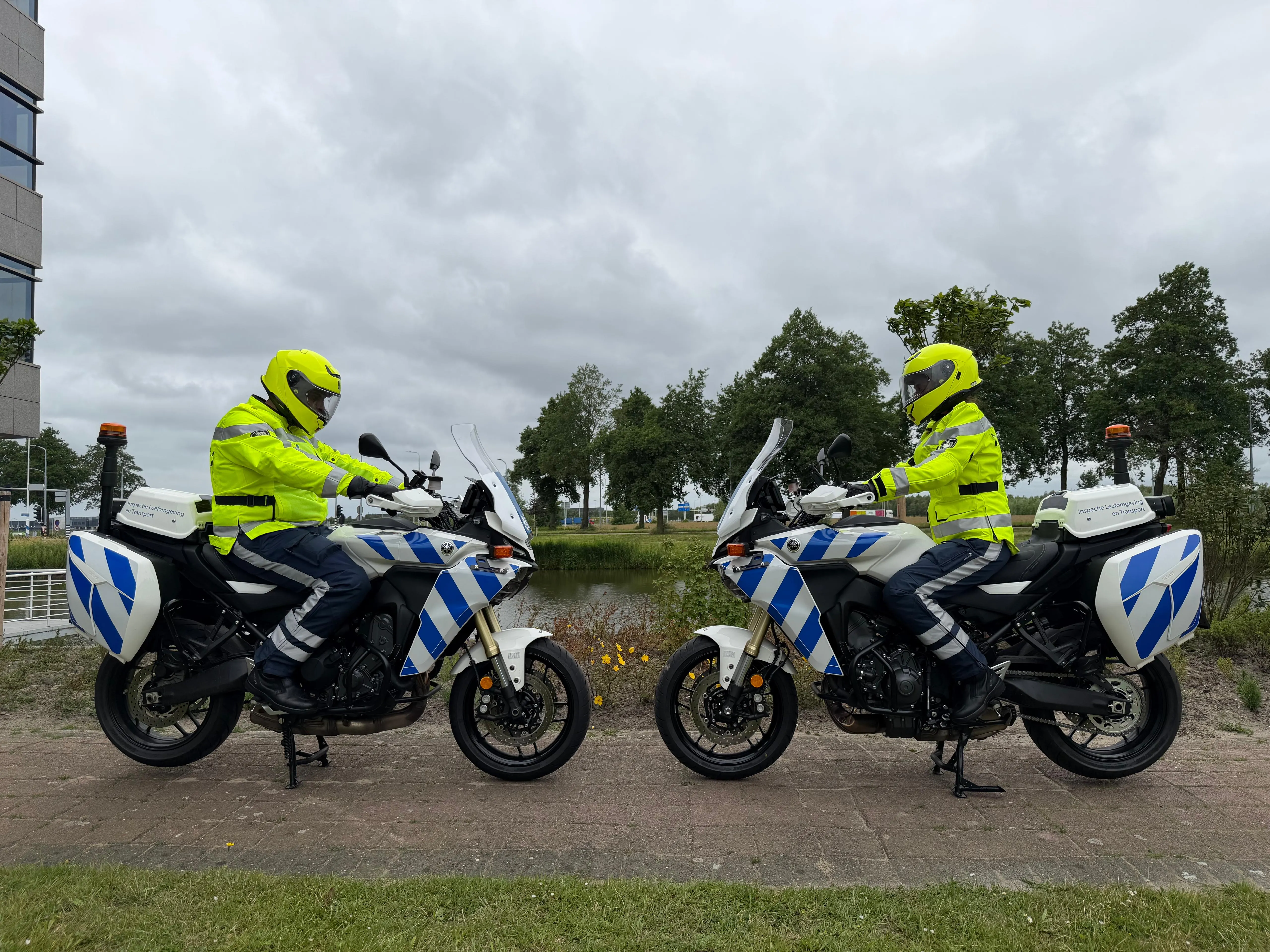
The eye-catching part is how roadside checks will work. Fixed and mobile observation equipment will be used along Dutch motorways to check passing trucks for a valid toll box. When the system produces a “hit”, an ILT motorcycle inspector stationed nearby can follow the truck and guide it to a control point, where colleagues will carry out the roadside check and deal with any fine.
The motorcycles are Yamaha TRACER 9 GTs, adapted for enforcement work by Modiforce B.V. and finished in ILT livery. Yamaha Motor Benelux’s Ferdinand Altenburg said the adapted motorcycles would give inspectors “reliable and manoeuvrable equipment” for their roadside duties.
Vehicles that are not dealt with immediately may also be placed on a signalling list. Number-plate recognition can then be used to identify them later, allowing inspectors to stop the truck and collect the fine on the spot. If payment is refused, the vehicle can be temporarily taken out of service.
The change is not only about new costs. Motor vehicle tax will be abolished for trucks up to 12 tonnes and reduced for heavier vehicles, as the new kilometre-based charge becomes the main way of charging HGVs for road use. The toll will apply whether the vehicle is loaded or running empty.
ILT says roadside enforcement is needed because foreign hauliers are covered by the toll too. Physical checks are intended to prevent a situation in which Dutch operators are easier to enforce against while foreign trucks pass through without effective follow-up.
Part of the revenue from the truck toll is earmarked for making freight transport cleaner, including support for electric trucks, charging infrastructure and cooperation across the logistics chain.