Key points
- Private companies would receive a licence to build, operate and maintain strategic roads in England, financed through a regulated asset base (RAB) model.
- Licence holders could collect and enforce tolls. The registered keeper of the vehicle would pay.
- Barrier-free (free-flow) tolling would be allowed on all tolled roads, including older ones such as the M6 Toll.
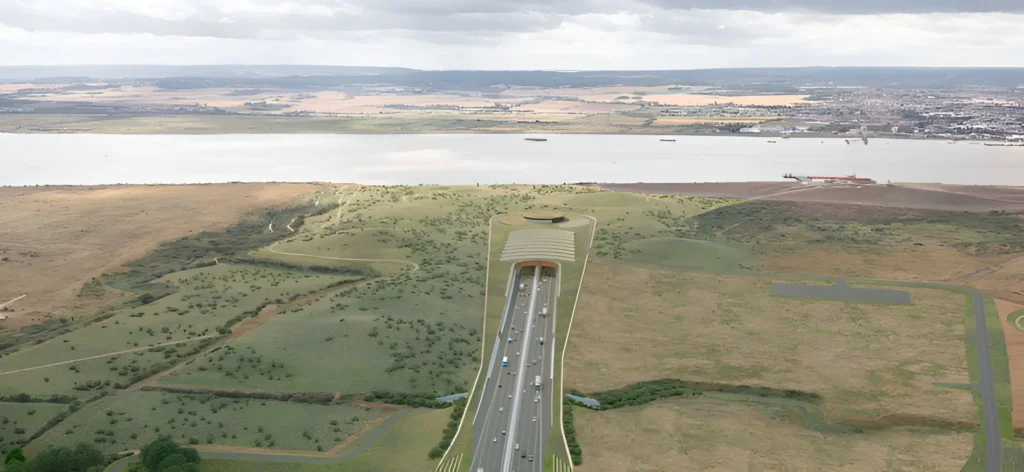
- The Lower Thames Crossing, expected to cost £10.6 billion, is set to be financed this way. The government says it has no plans to toll roads that are currently free.
Transport Secretary Heidi Alexander introduced the bill to Parliament on 10 September. Its second reading in the House of Commons is scheduled for 15 October, according to the House of Commons Library.
Roads built with private money
The bill creates a framework for private investment to build, operate, maintain and improve new and existing strategic roads. A licensed company would act as the highway authority for that road. Investors would get their money back, plus a return, from road users.
The model is known as a regulated asset base (RAB). It is already used in energy, water and rail. The Office of Rail and Road (ORR) would regulate the companies, decide how much they can earn and check that charges are fair, the government’s overview says. A stakeholder group would advise the ORR on the views of road users.
The government says the new route will be used “only for a limited number of large-scale projects” and will not replace existing ways of funding roads. The bill applies only to highways in England.
Tolls without barriers
For hauliers, the most practical change concerns how tolls are collected. The bill would allow barrier-free charging on all tolled roads, with payment made remotely rather than at toll booths. The government says this means smoother journeys and less congestion and safety risk at toll plazas.
Older schemes such as the M6 Toll cannot currently use free-flow tolling. The bill would allow it, but would not require it.
According to the government’s memorandum on delegated powers:
- the toll would be payable by the registered keeper of the vehicle,
- penalty charges for unpaid tolls would be set out in regulations, which could give licence holders powers to impose them,
- regulations could also give licence holders powers linked to vehicle examination and immobilisation,
- tolls could only be charged if the scheme complies with a charging code published by the ORR.
Hauliers already know free-flow charging from the Dartford Crossing, where the HGV charge rose to £8.40 in 2025. Without barriers, there is no stop at a booth, but a missed payment can quickly turn into a penalty.
Lower Thames Crossing comes first
The Lower Thames Crossing is set to be financed under the new model, according to the Commons Library. The 14.5-mile (23 km) road, with two tunnels under the Thames between Kent and Essex, is expected to cost £10.6 billion and will be tolled.
The memorandum says the Lower Thames Crossing and the Dartford Crossing “should operate under a single licensing and charging framework”. For hauliers using the Thames crossings every day, this means the same operator and charging rules could cover both routes.
Lorry drivers will get no dedicated facilities on the new route: the crossing is being built without a service area or lorry park, and Parliament’s Transport Committee has asked the government to explain why.
Will free roads be tolled?
The government has said it has no plans to use the bill to toll roads that are currently free. Barrier-free tolling would apply to roads where tolls are already allowed under existing law.
Even so, the bill matters for transport companies. Toll levels on new privately financed roads will depend on the return investors are allowed to earn and on how the ORR sets its charging code. Operators should also watch the penalty and enforcement rules, which will be set out later in regulations.