At the end of November, the Hungarian government unveiled a package of measures affecting road transport from 2026. Among them was a plan to increase road tolls on certain main roads by more than 50 per cent, alongside higher fines and stricter enforcement.
For many hauliers — especially small, family-run companies — the announcement came as a shock. Road tolls are paid upfront, while freight invoices are often settled 60 to 90 days later. Hauliers warned that such a steep increase would create severe cash-flow problems and force some companies out of business.
Following intense criticism, the government entered talks with transport associations. On 19 December, an agreement was announced:
- The planned 54 per cent toll increase on main roads was dropped,
- a 3 per cent inflation-linked rise remains from January 2026,
- But a 4 per cent increase on main-road infrastructure charges is still scheduled for March 2026.
Why many hauliers are still angry
While official industry bodies described the deal as a compromise, not everyone agreed. Independent and smaller hauliers say the core problem remains unchanged: road use is becoming steadily more expensive, while infrastructure, parking capacity and planning predictability are not improving.
For them, the issue is not just the final percentage, but the direction of travel. They fear a system where costs rise faster than freight rates, enforcement becomes harsher, and small operators are squeezed out in favour of larger fleets that can absorb the shock.
“We are not protesting a single number,” said Orosz Tibor, a Hungarian haulier and one of the organisers of the protest. “We are protesting a system that makes our businesses unviable.”
What is happening now
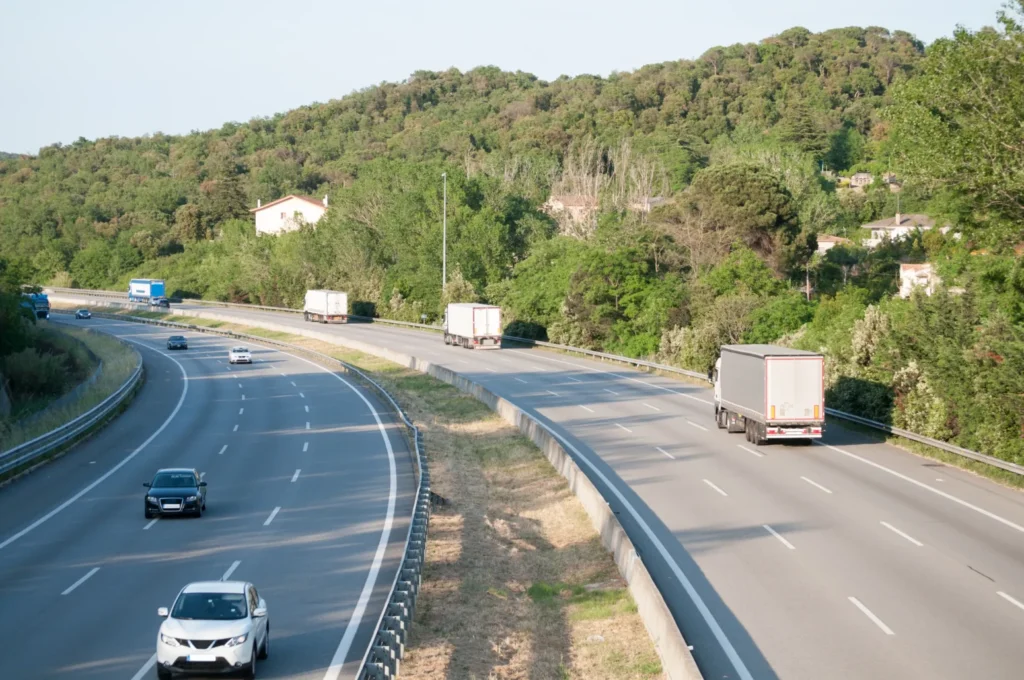
On Monday, truck convoys began moving towards Budapest. Police allowed only 50 trucks to enter the city, citing traffic and infrastructure concerns, while the rest were stopped on motorways around the capital.
The protest is peaceful, but highly symbolic. It reflects a deeper divide within the sector: between government-backed agreements and the lived reality of small hauliers who feel unheard.




![[UPDATE] Balkan hauliers call off blockade as protest suspended after breakthrough in talks](https://cdn-trans.info/uploads/2026/02/d31ece774c09c3d2748667e9536-1024x1024.webp)