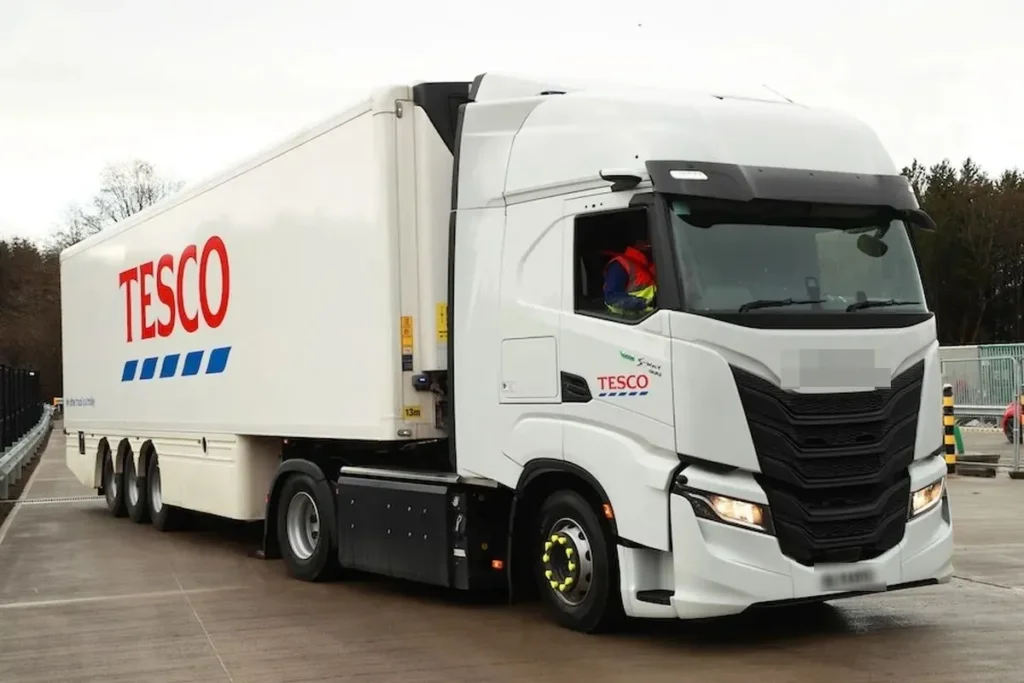

Ireland has temporarily relaxed driving hours rules for hauliers carrying all goods within the country, as the government tries to ease disruption linked to port blockades, rolling protests and road closures. The measure took effect on 13 April 2026 and will apply for an initial eight days.
The exemption broadens an earlier derogation introduced on 11 April, which covered only hauliers transporting liquid fuel used for home heating oil or as a propellant within Ireland. According to the Irish government, the wider measure is intended to support recovery across the national food and energy supply chain after several days of disruption.
Under the temporary derogation, the daily driving limit rises from 9 hours to 11 hours, the weekly limit from 56 hours to 60 hours, and the fortnightly limit from 90 hours to 102 hours. Weekly rest rules have also been eased: during the derogation period, drivers may take a reduced weekly rest of at least 24 hours in each consecutive week, with no obligation to take one regular weekly rest in two consecutive weeks until the exemption ends.
The Department of Transport said the decision followed concerns raised by agricultural and retail representatives, as well as other government departments, about the knock-on effects of the disruption. Minister for Transport Darragh O’Brien said goods transport across Ireland had been “severely disrupted” and that the measure was designed to give operators more flexibility while supply chains recover.
The government also stressed that the relaxation is temporary and should be used only when necessary. Drivers must record the reasons for exceeding normal limits on analogue tachograph charts or digital tachograph printouts at the end of the working day, while operators must keep supporting documents for at least 12 months. The Road Safety Authority added that any deviation from the normal rules must be a last resort and that road safety must not be compromised.