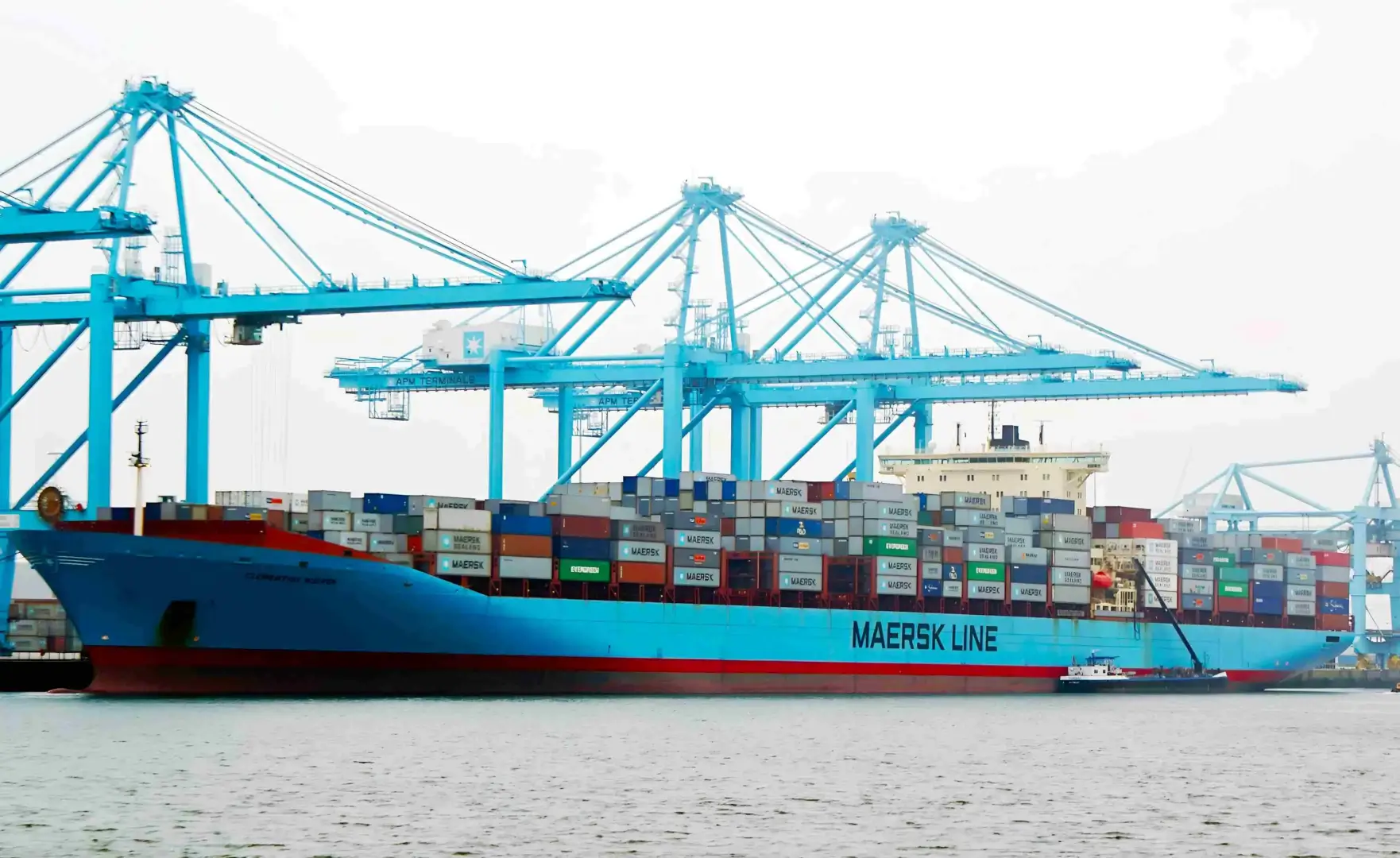

The 8,648 TEU Clementine Maersk passed through the Suez Canal on 13 June while operating on Maersk’s Middle East-India to US East Coast service. The vessel was travelling from Salalah towards New York, according to liner market intelligence cited by shipping media.
The transit is one of the clearest signs yet that Maersk is again testing the Red Sea and Suez corridor after rerouting vessels around the Cape of Good Hope during the latest phase of Middle East instability. Linerlytica reported that the Clementine Maersk and the 7,154 TEU Santa Catarina Maersk were the first Maersk vessels to pass through Bab el-Mandeb since 1 March 2026, when Maersk paused transits following the escalation of the Iran conflict.
The return is still cautious rather than a full network reset. Maersk had already planned a structural return of its MECL service to the trans-Suez route earlier this year, saying in January that the service, which connects the Middle East and India with the US East Coast, would return to the route originally designed for it. The company said at the time that any change would remain dependent on continued stability in the Red Sea and the absence of further escalation.
That caution has not disappeared: in its June market update, Maersk said the situation in the Middle East remained unpredictable and that shipping conditions in the Strait of Hormuz were not yet showing clear signs of improvement. Reuters also reported on 15 June that Maersk had welcomed the newly announced US-Iran agreement but had not yet made changes to its Middle East operations, saying details of the agreement remained limited.
The Suez Canal route matters because diversions around southern Africa add distance, time and cost to Asia-Europe and Middle East-linked services. For container lines, a gradual return through Suez would improve schedule efficiency and release capacity tied up by longer voyages. For shippers, however, the timing and reliability of any return remain more important than a single transit.
A second unresolved issue is the Strait of Hormuz. The US-Iran agreement is reported to include a restoration of commercial transit, but the question of fees or tolls for vessels crossing the strait remains unclear. Iran has previously described such charges as fees for navigational services rather than tolls, but maritime law experts have questioned whether a generalised charge for passage would be lawful.
Under the United Nations Convention on the Law of the Sea, foreign ships cannot be charged simply for passing through a territorial sea. Charges may only be levied for specific services rendered to the ship, and they must be applied without discrimination. The distinction matters for shipowners and cargo interests because a service fee linked to an actual navigational or safety service is different from a broader charge for using an international strait.


![Costs up 11%, rates up 5%: FarEye’s Suryansh Jalan on the hidden “inefficiency tax” in Europe’s last mile [INTERVIEW]](https://cdn-trans.info/uploads/2026/10/264940df8e8870b74281e69aeac-1024x769.webp)