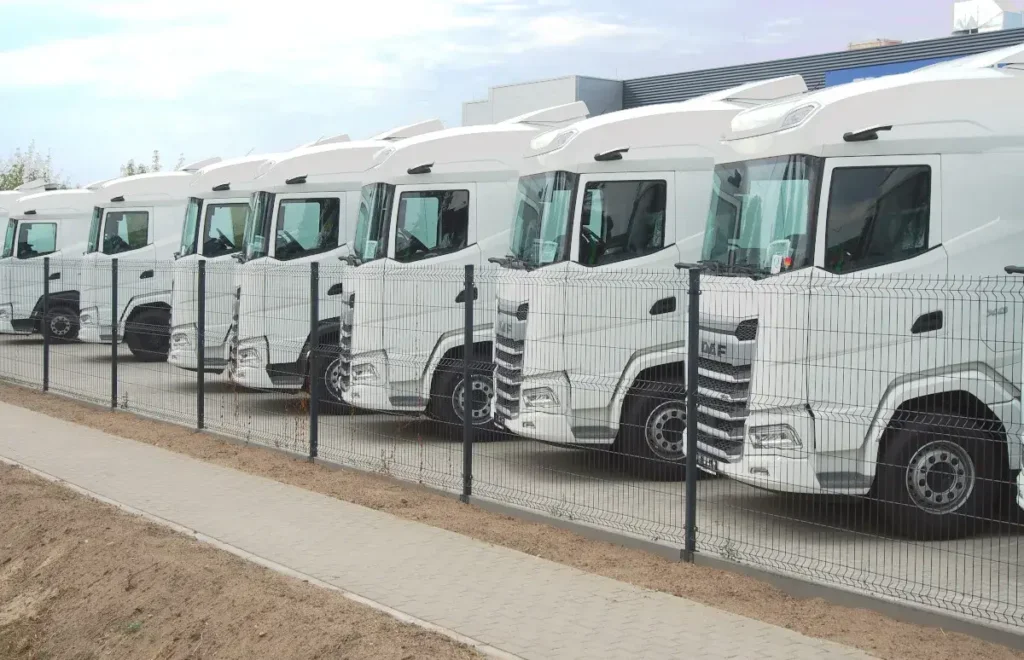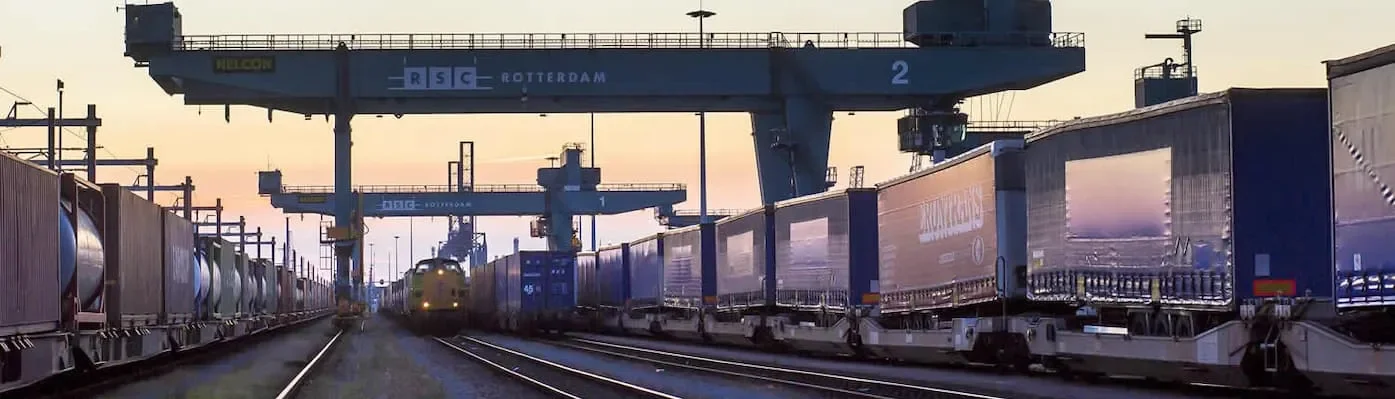

The Dutch timber and building materials supplier Outdoor Life Group (OLG) and logistics provider Bos Dynamics have operated an intermodal corridor on the Rotterdam–Munich route since May 2026. According to the Port of Rotterdam Authority, the trailers are first trucked to the Rail Service Center Rotterdam (RSC Rotterdam), then moved by train to Munich and delivered from there by road to consignees in southern Germany and Austria. Return loads travel back via the same corridor.
The rail leg is operated by intermodal provider Hutchison Ports Europe Intermodal (HPEI) and runs on the established Bayern Express service.
No new infrastructure needed
Project partners say the solution required no additional infrastructure. Instead, they relied on existing rail capacity and aligned processes across the shipper, forwarder, terminal and rail operator.
“We continuously look for ways to make our supply chain smarter and more sustainable,” says Jelle Poldervaart, Site Manager at OLG. Working with Bos Dynamics, HPEI and RSC Rotterdam makes it possible to organise the flow more efficiently while reducing the CO2 footprint.
Launching with eight moves a week
In the start-up phase, the project uses a pool of ten crane-liftable semi-trailers. The partners say four trailers a week run from Rotterdam to Munich and another four in the opposite direction.
If the concept proves viable in day-to-day operations, the service is set to be expanded.
Also aimed at other shippers and carriers
According to RSC Rotterdam, the set-up is intended to be open to other shippers and transport companies as well. For now, only crane-liftable semi-trailers are used on the route, but the shuttle could later be opened to non-craneable trailers.
“For shippers and transport companies that have so far moved their trailers exclusively by road, this project shows that existing rail services can be a practical alternative,” says Peter Schilte, Sales & Customer Service at RSC Rotterdam.
What it means for the logistics sector
For carriers, the model shifts the long main leg between the Netherlands and southern Germany to rail, with trucks handling only pre- and post-haulage. This can help free up long-distance road capacity while reducing road kilometres and emissions.
The project also highlights that intermodal services do not necessarily depend on new rail lines or terminals. Existing hinterland connections can be leveraged, provided processes between shippers, transport companies and terminal operators are properly coordinated.
With growing pressure to reduce emissions — reflected in debates around the EU Emissions Trading System (EU ETS) — as well as an ongoing driver shortage and recurring bottlenecks on key motorway corridors, combined transport on routes such as Rotterdam–Munich may become more relevant for additional companies.
For shippers and carriers navigating shifting demand and pricing conditions, the move away from purely road-based long hauls also reflects wider changes in the spot market.
At the same time, constraints on road operations and facilities — highlighted by cases where there is no lorry park for HGV drivers — add to the incentives to shift the longest leg of some routes onto rail.