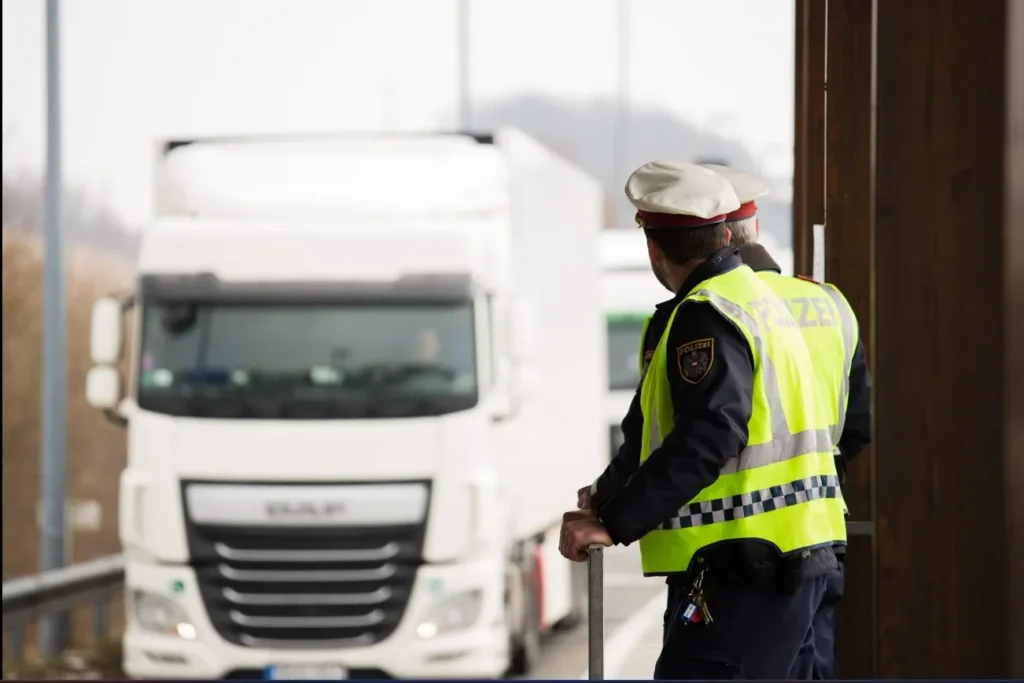
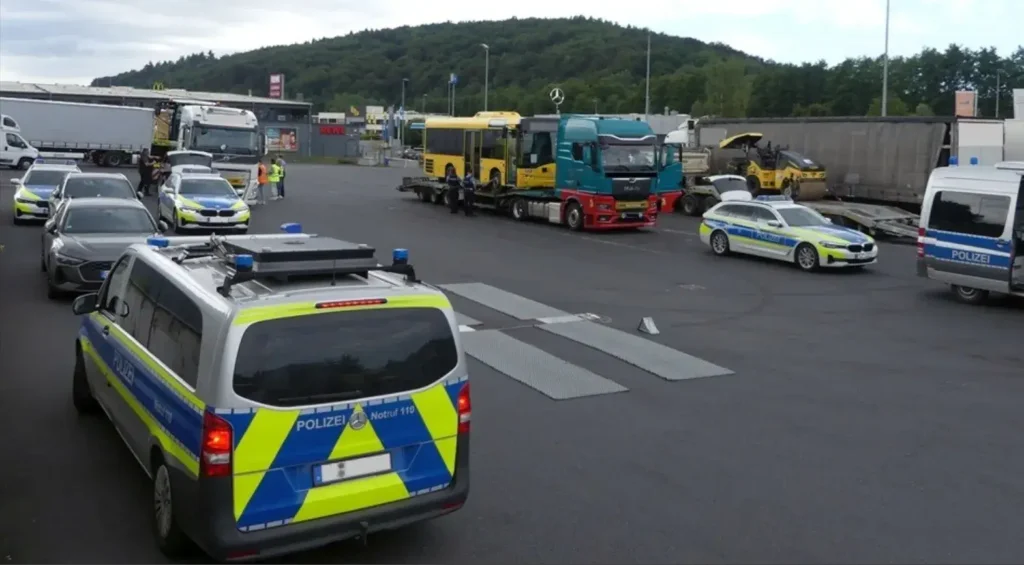
Officers from Brandenburg police stopped the vehicle at the Neuruppin exit on the A24 motorway during a standard check. The truck was travelling from Hungary to Meyenburg. When officers examined the tachograph data, they found serious and repeated breaches of EU driving and rest time rules.
More than 30 hours behind the wheel
According to police findings, the driver had been driving for more than 30 hours with virtually no proper rest. Mandatory breaks were either missing or so short that they did not qualify as legal rest periods.
Under EU rules, truck drivers may drive a maximum of nine hours per day, extendable to ten hours twice a week, and must take regular breaks and daily rest periods. In this case, those requirements were almost entirely ignored.
The violations were reported by German regional media outlet Nordkurier.
Police immediately banned the driver from continuing his journey and ordered him to take a full 11-hour daily rest period on the spot.
Repeat offences detected
Officers also confirmed that this was not an isolated incident. Tachograph records showed that the same driver had committed similar serious violations several times over the past two months.
Because of the repeated nature of the offences, the case was treated as a particularly serious breach of working time regulations.
€40,000 in penalties for driver and operator
The consequences went far beyond a roadside stop. Police imposed fines of €20,000 on the driver and a further €20,000 on the transport company that employed him.
Authorities said the penalties reflect not only the extreme continuous driving time but also the pattern of repeated infringements, which point to systematic non-compliance rather than a one-off incident.
Warning for international hauliers
German enforcement authorities are known for strict roadside checks and detailed tachograph analysis, particularly on major transit routes used by international hauliers.
The case serves as a reminder that serious or repeated violations can lead to very high fines for both drivers and operators, as well as immediate driving bans that can disrupt deliveries and schedules.