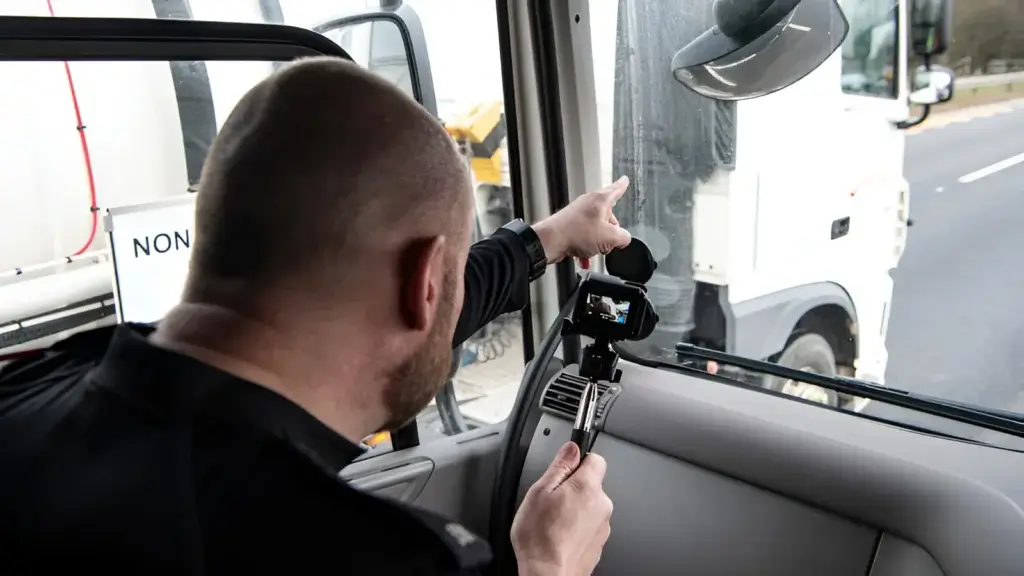
At the end of January, officers from the Villars-sous-Écot motorised unit stopped a truck on the A35 motorway in eastern France. The vehicle, registered in France, was travelling from Besançon towards Mulhouse.
Police attention was drawn to the truck because it was being driven with the windows fully open despite freezing temperatures. After stopping the vehicle, officers immediately noticed a strong smell of marijuana coming from the cab.
The driver, a 58-year-old resident of Dijon, told police that he regularly uses cannabis after being diagnosed with cancer. However, this explanation did not affect the authorities’ assessment of the situation.
The response was immediate. The driver’s licence was administratively suspended for six months, and the semi-trailer was seized. The case will now go to court, with the driver summoned to appear before a court in Montbéliard.
For a professional driver, a six-month suspension effectively means exclusion from work and a serious risk of losing their livelihood.
Cannabis treated as a drug under enforcement rules
The French case highlights a wider European reality that many drivers underestimate. In enforcement and licensing terms, cannabis is treated in exactly the same way as other illicit drugs. For professional drivers, even occasional use can lead to immediate administrative sanctions — regardless of whether impairment is proven or an incident has occurred.
Across most EU countries, professional drivers face much stricter consequences than private motorists. The reasoning is straightforward: the mass of a heavy goods vehicle and the potential impact of an accident justify harsher measures.
While national rules differ, one principle remains consistent: drug use detected during a roadside check often triggers rapid action, including licence suspension, vehicle immobilisation or seizure, and court proceedings.
Germany: clear limits, serious professional consequences
Germany provides an instructive comparison. Under current regulations, the permissible THC concentration in the blood is 3.5 ng/ml. Exceeding this threshold results in administrative penalties and, in certain cases, criminal proceedings.
For professional drivers, however, the consequences may extend further. While a single instance of cannabis use does not automatically result in a driving ban, repeated consumption can raise doubts about a driver’s fitness to perform professional duties.
In practice, this can lead to medical and psychological assessments and, ultimately, the withdrawal of professional driving entitlements.
A key issue is the distinction between “occasional” and “regular” use — a distinction that is not precisely defined in driving-licence regulations. According to BG Verkehr, the German statutory accident insurance body for the transport and logistics sector, repeated use within a short period is unlikely to be considered occasional and may already be classified as regular use for licensing purposes.
A growing risk for professional drivers
Cases like the one in France underline a growing gap between how some drivers perceive cannabis use and how authorities enforce the rules. What may be seen as occasional or unrelated to driving can, during a roadside check, quickly become a career-ending event.
For professional drivers, the risk is no longer limited to fines or penalty points. Licence suspension, court proceedings and loss of income are increasingly part of the reality — even in the absence of an accident.