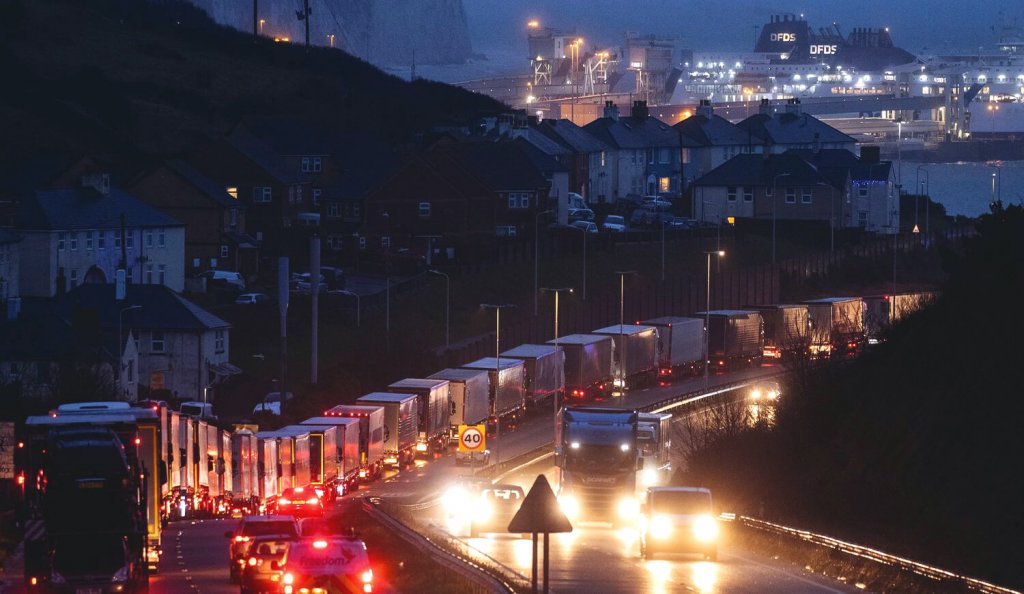
According to Ashford Port Health, the site now processes around 22,800 import notifications a month and handles more freight traffic than any other Border Control Post in the UK. Operating around the clock, Sevington has become a major part of the country’s post-Brexit border system, checking imported goods while keeping freight moving through one of the UK’s key trade gateways.
The figures show the scale of the border operation that now sits behind UK-EU trade. While Brexit border controls are often discussed in terms of political negotiations, customs rules or delays, Sevington illustrates the day-to-day infrastructure required to run the new system: specialist staff, document checks, veterinary and environmental health expertise, cooperation between agencies and technology to manage growing volumes of paperwork.
Ashford Port Health, which was established in 2021, says its operation has grown rapidly alongside Sevington as new import control requirements have been introduced. The authority works with DEFRA, Border Force, HMRC and other agencies to assess whether imported goods meet UK requirements before they enter the market.
Since November 2024, the authority says it has removed more than 226,000 kilograms of products deemed unfit for human consumption before they could enter the UK food chain. The figure gives one indication of the practical role now played by Border Control Posts in food safety, animal health and biosecurity.
For hauliers and logistics operators, the development of Sevington is also a reminder that the post-Brexit border is no longer just a transition issue. It has become a permanent operational layer in freight movements between Britain and its trading partners.
Border checks become a technology challenge
The growth of the operation has also turned border control into a document-processing and data-management challenge.
Ashford Port Health says it has introduced intelligent document processing technology to support the review of import documentation. Early results suggest productivity improvements of around 40%, although the authority says final decisions remain with qualified professionals.
That distinction is important. The technology is being used to manage scale and speed, but the final judgement on consignments remains with environmental health, veterinary and border specialists.
Read more: Despite Brexit, most manufacturers still export to the EU. And the friction hits the road
Anthony Baldock, Director of Port Health and Public Protection at Ashford Port Health, said the public debate around Brexit often focuses on politics and trade agreements, while less attention is paid to the operational work now taking place at the border.
“At Sevington, our role is to help protect public health, support compliant trade and safeguard the UK’s food supply chain. The scale of that responsibility has grown considerably in recent years and our team has worked hard to build a service capable of responding to those demands,” he said.
He added that border controls also play a role in protecting animal health and UK biosecurity, particularly as disease risks continue to emerge across Europe.
A test case for future UK-EU border talks
The timing of the figures is relevant. The UK and EU are continuing discussions on future border arrangements, including a possible Sanitary and Phytosanitary Agreement that could change how some food, plant and animal-product checks are handled.
Ashford Port Health argues that Sevington offers lessons for future arrangements, particularly through its risk-based and intelligence-led approach.
“As Government continues discussions with the European Union on future border arrangements, we would encourage policymakers to build on the lessons learned at Sevington,” Baldock said.
The authority presents Sevington as evidence that border controls can protect consumers and biosecurity while still supporting trade. However, the release does not provide data on waiting times, inspection rates, rejection rates or the cost of compliance for operators.
Even so, the figures underline the extent to which Britain’s post-Brexit freight border has become a large-scale, permanent operation. Sevington is no longer merely a symbol of the transition out of the EU. It is now part of the everyday machinery of moving goods into Britain.