

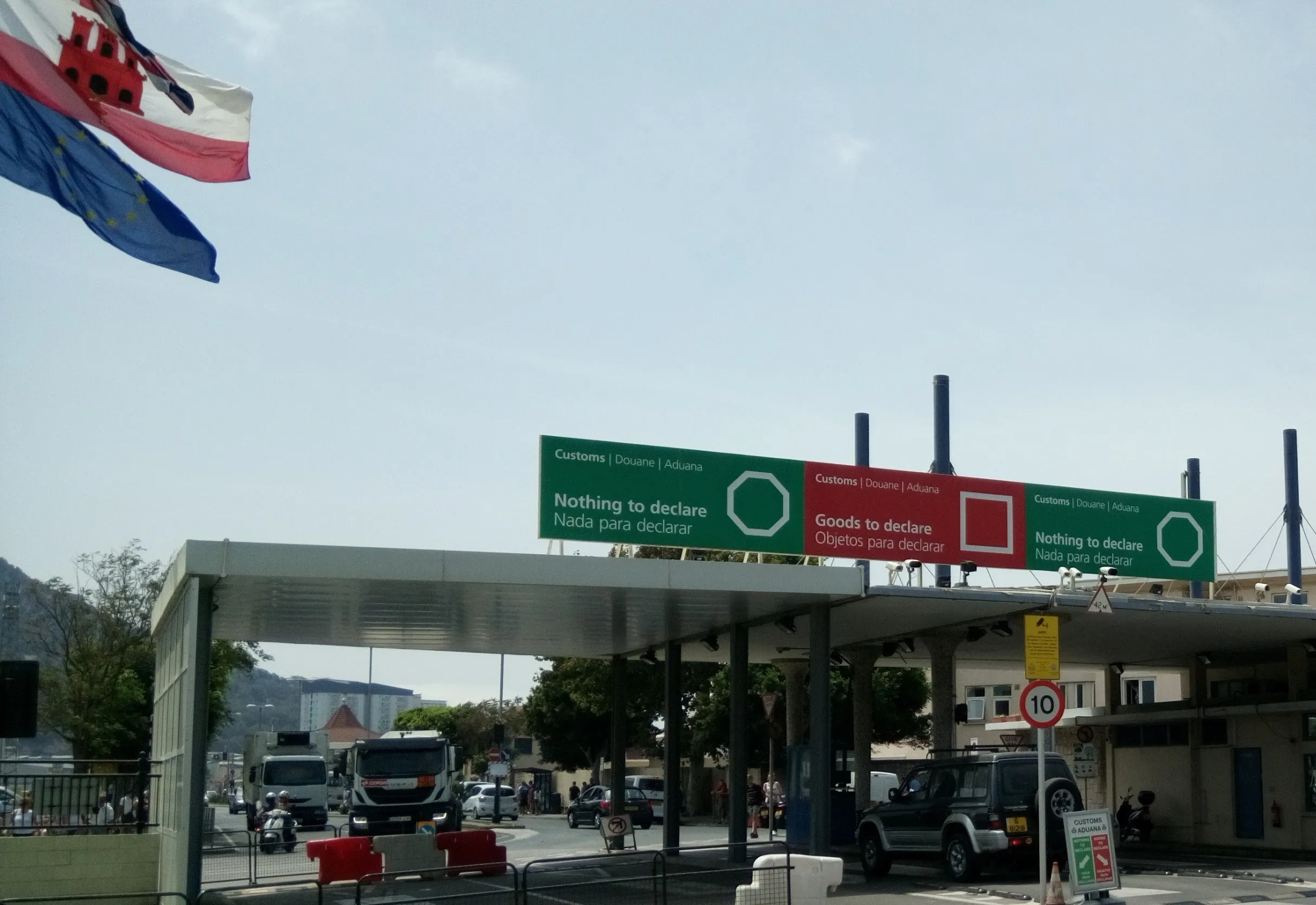

The treaty was signed on 14 July and began applying provisionally on 15 July 2026. The following day, the authorities removed the routine immigration and customs controls previously carried out at the land frontier.
The change is intended to reduce delays and provide a more predictable movement of goods between Gibraltar and the surrounding Spanish region.
However, the legal border has not been abolished, and the removal of roadside checks does not mean that trucks can cross without customs formalities.
Customs work moves away from the frontier
Under the agreement, Gibraltar and the EU have established a bespoke customs arrangement designed to remove tariffs, duties and quotas on goods moving between the two territories.
Goods should no longer be routinely inspected at the physical Spain–Gibraltar crossing once the necessary customs requirements have been completed. Instead, much of the clearance process will take place before consignments reach the frontier, including through EU customs facilities in Spain.
Operators will therefore still need to comply with customs declarations, product standards, taxation requirements and other formalities applicable to the cargo.
The agreement also requires Gibraltar to align parts of its goods regime with EU rules in order to protect the single market and prevent products from entering the EU through a less tightly regulated route.
Road freight included in post-Brexit settlement
Gibraltar was not covered by the main EU–UK Trade and Cooperation Agreement, leaving the territory’s post-Brexit relationship with the EU unresolved. The new treaty completes that framework and includes provisions covering goods, customs cooperation and road transport. Its aim is to allow more fluid movement while maintaining controls protecting the EU customs union and Schengen area.
The Gibraltar government described the removal of the checks as historic but warned that some initial operational problems could arise as businesses, drivers and border authorities adjust to the new procedures.
For freight companies, the main practical benefit should be fewer stops at the crossing itself. But the efficiency of the system will depend on whether consignments are correctly cleared before vehicles arrive at the frontier.


