The station, due to be completed in the first quarter of 2027, will be owned and operated by CNG Fuels, which is 40% owned by ReFuels. Construction is scheduled to begin on 1 June.
According to ReFuels, the site will have direct access to the M4 motorway and will be located close to major distribution hubs and freight flows. Together with CNG Fuels’ Magor station, which is currently under construction in South Wales, the Swindon site is intended to support Bio-CNG refuelling across one of the UK’s busiest freight routes.
When fully utilised, the Swindon station will be able to refuel 12 HGVs at the same time. ReFuels says it will have capacity for more than 800 trucks per day and more than 30 million kilograms of 100% renewable Bio-CNG per year.
ReFuels said the site forms part of a wider plan to nearly double the UK-wide dispensing capacity of the CNG Fuels network by the end of 2028. The company says demand is being supported by the uptake of larger 6×2 gas trucks, which it argues opens the technology to a broader part of the heavy goods vehicle market.
Philip Fjeld, CEO and co-founder of ReFuels, said the Swindon and Magor stations would provide “a clean fuel corridor” for road freight along the M4 and into the Midlands.
“Europe and the UK are increasingly addressing energy resilience by shifting away from volatile global fossil fuel markets. ReFuels has a clear strategy of expanding the CNG Fuels station network to enable logistics operators to reduce emissions and cut fuel costs while reducing dependency on diesel,” said Fjeld.
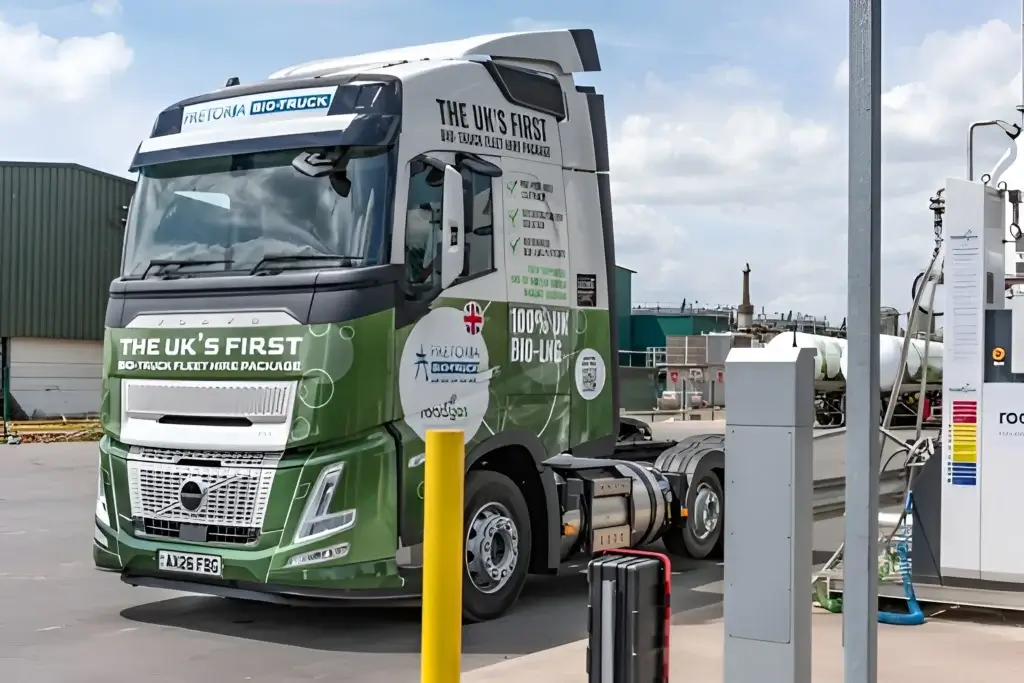
Bio-CNG supplied through the network is produced from renewable biomethane sourced from food waste and manure. ReFuels claims the fuel can deliver greenhouse gas emissions savings of 85–90% compared with diesel, while fuel costs are around 25% lower than diesel and around 40% lower than HVO.
“Biomethane is a homegrown energy source that delivers carbon reductions at scale while offering lower and more predictable fuel costs. Since 2020, customers across our network have saved over GBP 55 million by switching to biomethane,” Fjeld added.
CNG Fuels currently operates 16 UK stations, with more than 2,250 trucks refuelling daily across the network. ReFuels says current network capacity exceeds 11,500 trucks per day.
By the end of 2028, the company aims to increase this to 20,000 HGVs per day, dispensing more than 780 million kilograms of biomethane annually. ReFuels says this would be equivalent to more than 2.3 million tonnes of CO₂ savings each year.