The retailer has also signed a long-term agreement with CNG Fuels for mobile refuelling stations at UK distribution centres, giving it daily refuelling capacity for up to 300 trucks.
M&S already operates more than 210 Bio-CNG trucks, including around 150 Scania 4×2 vehicles and 26 Scania 6×2 vehicles, according to the company. The latest expansion will take its lower-emission HGV fleet past the 300-vehicle mark by the end of its 2026/27 financial year.
Scania UK said the new order covers more than 120 compressed natural gas trucks, including a mix of 4×2 and 6×2*4 tractor units. The manufacturer said each vehicle can cut CO2 emissions by more than 85% compared with the diesel vehicles they replace.
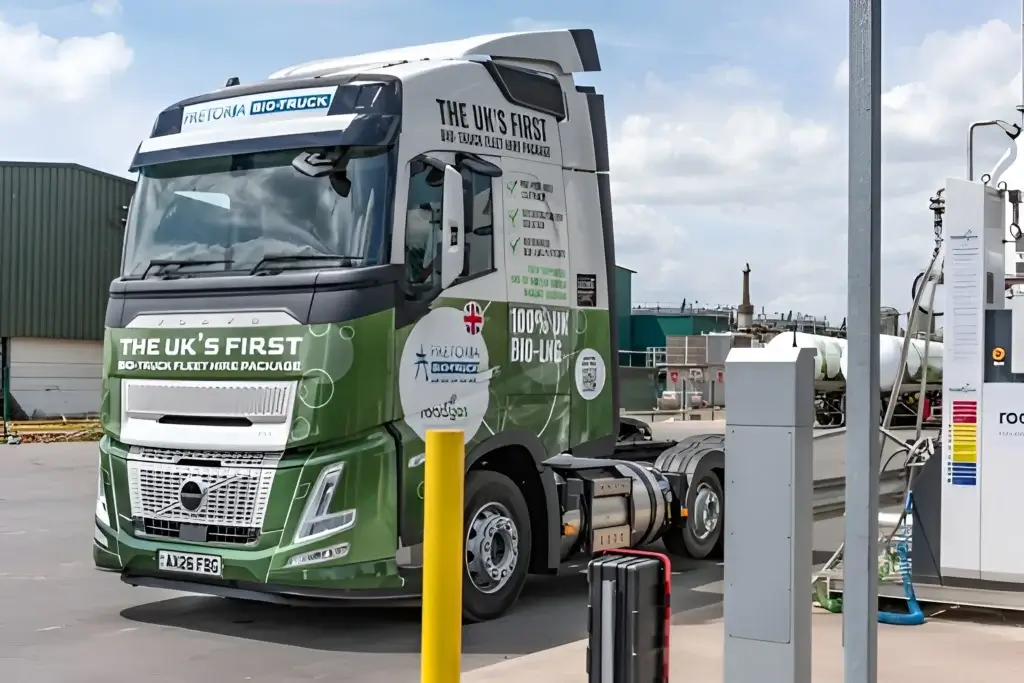
The operational part of the deal is the refuelling network. CNG Fuels, which is 40% owned by ReFuels, will provide mobile refuelling stations at M&S distribution centres. ReFuels said the units will have combined capacity to refuel up to 300 trucks a day and will complement CNG Fuels’ 16 public-access Bio-CNG stations in the UK.
The agreement includes one redeployed mobile refuelling unit and up to three new units, increasing CNG Fuels’ mobile refuelling fleet from 10 to 14 units by 2026, according to ReFuels.
Bio-CNG is made from waste feedstocks including food waste and agricultural by-products such as manure. ReFuels says the fuel can deliver up to 85% lower CO2 emissions than diesel.
For M&S, the decision puts gas trucks at the centre of its near-term HGV decarbonisation plans. The retailer said it had trialled several technologies and described Bio-CNG as a proven, flexible and cost-efficient fuel supported by mature infrastructure.
Scania’s current gas truck range uses 9-litre or 13-litre methane engines, available for compressed or liquefied gas, with power outputs from 280hp to 460hp. The manufacturer says the range can be used from urban rigid operations to long-distance haulage, with driving range of up to 1,800km depending on specification.
M&S is not relying solely on gas. The retailer also said it currently operates 13 battery-electric HGVs and five battery-electric rigid trucks. However, the scale of the Bio-CNG expansion shows where it sees the more immediate route for cutting emissions across heavier logistics operations.