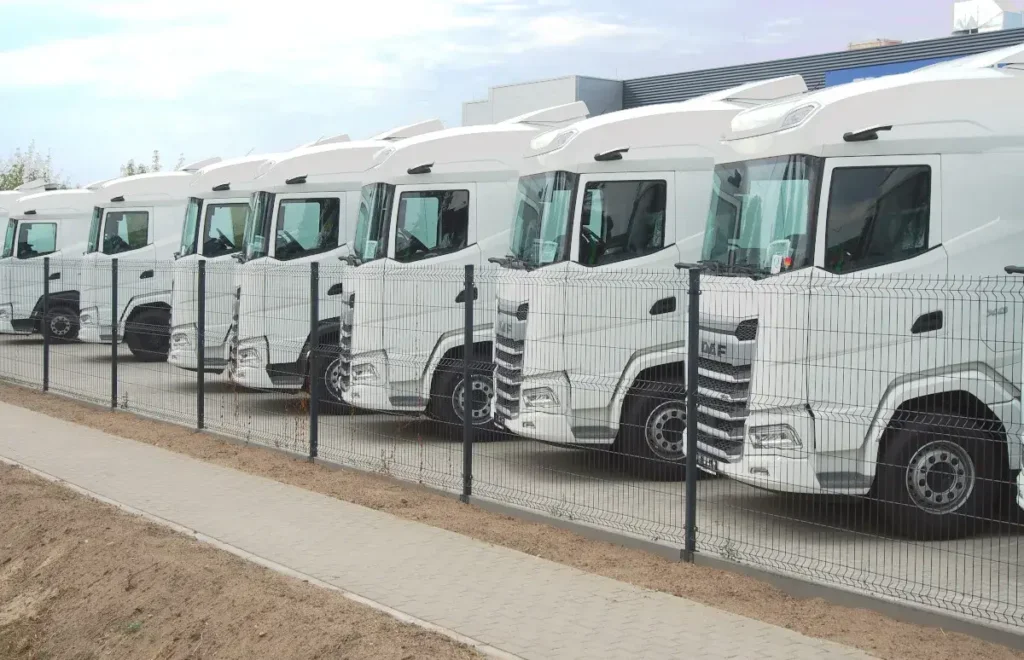
A new report from the European Commission shows just how severe Europe’s shortage of safe and secure truck parking has become. According to the document, only 4,943 parking spaces in the EU meet the official standards, while drivers and hauliers need around 395,000 to operate safely and comply with rest-time rules. This leaves a gap of almost 390,000 spaces, a shortage the Commission expects to grow as freight volumes increase.
The shortage is unevenly distributed but affects many of the busiest freight corridors. Drivers identified Belgium, France, Germany, Italy, the Netherlands, Portugal and Spain as the most underserved regions, despite their central role in European road transport.
High exposure to cargo crime
Security remains a key concern. The report states that 85% of hauliers have experienced theft or vandalism when vehicles were parked in unsecured areas, and even certified sites report incident levels of 41%. Only 9% of drivers say they feel safe using Europe’s current parking facilities.
Incidents range from fuel theft and break-ins to illegal boarding of vehicles near borders. The Commission links the situation to driver retention problems, noting that poor parking conditions undermine the profession’s attractiveness, particularly for women, who represent just 6% of the driver workforce.
TEN-T rules introduce mandatory secure parking every 150 km
Under the revised TEN-T regulation, Member States must ensure the development of certified secure parking every 150 km on the core and extended core network by 31 December 2040. New or upgraded sites must be located on the network or within 3 km of an exit.
Meeting this requirement will require large-scale investment. While 49 EU-supported projects are currently underway—expected to add around 4,600 new secure spaces—the Commission warns these will not be enough to close the gap.
Cost and digital shortcomings limit uptake
The report flags additional barriers, including the cost of secure parking, which ranges between €15 and €35 per night for higher-security sites. Many operators remain reluctant to cover these costs.
Digital visibility is another weak point. Only 27% of operators consider current parking-availability data reliable, and more than half do not make reservations at all due to fragmented systems. The Commission is encouraging the creation of an EU-wide real-time platform to support route planning, compliance and booking.
Possible policy changes ahead
The Commission also raises the possibility of regulatory adjustments in the future. One option under consideration is allowing regular weekly rest in the cab if a vehicle is parked in a high-quality, certified SSPA—an issue of particular interest since the introduction of stricter Mobility Package rules.
Other ideas include adding intermediate certification levels (such as “Silver+”) to accelerate upgrades, improving gender-sensitive facility requirements, and introducing clearer signage for drivers.
The Commission stresses that responsibility lies primarily with Member States, noting that EU funding alone cannot close the gap. The report calls for coordinated national planning, public–private cooperation and accelerated modernisation of existing motorway rest areas.