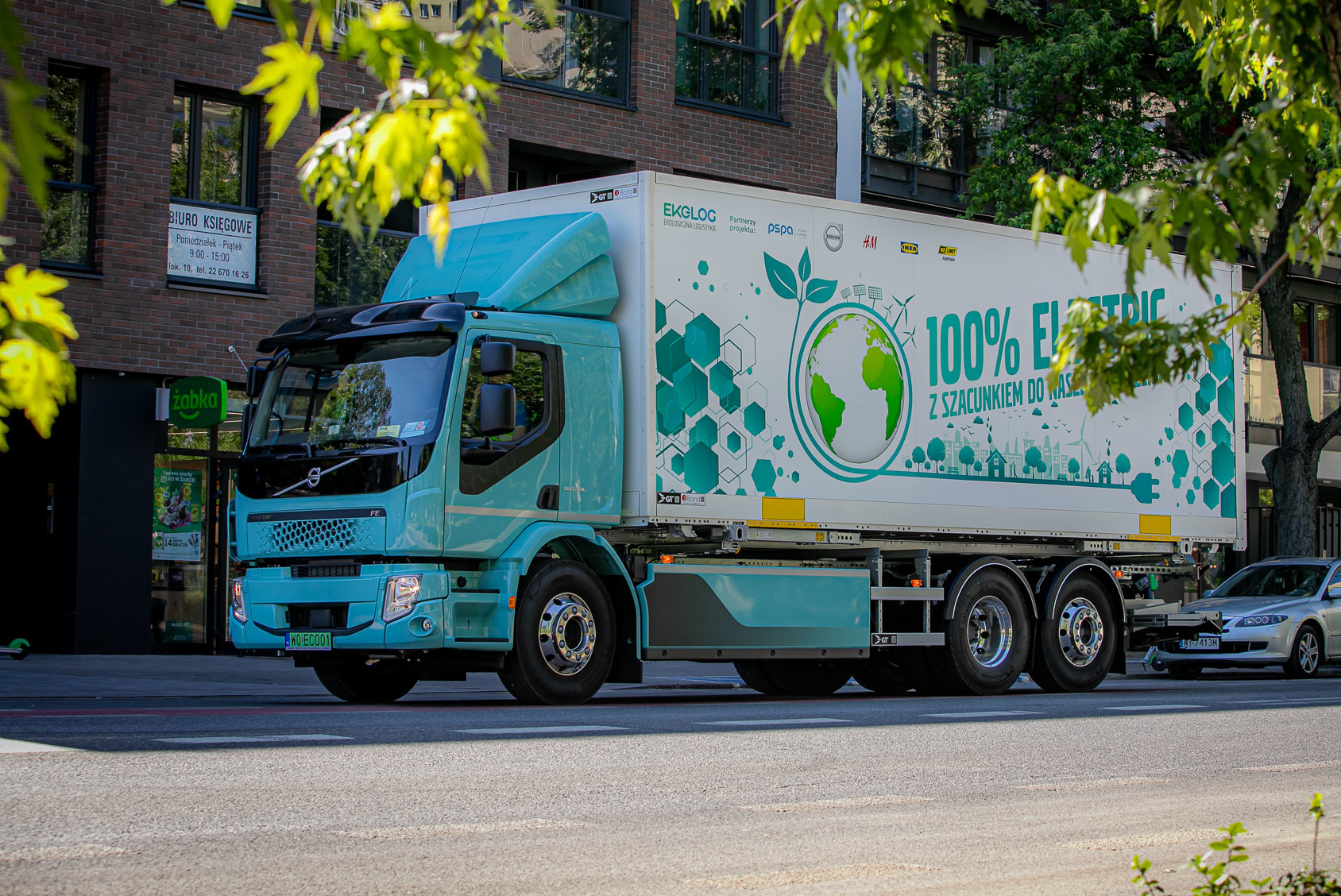

The nine-week pilot, led by the Polish Alternative Fuels Association (PSPA), tested a series-produced Volvo FE Electric in regular delivery operations for H&M and Ikea. The vehicle supplied stores for the Swedish fashion chain and carried out Ikea deliveries both to retail locations and directly to customers.
Daily logistics operations and vehicle management were handled by No Limit, the project’s logistics partner.
According to the project summary, the deployment suggests that a mass-produced electric truck can replace diesel vehicles in urban distribution under Polish operating conditions. The trial reported no disruptions linked to insufficient range.
Over the test period, the Volvo FE Electric covered 5,056 kilometres, logged 595.5 operating hours and transported 285 tonnes of freight. It used 7,056 kilowatt-hours of energy, while the project collected more than 150,000 data points covering environmental and social impact, usability, performance and operating-cost indicators.
The analysis found the electric truck to be noticeably quieter than a comparable diesel vehicle, with noise levels lower by as much as 20 decibels.
On costs, the study estimated fuel-cost savings of up to 52% per year, based on average fuel prices from August 2020 to August 2021.
In city operations, the FE Electric achieved a real-world range of 140–180 kilometres. On intercity routes, the range reached 200 kilometres. The study also found that each additional tonne of payload increased energy consumption by 7.85%.
Drivers involved in the pilot reported stronger acceleration and more immediate power delivery than in a conventional truck. They rated productivity and reliability as comparable to a diesel vehicle, while 67% said working comfort had improved thanks to lower vibration and noise levels.
Żabka adds first Volvo FL Electric in Poland
In a separate development, Polish convenience retailer Żabka has added a Volvo FL Electric to its fleet. The two-axle truck, with a maximum gross vehicle weight of up to 16 tonnes, has been fitted with a refrigerated body built to the chain’s requirements.
The vehicle will be tested in Silesia over the coming months.
“Volvo’s new, fully electric truck is an interesting alternative to conventional logistics fleets. For us, it is another step towards protecting the environment and reducing our carbon footprint — something that matters greatly in cities and in regions particularly exposed to air pollution, such as Silesia, where the vehicle will be tested over the coming months,” said Adam Manikowski, managing director at Żabka Polska.
The Volvo FL Electric can travel up to 250 kilometres on a single charge. Its lower noise levels make it suitable for use in warehouse areas, low-emission zones and night-time urban deliveries.
“The electric truck delivered to Żabka is the first FL Electric model in Poland. It is our smallest chassis powered entirely by electricity, and we are pleased it will be performing transport tasks in Silesia,” said Małgorzata Kulis, managing director at Volvo Trucks Polska.
“It is an ideal distribution vehicle that offers high driver comfort and improves residents’ quality of life. Above all, what you notice is the silence — which also supports safety and helps make urban areas better places to live,” she added.