At a glance:
- BYD’s 44-tonne ETT 44 is due to reach European customers in Q2 2027.
- The electric tractor has a 651 kWh battery and claimed range of around 600 km.
- BYD says it ultimately wants to manufacture everything it sells in Europe locally.
- The manufacturer is also building a European charging, finance and service offering around its trucks.
The announcement at IAA Transportation in Hanover marks a significant escalation of BYD’s push into the European commercial vehicle market, where a growing number of Chinese manufacturers are challenging established truckmakers.
“For the long term, we will produce everything we sell in Europe here locally,” Stella Li, BYD executive vice-president and head of international business, said at the Hanover exhibition. “Once you move everything produced locally, it’s okay. We become a European company,” she added.
BYD has not yet disclosed where its European trucks would be manufactured or when local production would begin. The company is already building a passenger-car plant in Szeged, Hungary, where mass production is expected to start in 2027.
Local production would also reduce BYD’s exposure to European import tariffs. The EU currently imposes additional anti-subsidy duties on battery-electric cars manufactured in China, while European truckmakers including MAN have called for similar measures covering Chinese electric trucks.

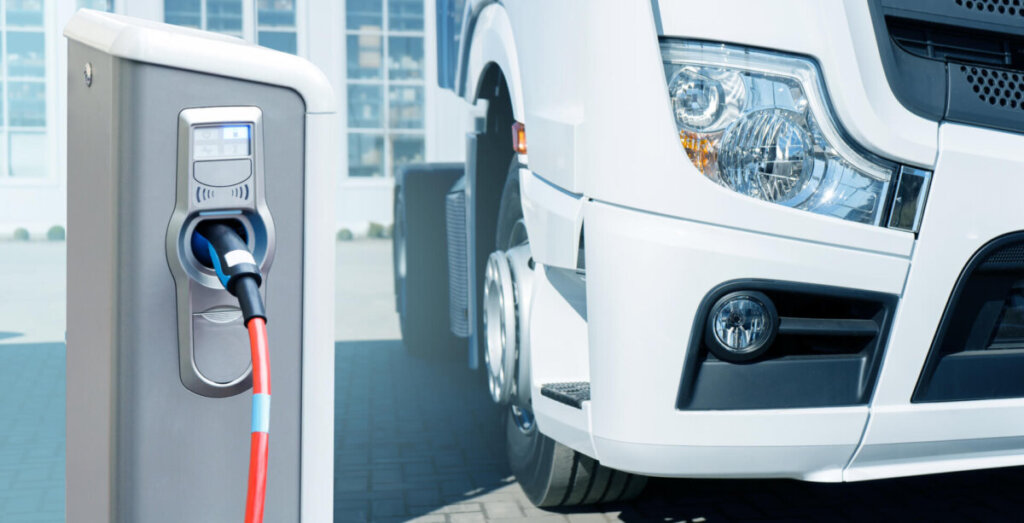
YD ETT 44 electric tractor, due to enter the European market in 2027. Photo: BYD
Li said BYD regarded tariffs as a short-term issue while it builds up local manufacturing capacity.
600 km range and 20-minute charging
At the centre of BYD’s Hanover launch is the ETT 44, a battery-electric 4×2 tractor for combinations of up to 44 tonnes. The truck uses a 651 kWh Blade Battery, with BYD claiming a range of up to around 600 kilometres. Its powertrain can produce up to 1,000 PS.
Perhaps more significant for long-distance operation is its charging capability. BYD says its new 1.5 MW charging system can take the battery from 20% to 80% in around 20 minutes, adding approximately 400 km of range.
The ETT 44 forms part of a substantially expanded European commercial vehicle range. BYD also presented 4×2 and 6×2 rigid trucks at IAA, giving it vehicles spanning weight classes from 3.5 to 44 tonnes.
Rather than selling trucks alone, BYD is also trying to offer operators an integrated package covering vehicle financing, charging infrastructure, energy management and aftersales support.
Li said the company’s plans include solar-powered charging infrastructure as well as a workshop network backed by mobile roadside assistance.

YD ETT 44 electric tractor. Photo: BYD
Truck technology races ahead of the grid
However, the arrival of higher-range trucks and megawatt charging is intensifying another problem for European operators: whether the electricity infrastructure can support them.
Germany’s freight forwarding and logistics association DSLV used IAA Transportation to argue that vehicle technology is now progressing considerably faster than the infrastructure needed to operate zero-emission fleets.
“The decisive question is no longer whether powerful electric and hydrogen trucks are available, but whether the necessary charging infrastructure, electricity generation and grid capacity can keep pace with vehicle development,” said DSLV chief executive Frank Huster.
A study commissioned by the association from RWTH Aachen University’s Institute for Automotive Engineering estimated earlier this year that German road freight could require 156 TWh of electricity annually by 2045 — 39 times its current consumption.
DSLV expects much of that charging to take place at logistics depots and operating bases, meaning grid connections at those sites will become increasingly important as fleets electrify.