According to industry data and logistics operators, including Girteka, the event showed that extreme cold should be treated as a recurring structural risk for European freight transport rather than an exceptional scenario.
January 2026 brought one of Europe’s harshest cold spells in over a decade. Temperatures fell below –30°C in northern Sweden and Finland and approached –40°C in parts of Scandinavia. Lithuania recorded a temperature of– 34.3°C, its lowest in 30 years. Western and Central Europe also experienced widespread snow and frost, with weather warnings issued in countries including France, Germany, Belgium, Italy and the Netherlands.
Crucially, disruption occurred across multiple regions simultaneously, amplifying delays across interconnected transport corridors.
Limited capacity across air and ports
Air and maritime transport also faced constraints, adding pressure to inland networks. At Amsterdam Schiphol, more than 2,400 flights were cancelled within a single week, while several Central European airports temporarily reduced operations. According to Girteka, reduced air cargo capacity contributed to delays for time-critical shipments.
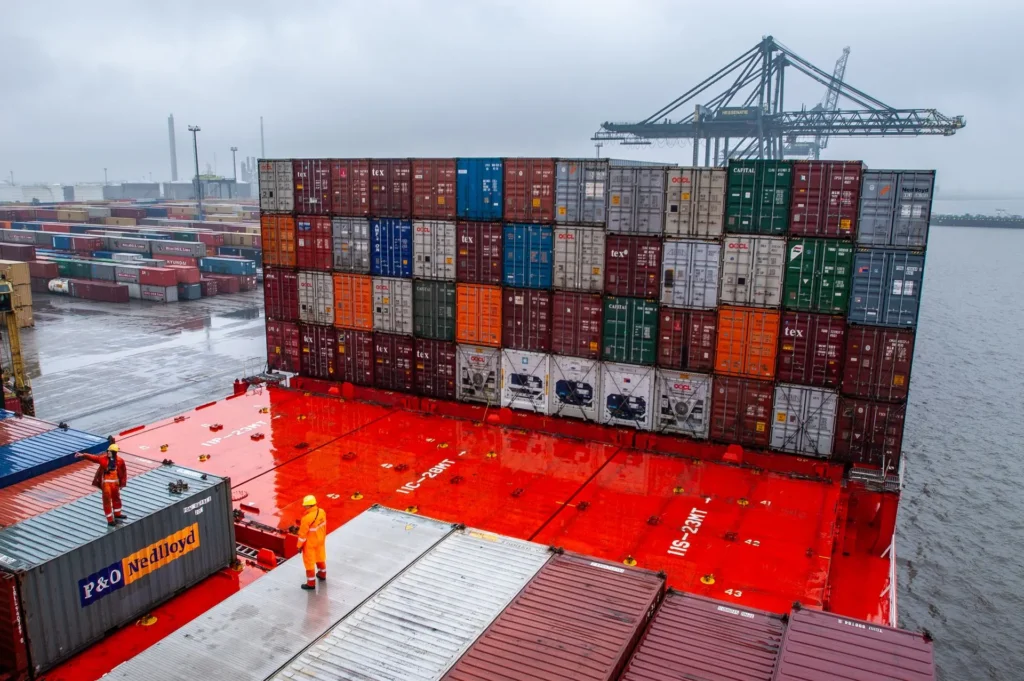
At major North Sea ports such as Rotterdam, Hamburg and Antwerp, freezing temperatures slowed terminal operations, increasing container dwell times and extending truck turnaround times. While these disruptions were secondary to road haulage, they further intensified congestion inland.
Road transport most heavily affected
Road networks experienced the most widespread disruption. In France, congestion in the Île-de-France region exceeded 1,000 kilometres, prompting restrictions on heavy goods vehicles to allow snow-clearing operations. Italy activated national winter emergency protocols on key motorways, including controlled entry procedures and lane restrictions.
Across Europe, drivers encountered reduced speed limits, localised closures and delays ranging from hours to days. Girteka notes that when extreme cold affects multiple network nodes at once, transport systems experience structural disruption rather than isolated slowdowns.
The economic cost of cold weather
Extreme weather imposes measurable costs on European transport. The EU-funded EWENT project estimates that weather-related events cause at least €15 billion in annual transport-system losses across Europe, with road transport particularly exposed due to time delays and accident risks.
According to the European Environment Agency, weather-related extremes caused approximately €822 billion in economic losses across the EU between 1980 and 2024, with around 25% of losses occurring since 2021. While floods and storms dominate the overall figures, temperature-related hazards— such as cold spells and frost—still account for approximately 8% of total losses.
Why extreme cold causes abrupt failures
Cold weather affects transport systems differently from heatwaves. While high temperatures tend to degrade performance gradually, cold introduces threshold effects, in which systems fail abruptly when temperatures fall below critical thresholds.
Based on maintenance data from its operations, Girteka reports that cold-related vehicle failures most often affect a limited number of systems:
- Electrical systems: Battery capacity can fall to 40–50% at –20°C, increasing the risk of starting failures.
- Fuel systems: Diesel gelling and frozen AdBlue can restrict fuel flow or prevent engine start.
- Air and braking systems: Moisture in air reservoirs can freeze, impairing braking performance.
- Tyres and traction: Reduced elasticity and grip increase stopping distances and the risk of immobilisation.
- Ancillary systems: Frozen washer fluid reduces visibility during snowfall and road spray.
According to Girteka, these failures often occur simultaneously during rapid temperature drops, amplifying disruption across entire fleets. Many issues can be mitigated through seasonal preparation carried out before winter.
Cargo risks increase during prolonged delays
Extreme cold affects cargo differently depending on product type and temperature requirements. Fresh food is vulnerable to freezing, whereas frozen food poses operational challenges, such as frozen door seals and longer unloading times. Beverages and liquids are susceptible to packaging damage from freezing; pharmaceuticals are highly sensitive to even brief temperature excursions; and electronics are exposed to condensation during temperature transitions.
Girteka notes that prolonged winter delays increase exposure to damage across all cargo categories, particularly where monitoring and real-time visibility are limited.
Fleet age and winter resilience
Fleet condition also influences winter performance. According to ACEA, the average age of trucks in the EU is around 14 years, making heavy-duty vehicles among the oldest fleets in the European transport sector. Older vehicles are generally more susceptible to cold-related mechanical stress, increasing the risk of breakdowns and delays.
Some operators, including Girteka, report significantly lower average fleet ages. Newer vehicles typically offer higher mechanical reliability and better integration with monitoring systems, although fleet age is only one of several factors shaping winter resilience.
Cold waves are no longer exceptional
The January 2026 cold wave demonstrated that extreme winter conditions are no longer isolated anomalies. When low temperatures persist across multiple regions, transport reliability depends on infrastructure readiness, fleet condition and winter-specific operational planning across the sector.
As climate volatility increases, extreme cold is likely to remain a recurring challenge for European road transport and supply chains rather than an exceptional event.