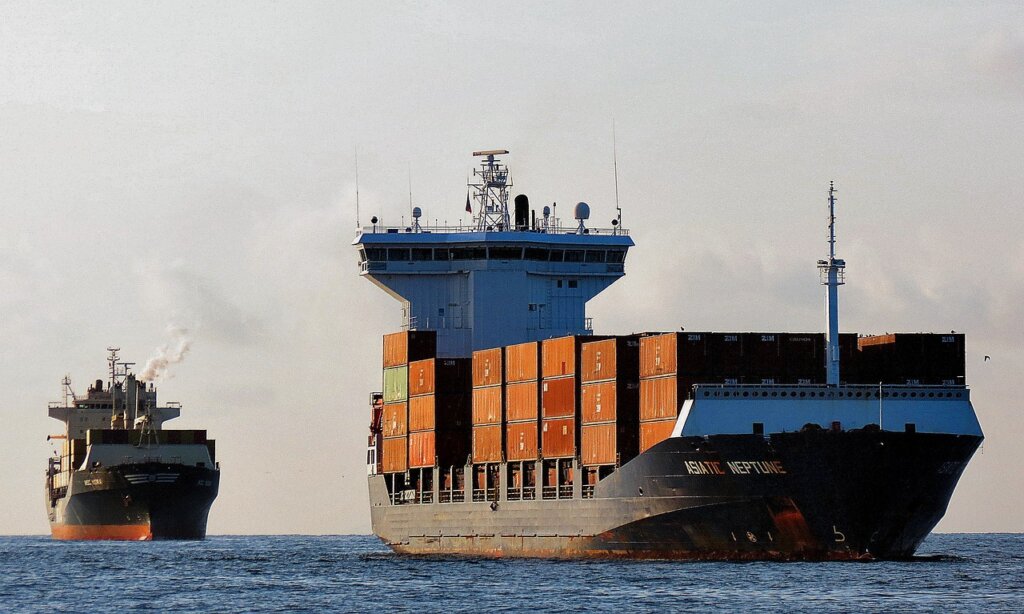
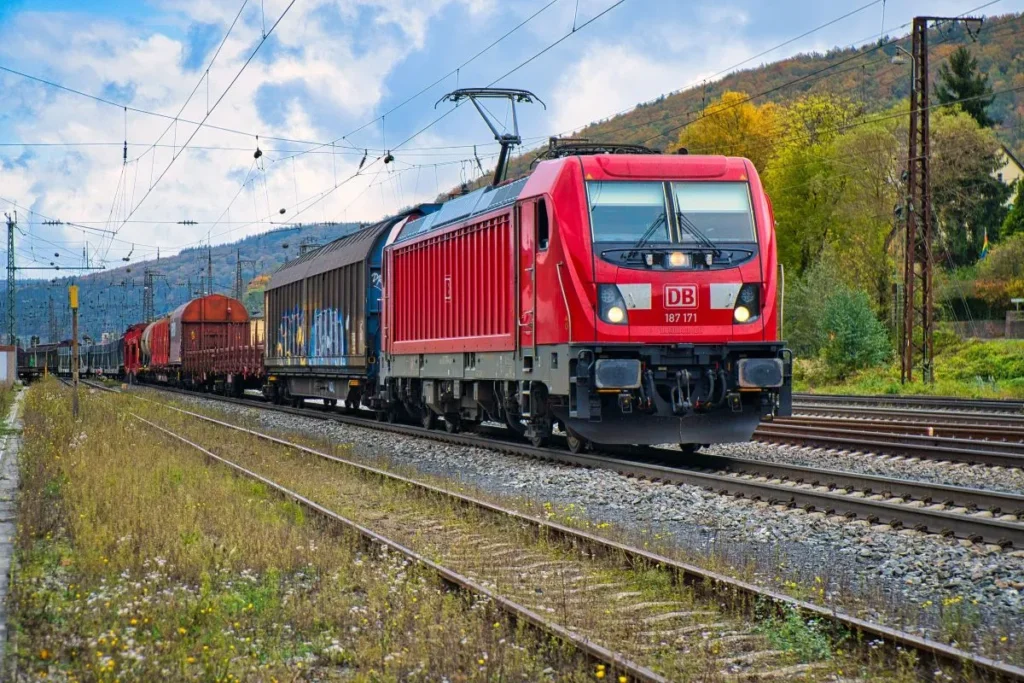
According to the Eurasian Rail Alliance Index (ERAI), total freight traffic on the Eurasian rail route fell to 572,300 TEU in 2025, down from 745,900 TEU the year before. On the core China–Europe–China corridor, volumes dropped from 380,600 TEU to 311,200 TEU. ERAI links that decline mainly to stronger competition from maritime shipping as sea freight rates softened through the year.
One of the most revealing parts of the report is the contrast between rail and sea pricing. Ocean rates moved up and down throughout 2025. Drewry’s world container index started the year high, peaked at $3,986 per FEU in early January, then spent much of spring in the $2,050–$2,550 range. It rose again in June, fell to roughly $1,650 in October, and ended the year at $2,213 per FEU.
Rail looked very different. ERAI says its composite rail index stayed in a much narrower band of around $3,200 to $3,300 per FEU throughout the year. That made rail easier to plan around, but it also meant its prices stayed well above sea freight once maritime rates came back down.
Read more: EU opens the door to faster public funding for rail, inland waterways and multimodal freight
The Shanghai–Rotterdam gap became hard to ignore
The report makes that especially clear on the Shanghai–Rotterdam corridor. In December 2025, shipping a container by sea on that route cost roughly $2,150 to $2,600 per FEU, according to ERAI’s cited expert data. The rail equivalent was $5,600 to $6,600 per FEU.
That does not mean rail lost all of its appeal. It was still faster than sea on many flows, and still offered more stable pricing. But by the end of the year, the difference in cost had become so wide that many shippers clearly chose the cheaper option.
The decline was not limited to one type of cargo
The weakness was also broad-based. The report says the three biggest cargo groups on the corridor remained electronics, mechanical equipment and automotive equipment, but all three lost volume in 2025. Electronics fell from 58,400 TEU to 37,700 TEU. Mechanical equipment dropped from 46,600 TEU to 32,800 TEU. Automotive equipment declined from 39,900 TEU to 32,500 TEU.
Taken together, those three categories accounted for a smaller share of total rail traffic than a year earlier. Their combined share fell from 38.1% in 2024 to 33.2% in 2025. ERAI presents that as a sign of gradual diversification, but it also shows that rail struggled to hold on even to some of the cargoes that have traditionally suited it best.
The broader market picture also points in the same direction. Upply says China–EU rail freight via the Northern Corridor fell to 310,579 TEU in 2025, a 14.1% year-on-year decline. It adds that the west-east leg was particularly weak: Europe-to-China volumes fell 22.7% to 38,422 TEU, the lowest level on record.
There were warning signs much earlier in the year. RailFreight reported in August 2025 that first-half China–Europe rail container traffic was already down 22%, to 160,600 TEU, with lower maritime rates putting rail under heavy competitive pressure.