The Council of the EU has formally adopted a targeted amendment to the bloc’s heavy-duty vehicle CO2 rules, giving truck manufacturers temporary extra flexibility in how they build up emission credits before 2030. The move was announced on 30 March 2026 and does not change the EU’s long-term CO2 reduction targets.
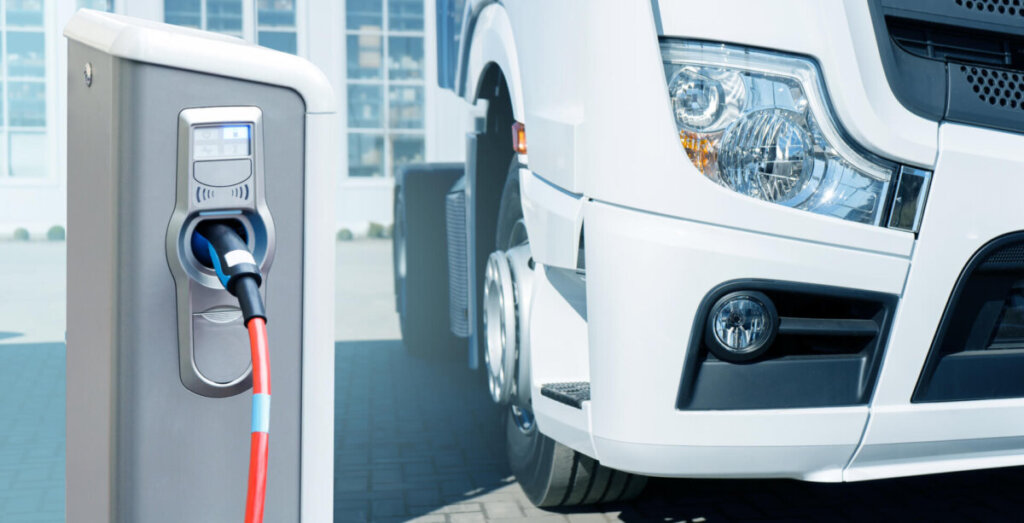
According to the Council, the amendment is intended to reflect “structural challenges” facing the sector, especially the slow rollout of public charging infrastructure along motorways. The aim is to support the transition to zero-emission mobility without altering the wider climate framework.
The practical change concerns the way emission credits are calculated between 2025 and 2029. Under the revised system, manufacturers will be able to accumulate credits if their emissions fall below their own specific annual CO2 targets, rather than the stricter linear reduction trajectory previously used between five-year target periods. The Council says this should allow truck makers to generate more credits ahead of 2030 and ease compliance from that point onwards.
More details: EU gives truck makers breathing space on CO2 rules
The updated mechanism applies to heavy lorries over 16 tonnes and certain bus categories over 7.5 tonnes, but not to urban buses, where zero-emission deployment is already considered more advanced and less dependent on motorway charging infrastructure.
The Council stressed that the amendment leaves the long-term targets unchanged. Under the current framework, heavy-duty vehicle manufacturers still face CO2 reduction targets of 15% from 2025, 43% from 2030 and 90% from 2040. The regulation will now be published in the Official Journal of the EU and will enter into force 20 days later. A broader revision of the heavy-duty CO2 rules is due in 2027.
Statements entered in the Council minutes suggest that not all member states are fully comfortable with the change. France, while supporting the amendment, said it regretted the lack of an impact assessment and warned that the new flexibility could weaken the market signal in favour of truck electrification. Malta raised concerns about the limited availability of zero-emission heavy-duty vehicles in small right-hand-drive markets, while Slovakia and Czechia backed the revision and suggested that a broader review might be needed even before 2027.