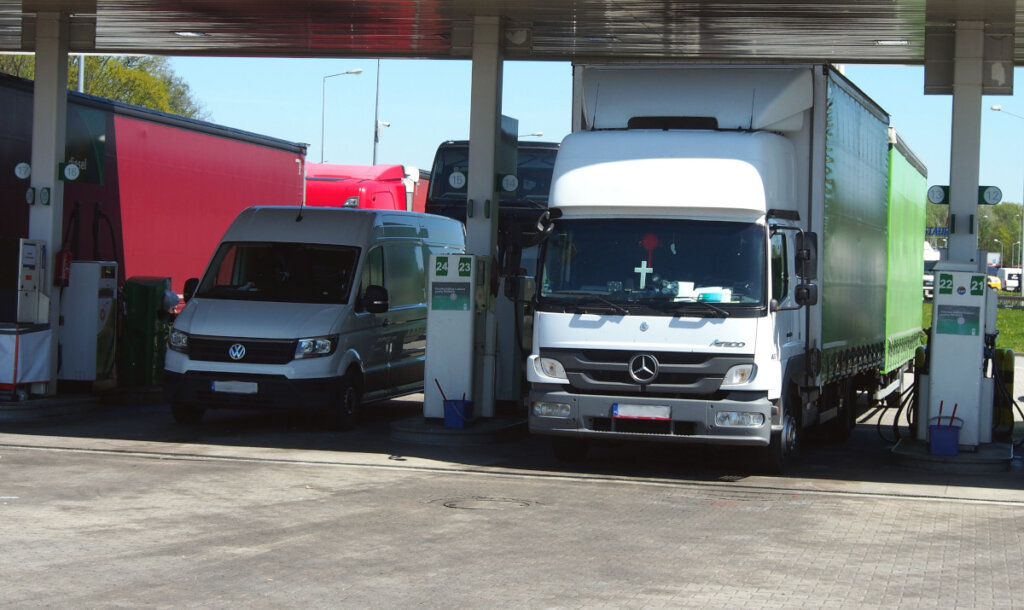
In just a few months, the light transport sector will face one of the biggest regulatory changes in recent years. From 1 July 2026, vans with a gross vehicle weight of 2.5–3.5 tonnes used for international goods transport will be required to use second-generation smart tachographs (G2V2). Their drivers will also become subject to the same working time regulations as truck drivers.
The changes are intended to improve road safety and ensure fair competition in road transport. At the same time, they mean that many companies will have to thoroughly reorganise their operations. Experts have no doubt that without proper technological, administrative and training preparation, some carriers may struggle to meet the new requirements. The question is what lies ahead for companies whose fleets rely mainly on vans.
Tachographs in vans are a major undertaking
From 1 July 2026, operators in the light transport sector who want to continue international goods transport will have to comply with the same rules on driving time and recording equipment as truck operators. The new requirements stem from EU Regulation 561/2006 and form part of the Mobility Package, which has been gradually implemented since 2020.
Few carriers are fully aware of the scale of the upcoming task. Purchasing and installing new-generation tachographs is only one of several steps that must be completed by the end of June 2026. Companies will also need to:
- issue driver cards,
- train staff in the use of tachographs and working time rules,
- adapt internal procedures.
Equipping companies with data-reading software or outsourcing settlements to specialist providers may help meet the new legal requirements. These regulations represent a significant financial and logistical challenge for the light transport sector, especially for smaller operators that rely exclusively or mainly on vans, explains Mateusz Włoch, expert in analysis and training at the Eurowag Group.
The only permitted device will be the second-generation smart tachograph (G2V2) — the latest homologated digital model that has already been mandatory in newly registered trucks for several years. Failure to install the device on time, or fitting an older tachograph, will constitute non-compliance with the law.
Not every van will need a tachograph
The obligation to install a G2V2 tachograph will apply to vehicles with a gross vehicle weight of 2.5–3.5 tonnes used for international road transport within the European Union, the EEA and Switzerland. The rules will apply to both newly registered and already registered vehicles, provided they are used internationally.
At the same time, the regulations include several exemptions:
- Vans used exclusively for domestic transport will not be required to install tachographs.
- Vans used for own-account international transport are exempt, provided that driving is not the driver’s main occupation.
- Vehicles designed to carry up to nine people including the driver are also exempt, even in international transport.
Across Europe, the obligation will affect tens of thousands of delivery vehicles. The cost of purchasing a second-generation smart tachograph is around €1,000 per vehicle, excluding installation. For larger fleets, this represents a considerable financial burden.
Moreover, most vans currently operating on European roads are not factory-prepared for tachograph installation. As a result, some companies may decide to change their business model — for example, by replacing vans with trucks or by withdrawing from international transport and focusing solely on domestic operations. Much will depend on whether international van transport remains profitable, particularly in light of strict working time regulations, Włoch adds.
What does a tachograph mean for van operators?
Installing tachographs brings entirely new responsibilities for companies operating vans in international transport. Businesses will need company cards, while van drivers will require driver cards to record driving, work and rest times.
The changes also require extensive staff preparation. Many van drivers will be subject to driving and rest time regulations for the first time and may have no previous experience using tachographs.
To avoid costly mistakes and infringements, companies should ensure training for all personnel involved in transport operations — from management and drivers to dispatchers and administrative staff. Employees will need to learn how to plan routes in line with driving time rules and how to correctly read and interpret tachograph data.
Failure to comply may result not only in financial penalties but also in vehicle immobilisation during roadside checks abroad, with authorities ordering immediate installation of the device at the operator’s expense, Włoch warns.
How companies can prepare
Companies that plan to continue using vans in international transport should begin preparations as soon as possible. The first step should be a fleet analysis to determine which vehicles will require G2V2 tachographs.
It is also advisable to book installation appointments at authorised workshops well in advance, as demand is expected to increase closer to the deadline. At the same time, companies should apply for driver and company cards, plan staff training and update internal procedures.
The choice of tools for reading and analysing tachograph data and for transport planning may play a key role in adapting to the new regulatory environment.