For many companies, this means the need to retrofit vans with a second-generation smart tachograph (G2V2), implement new procedures, and get the settlement of van drivers’ working time in order.
Who will be covered by the tachograph requirement in vans from 2026?
The new rules apply to light commercial vehicles (LCVs) with a gross vehicle weight:
- above 2.5 t up to 3.5 t,
- used in international carriage of goods or cabotage for remuneration,
- both as a standalone van and as a van-and-trailer combination (the gross combination weight counts).
The key point is that the regulations will cover both fleets of new vehicles and vans already in operation, which will need to be retrofitted with a second-generation smart tachograph. Installation may be carried out only by a certified workshop, which also performs calibration and applies a company lock to protect the data.
Some own-account transport operations or strictly defined categories (e.g., certain municipal services, special-purpose vehicles) may be exempt. In every case, however, it is worth analysing your business profile with a lawyer or transport advisor – in practice, the line between transport for remuneration and own-account transport can be thin.
On this occasion, it is also worth considering not only the installation of the device itself, but also equipping the company with systems for remote downloading and managing tachograph data files (from the driver card and vehicle unit). Remember that the additional obligations are not just direct financial outlays related to installing the device. It is also extra time spent on administration. Process optimisation through digitalisation should go hand in hand with meeting the new, legally mandated obligations for transport.
Timeline of changes – from trucks to 2.5–3.5 t vans
The introduction of mandatory tachographs in vans is part of a broader timeline:
- From 21 August 2023 – all newly registered vehicles above 3.5 t in the EU must be equipped with the version 2 smart tachograph (G2V2).
- By 31 December 2024 – vehicles in international traffic above 3.5 t with an analogue tachograph or a first-generation tachograph must be upgraded to smart tacho 2.
- By 19 August 2025 – vehicles with the first version of the smart tachograph in international transport are also subject to retrofitting to G2V2.
- From 1 July 2026 – the tachograph requirement and the application of driving time, rest and driver posting rules will be extended to 2.5–3.5 t vans in international transport and cabotage for remuneration.
In practice, this means that companies that previously focused on vans must, in a short time, go through a process similar to what heavy transport went through a few years ago: investment in equipment, changes in procedures, training and putting documentation in order. This is time-consuming for companies that operate internationally and want to remain legally compliant and competitive against transport carried out by heavy goods vehicles.
Van drivers’ working time: same rules as in heavy transport
From 1 July 2026, van drivers covered by the new regulations must comply with the same basic driving time and rest limits as truck drivers:
- a maximum of 9 hours of driving per day (with the option to extend to 10 hours twice a week),
- a maximum of 56 hours of driving per week and 90 hours over two consecutive weeks,
- a break of at least 45 minutes after a maximum of 4.5 hours of driving (with the option to split it into shorter periods),
- daily rest generally at least 11 hours (with limited exceptions),
- compensation to be taken.
Each driver must have a driver card, and data on their activity will be recorded in the tachograph memory and on the card. The obligations will also include rules on the posting of van drivers, including notification and settlement of working conditions in host countries.
For many companies operating with a fleet of delivery vehicles, the biggest change is not the installation of the tachograph itself, but entering the full working-time regime, including rest control, record-keeping and posting. Without orderly processes and access to up-to-date data in real time, organising drivers’ work will simply become too risky.
Haulier obligations: tachograph in practice
A haulier or company using vans covered by the new regulations will have to:
- equip vehicles with a second-generation smart tachograph (G2V2),
- ensure timely downloads of data from driver cards (at least once every 28 days) and from the tachograph memory (at least once every 90 days),
- store the data for the period required by regulations (in practice up to 1–2 years, taking into account working time checks and other obligations),
- analyse working time infringements and take corrective actions,
- train drivers in tachograph operation and the rules on driving time and rest periods,
- develop procedures for device malfunction, loss of a card, or a driver change.
The law requires data to be stored in an orderly manner, enabling it to be presented quickly during inspections by road transport enforcement authorities, labour inspectorates or other competent services in Member States.
Fines and risks for the driver, haulier and transport manager
The system of penalties for infringements related to working time and the tachograph is multi-level:
- fines for the driver (e.g., for exceeding daily driving time, shortening rest periods, or not having a driver card),
- administrative penalties for the haulier (e.g., for missing required downloads, lack of a device, tolerating infringements, manipulation),
- penalties for the person managing transport operations.
Current penalty schedules show that a single serious infringement can lead to fines from a few hundred euros upwards, depending on the Member State. Total penalties can rise quickly if inspectors identify additional breaches during the same check or suspect tachograph manipulation.
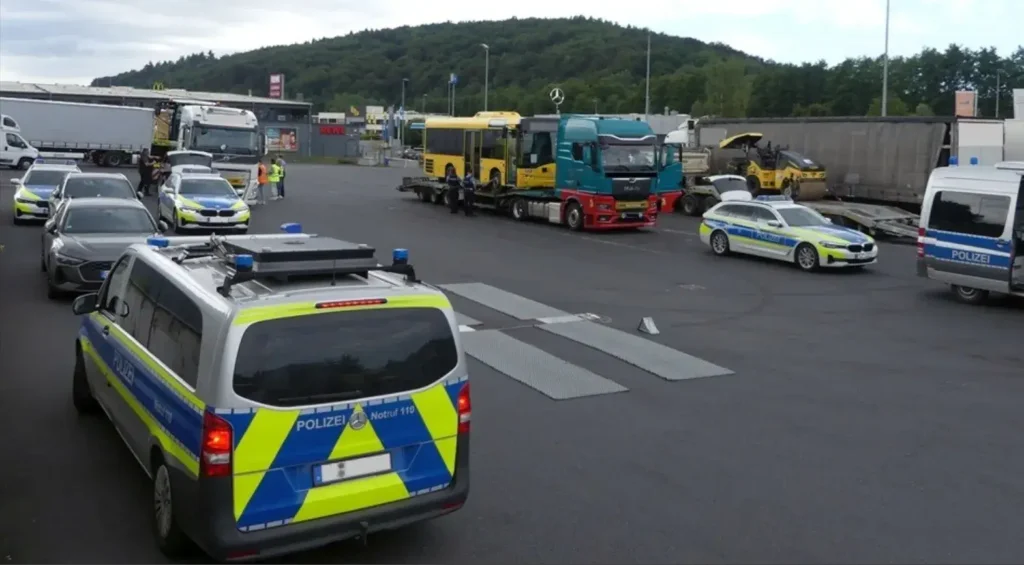
It is worth remembering that for 2.5–3.5 t vans, checks may intensify particularly in the first months of the new regulations, because for many administrations this will be a new group of entities within the Mobility Package.
Managing drivers and costs under tachograph rules in 2026
Bringing vans under the tachograph regime forces a different approach to transport planning. Key elements include:
- route planning that takes driving time limits and breaks into account,
- realistic estimation of travel time and the number of orders that can be handled by a single crew,
- linking planning with data on driver availability (working time, rest, extensions and reductions),
- transparent rules for settling pay, allowances and posting.
In many transport companies, planning is still done “by phone” and in spreadsheets. After 1 July 2026, such a model means high risk of:
- accidental non-compliance,
- administrative penalties,
- conflicts with drivers (e.g., over pay and working time records),
- problems in relationships with key customers if inspections reveal irregularities.
Digital solutions as the answer to the new obligations
The new regulations are also a strong impetus for digitalising transport management. The tachograph itself will not solve organisational problems – it is only a source of data. Without a system that collects and analyses this data and links it to routes and orders, the company will simply drown in obligations.
That is why the importance of the following is growing:
- remote downloading of data from the tachograph and driver cards,
- integration of the tachograph with GPS/telematics systems and OEM telematics,
- modules for managing orders and deliveries,
- mobile apps for drivers,
- cost and ESG reports based on vehicle data.
Hauliers, hang in there!
The mandatory tachograph for vans from 1 July 2026 is one of the most important changes for the light commercial vehicle segment in recent years. It covers LCV fleets – international and cabotage. The tachograph in delivery vehicles introduces strict working-time rules, expanded documentation obligations, and real financial risks in the event of infringements.
Companies that treat this change solely as the cost of installing the device will quickly feel the pressure of inspections and bureaucracy. Those hauliers and fleet owners who use this moment to digitalise transport management – combining the tachograph, telematics, order management and driver settlement – will gain a competitive advantage: lower TCO, better risk control and greater business predictability.