Safety systems in trucks and buses
The European Union is consistently increasing vehicle safety requirements within the next phase of the GSR (General Safety Regulation) regulation, which imposes the requirement for advanced safety systems in newly manufactured vehicles. From July 7, 2026, advanced emergency braking systems (AEB) will become mandatory in newly manufactured trucks. Previously, they were already mandatory in passenger cars and light commercial vehicles. At the same time from 2026, all newly homologated buses and trucks will have to be equipped with event data recorders (EDR), so-called “black boxes.” From 2029, they will cover all vehicles in these categories.
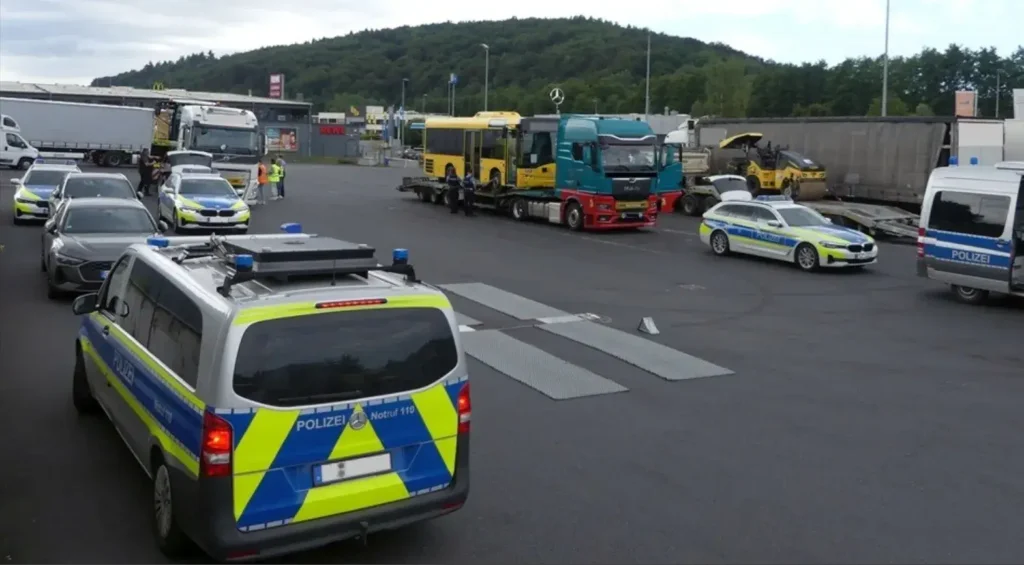
The aim of the changes is to improve road safety and level the playing field in road transport. Experts point out that some companies that do not prepare their fleet for the new technical requirements may have significant difficulties in continuing operations. The installation of new systems will require not only the purchase and installation of equipment but also staff training and updating internal procedures within companies. Carriers must also prepare for possible sanctions, including vehicle detention during foreign inspections.
Read more: EU realises Euro 7 truck rules went too far
Obligation of tachographs in vans
From July 1, 2026, vans weighing 2.5-3.5 tons performing international transport of goods will be subject to the obligation to use second-generation smart tachographs (G2V2) and working time regulations analogous to those applicable to truck drivers. This means major organizational changes, especially for smaller transport enterprises.
The purchase and installation of a tachograph is just the beginning of formalities and costs (the cost of one device is about 1,000 euros without installation). Companies need to issue driver cards and company cards, train staff, and update internal procedures and data reading software. Few vans are factory-adapted for the installation of G2V2 tachographs, which poses additional technical and logistical challenges.
Companies should already analyze their fleet, reserve installation dates at authorized services, and plan training for drivers and office staff responsible for route planning and working time control.
Tightened ADR regulations across the Union
From November 2, 2025, with full implementation by June 24, 2026, new rules for the transport of dangerous goods will be in force. The delegated directive (EU) 2025/1801 introduces a unified checklist, a new risk classification for violations, and extends responsibility to the entire logistics chain – from shippers to tank operators and recipients.
The new regulations define three risk levels:
- Category I – high risk: includes cases requiring immediate vehicle stoppage, such as leaks of hazardous substances, lack of documentation, or lack of an ADR driver’s certificate. It also includes events posing a threat of death, serious injury, or significant environmental damage.
- Category II – medium risk: concerns violations requiring immediate correction, such as malfunctioning fire extinguishers or incorrect markings, as well as events posing a risk of injury or environmental damage.
- Category III – low risk: refers to formal deficiencies or minor errors that can be corrected later without significant impact on safety.
The directive specifies the obligations of all transport participants, reducing the risk of interpretative ambiguities and enabling the unambiguous determination of responsibility.
ADR documents, including training certificates and written instructions, must be available in the vehicle cabin. Only compliance with these requirements avoids administrative and criminal sanctions, including vehicle detention.
Companies must update internal procedures, train drivers, and verify the obligation to appoint an ADR advisor according to new thresholds and exemptions.
Digitization of EKMT permits
From January 1, 2026, EKMT permits and carnets will be issued exclusively in electronic form. Paper documents are becoming history, requiring integration with ERP and TMS systems and staff training in handling new procedures.
For carriers, this means the need to update operational processes, transport schedules, and planning of international transport outside the EU and EFTA. Electronic carnets allow for faster inspections and reducing the risk of documentation errors but require full digitization and the implementation of systems compatible with EKMT.
Customs duties in e-commerce and the ICS2 system
From July 1, 2026, all shipments from outside the EU worth up to 150 euros will be subject to a flat customs duty of 3 euros. This is to limit the influx of cheap packages and organize the cross-border e-commerce segment, which generates increasing administrative costs and the risk of abuse. At the same time, the Import Control System 2 (ICS2) will become fully operational.
Recall that the European Commission allowed the possibility of so-called derogations, i.e., postponing the mandatory implementation of ICS2. A significant group of countries has taken advantage of it. Countries that granted derogations (obligation postponed to the end of 2025) include: Austria, Belgium, Croatia, Finland, France, Hungary, Ireland, Italy, Latvia, Lithuania, Luxembourg, Poland, Romania, Slovakia, Spain. In the countries that did not postpone the implementation – ICS2 has been in force since September 1, 2025:
Bulgaria, Cyprus, Czech Republic, Denmark, Estonia, Germany, Greece, Malta, Netherlands, Portugal, Slovenia, Sweden.
ICS2 requires the submission of an Entry Summary Declaration (ESD) before each delivery. Carriers and importers must integrate ERP and TMS systems with the ICS2 platform, test procedural compliance, and train staff. Failure to report may result in a fine of up to 5,000 euros, especially with a large volume of shipments.
The declaration must be submitted at least an hour before arrival at the EU border. It contains detailed information about the shipment, including the buyer, seller, place of receipt and delivery, as well as a six-digit HS code and a description of the goods. The carrier, who must obtain complete information from partners in the supply chain, is responsible for submitting full data.
The system’s goal is to identify threats early, increase border security, and improve information exchange between carriers and customs administrations.
Read more: Switzerland retires its truck toll device
Eco zones in the Netherlands, Italy, and Poland
On January 1, 2026, the Netherlands introduced a nationwide range of exemptions in zero-emission and ecological zones, extending the validity period of concessions for new vehicles that are not yet available in zero-emission versions, and indicating new thresholds for these vehicles. At the same time, municipalities will replace old road signs with new ones, informing about entry restrictions for specific vehicle categories.
In Italy, in October this year, a ban on the entry of Euro 5 Diesel vehicles in four northern regions – Piedmont, Lombardy, Emilia-Romagna, and Veneto will come into force, a year late. The restrictions will apply to N1-N3 category vehicles both Italian and foreign – in including trucks and vans from outside Italy. Penalties for breaking the ban start at 168 euros, and repeated violations result in a one-month driving ban. The ban will only apply to municipalities with over 100,000 inhabitants, not 30,000, as originally planned.
Another eco zone has been created in Poland. On January 1, 2026, Krakow introduced a Clean Transport Zone, covering approximately 60% of the city’s area. From January 2026, specific emission standards will apply: gasoline vehicles must meet Euro 4, and Diesels Euro 6. The system automatically qualifies vehicles with Polish registrations, and for visitors, hourly, daily, and monthly subscriptions are planned. The city will launch resident service points and online tools supporting businesses in registering vehicles and planning routes.
New minimum wage in Germany
Significant for carriers operating abroad will also be the change in the minimum wage rate in Germany. From January 1, 2026, the German minimum wage rose to 13.90 euros per hour. Another increase is planned for 2027 – when the hourly rate will be 14.60 euros. For the transport industry, this means additional costs. The German government estimates that additional payroll costs will amount to 2.2 billion euros in 2026 and 3.4 billion euros in 2027. Logistics associations from Germany warned that the increase of almost 14% is detached from the real productivity of enterprises and may threaten the stability of many companies, but the government did not listen to the industry’s voice and raised wages.
Transport companies will have to include higher costs in transport calculations and route optimization. It may be necessary to renegotiate rates with clients, change the employment structure, or, in extreme cases, limit operations or fleet size. Increases apply to both drivers employed in Germany and in international transport, which, combined with rising fuel costs, new technology, and legal obligations, places the industry in a situation requiring strategic decisions.