
A four-day enforcement operation on the M40 and M25 resulted in 99 offences being recorded, more than half of them for mobile-phone use.
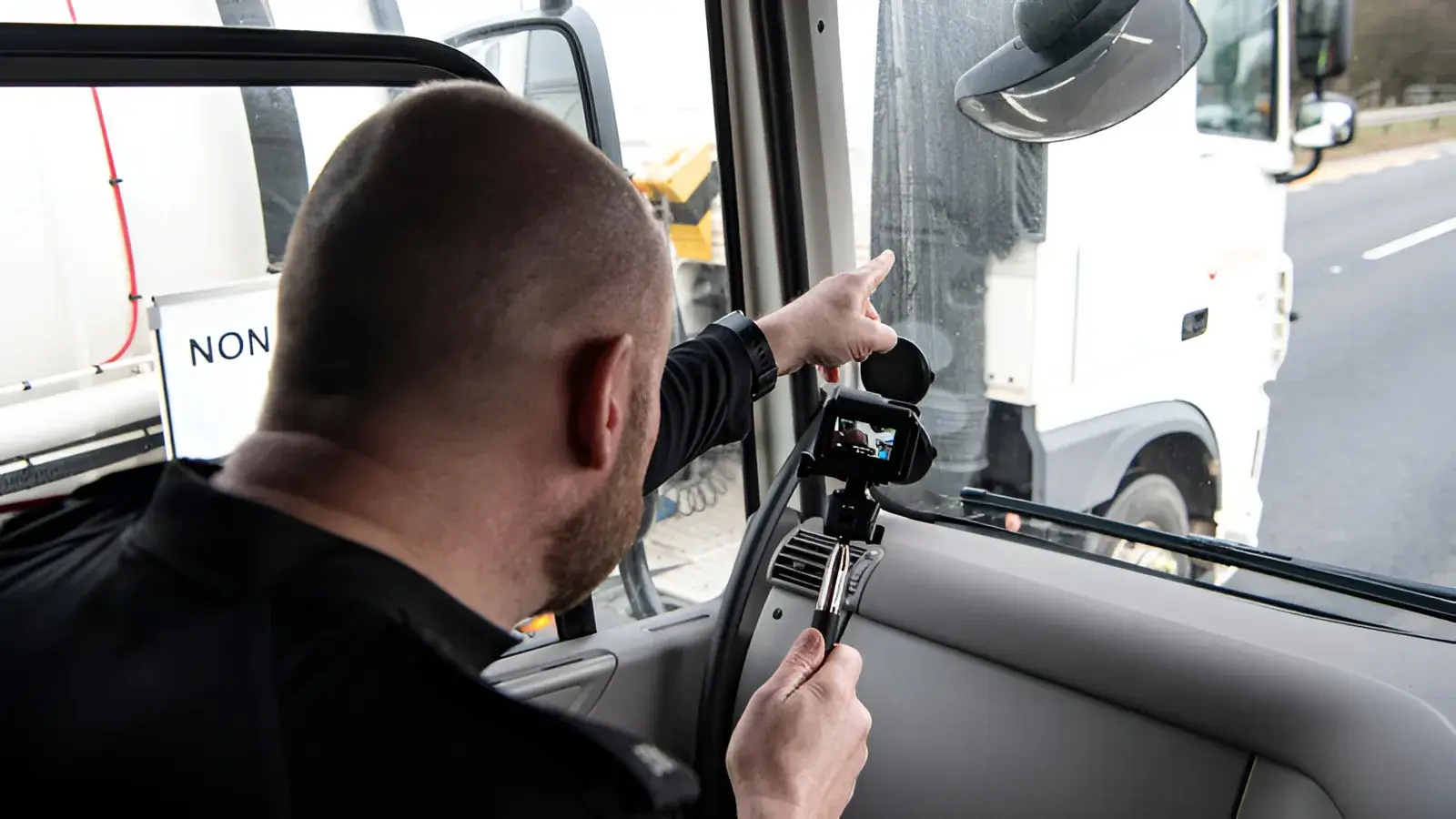
Thames Valley Police officers working as part of Operation Tramline used an unmarked HGV to travel alongside other vehicles. The elevated cab gives officers a view down into cars, vans and other lorries, allowing them to see behaviour that can be difficult to detect from an ordinary patrol vehicle.
According to the BBC, 54 drivers were penalised for using a mobile phone during the four-day operation. Some already had points on their licences, including one driver who reportedly had nine points and now faces the possibility of a driving ban.
The operation comes as official figures show that enforcement for mobile-phone offences is moving in the wrong direction. Home Office data for England and Wales show that recorded offences involving the use of a handheld mobile phone while driving increased by 11% in 2024 compared with the previous year.
Professional drivers still being caught
Similar behaviour has also been found during a recent Operation Tramline deployment in North Wales. Police stopped more than 30 vehicles during checks on the A55, A483 and A494 earlier in September, issuing tickets and graduated fixed penalties for offences including mobile-phone use, failure to wear a seatbelt and insecure loads.
North Wales Police said officers continued to find drivers of larger vehicles using phones behind the wheel. Sergeant Danny Rees of the Roads Crime Unit said it was particularly concerning that professional drivers, including HGV and LGV drivers, were still being caught using mobile phones while driving.
The findings are not isolated. During a 4.5-day Operation Tramline campaign in Suffolk in July, police stopped 163 vehicles and detected 184 offences. These included 40 drivers using mobile phones, 49 not wearing seatbelts, 17 instances of driving without due care and 12 insecure loads. Of the vehicles stopped, 49 were HGVs and another 38 were light goods vehicles.
What the HGV can see
Operation Tramline has been running since 2015 and uses specialist HGV tractor units supplied by National Highways to police forces. Their height allows officers to see directly into vehicle cabs, including other HGVs, while cameras can be used to record evidence. Supporting police vehicles can then stop the driver further along the road.
National Highways says police have now stopped more than 55,000 vehicles through the programme and identified more than 60,000 offences. Around 39% of vehicles stopped have been HGVs and 22% vans. Mobile-phone use is one of the two most commonly detected offences. National Highways records 16,388 mobile-phone offences since Tramline began, alongside 16,786 seatbelt offences.
The programme currently has three HGV camera cabs circulating between police forces in the North, Midlands and South of England and Wales. Further deployments are scheduled throughout the remainder of 2026.
Higher stakes for lorry drivers
For professional drivers, being caught can have consequences beyond the standard penalty. Using a handheld phone while driving normally carries six penalty points and a £200 fixed penalty. If the case goes to court, someone driving a lorry or bus can face a fine of up to £2,500 and may also be disqualified from driving.
Vocational licence holders can additionally come to the attention of the Traffic Commissioner. Official guidance states that handheld-device use by vocational drivers, particularly while driving an HGV or PSV, presents an unacceptable road-safety risk. Traffic Commissioners can suspend or revoke an LGV driver’s vocational entitlement or impose a period of disqualification.
Current guidance gives an example in which a driver reported for using a mobile phone in a commercial vehicle could face a four-week suspension of their LGV or PCV entitlement, although individual cases are considered on their circumstances.
There can also be implications for operators. Traffic Commissioner guidance states that where a vocational driver was using a handheld device to speak to an employer or customer, the commissioner may consider what that says about the operator’s repute.