
Key points
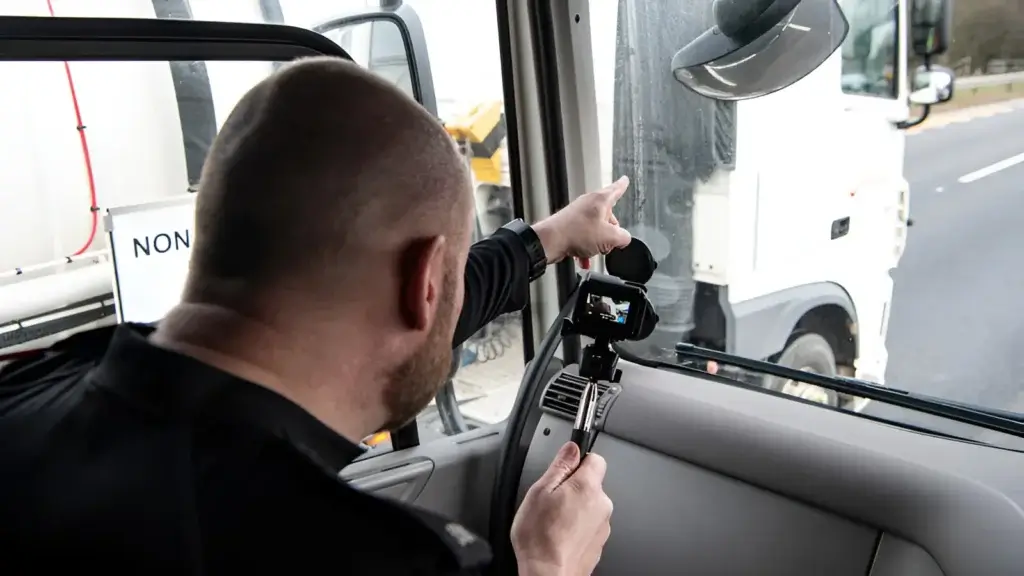
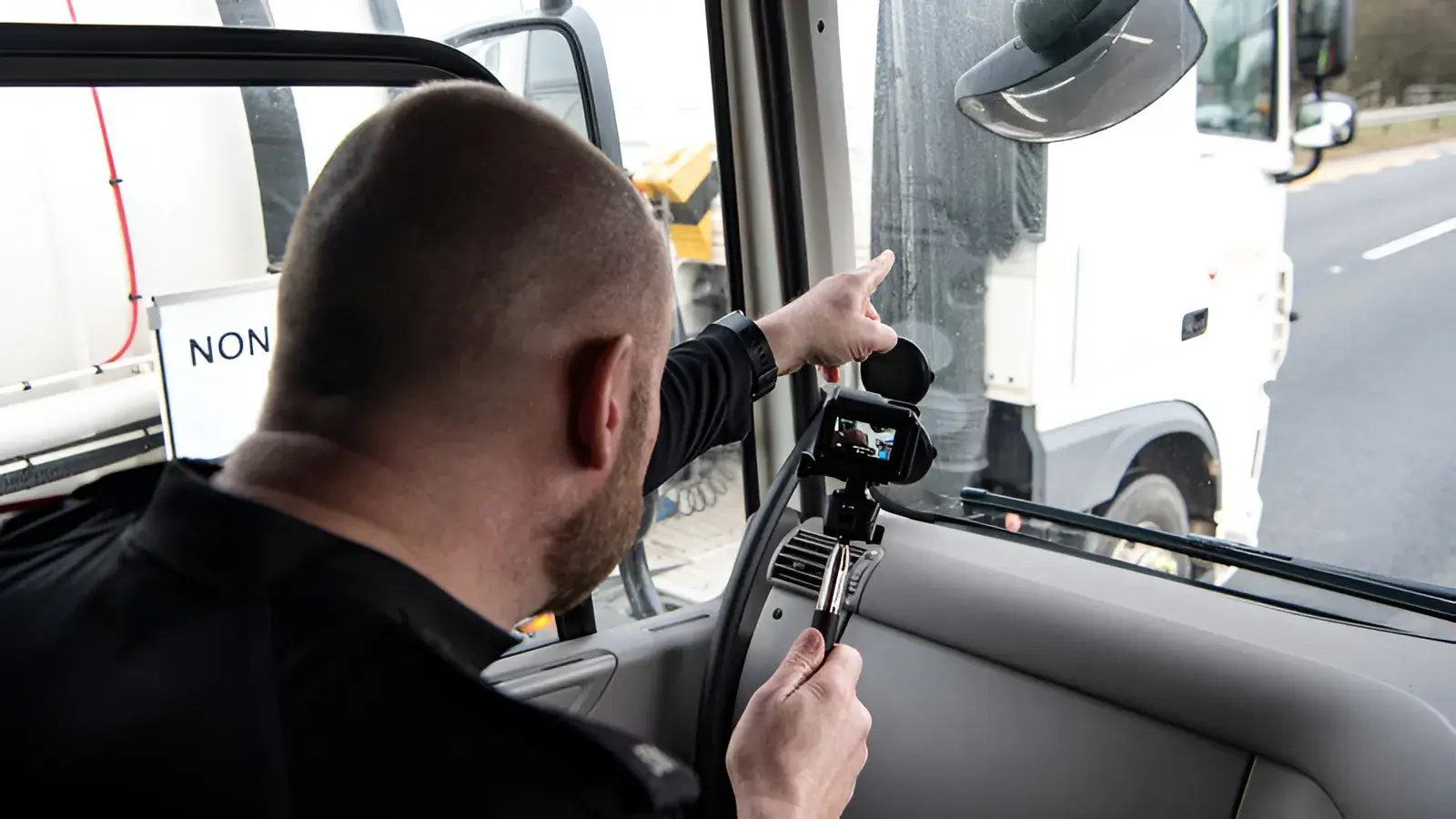
- Operation Tramline uses unmarked HGV cabs that give police a high view into vehicles.
- Since 2015, police have stopped over 55,000 vehicles in the operation, 39% of them HGVs.
- More than 60,000 offences were found, including 16,388 for using a mobile phone.
- 24 operations with police forces in the North, Midlands and South of England are scheduled from 12 October to 14 December 2026.
- In The Hague, Dutch police fined 55 drivers €440 each for holding a phone after watching traffic from a touring coach.
North Wales: more than 30 vehicles stopped
In September, the North Wales Police Roads Crime Unit used a Tramline cab on the A55, A483 and A494. According to North Wales Police, more than 30 vehicles were stopped. Officers found drivers using mobile phones, not wearing seatbelts and carrying insecure loads, and said phone use by HGV and LGV drivers remains a concern.
“A phone call, message or notification can wait,” said Sergeant Danny Rees. Marie Biddulph of National Highways added that drivers are four times more likely to crash if they use their phone.
trans.info reported on the North Wales operation in September.
Where the cabs go next
National Highways lends three HGV camera cabs to 36 police forces in England and Wales. According to its Operation Tramline page, the autumn programme includes:
- North: West Yorkshire (19 Oct), North Yorkshire (26 Oct), Cleveland (2 Nov), Durham (9 Nov), Northumbria (16 Nov and 7 Dec), South Yorkshire (23 Nov), Cumbria (30 Nov),
- Midlands: Lincolnshire (19 Oct), West Midlands (26 Oct and 14 Dec), West Mercia (2 Nov), Northamptonshire (9 Nov), Warwickshire (16 Nov), Staffordshire (30 Nov),
- South: Suffolk (19 Oct), Wiltshire (2 Nov), Sussex (9 Nov), Essex (16 Nov), Devon and Cornwall (30 Nov), Dorset (7 Dec).
The first operations on 12 October took place in Merseyside, Nottinghamshire and Wiltshire. The page lists the week commencing and the force, not exact roads, so drivers should expect the cabs on any major route.
Since 2015, police in the operation have stopped more than 55,000 vehicles: 39% HGVs, 22% vans and 35% cars. Over half of the more than 60,000 offences were for not wearing a seatbelt (16,786) or using a mobile phone (16,388). In the UK, using a hand-held phone while driving brings a £200 fine and six penalty points.
Europe: coaches, campers and a high view
The idea of watching from above is spreading across Europe.
Netherlands. On 5 October 2026, police in The Hague watched traffic from a touring coach. They issued more than 80 fines, including 55 for holding a phone while driving, at €440 each. The check was part of ROADPOL’s European “Focus on the Road” week, held from 5 to 11 October in several countries.
Dutch police have used this method for years. In 2017, officers working from a camper van on the A6, A7, A28 and A32 fined 355 drivers for using a phone, 104 of them truck drivers.
Germany. German traffic police copied the Dutch idea with a camper van in which an officer films truck and van drivers. If a driver is seen with a phone, the van overtakes and shows a “POLIZEI, STOP” sign. In Germany, using a phone at the wheel costs €100 and a penalty point.
The takeaway for drivers
Whether it is an unmarked lorry cab in Yorkshire, a coach in The Hague or a camper on a German autobahn, the message is the same: the higher the view, the easier it is to see a phone in a lap. With more than 20 UK operations still to come this year, put the phone away before you set off.