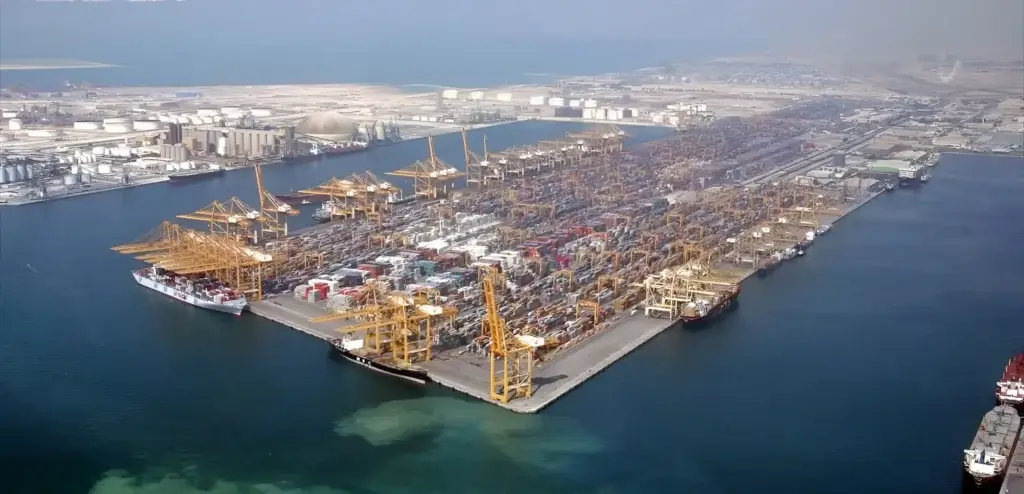
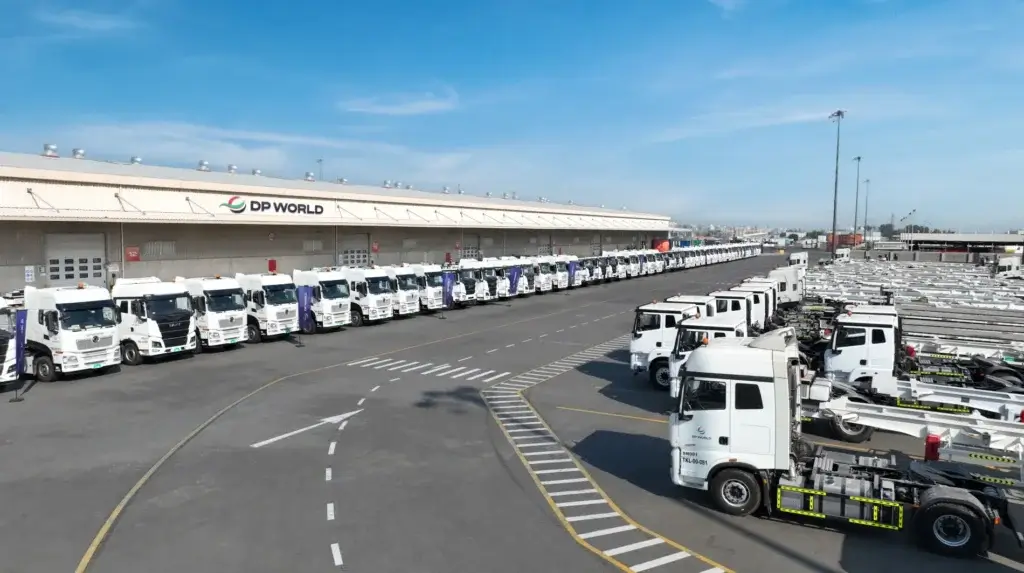
Landbridge routes through Oman, Saudi Arabia, Jordan and other regional corridors have become an important emergency option for shippers trying to keep cargo moving when Gulf shipping is disrupted. Several major logistics and shipping companies have explored or expanded such solutions during the crisis, using ports outside the most exposed areas and moving goods inland by road.
However, the latest escalation around Hormuz has underlined a hard operational reality: land routes can support selected shipments, but they cannot absorb the volumes normally carried by container ships.
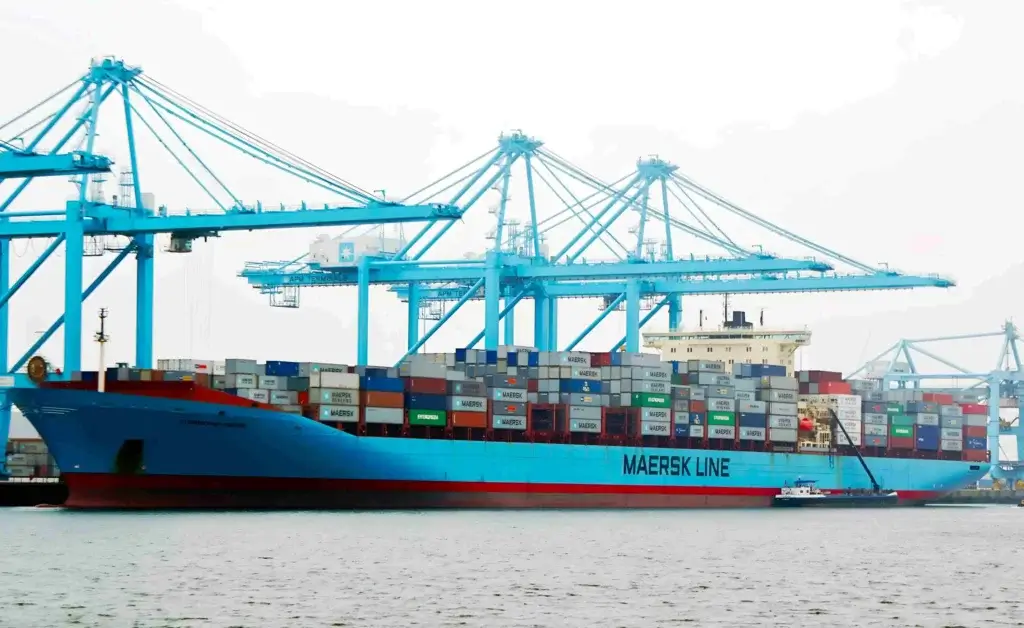
Kuehne+Nagel chief executive Stefan Paul told the Financial Times that road transport into the Gulf was not a sustainable mid- or long-term substitute for shipping through the Strait of Hormuz. He pointed to the basic imbalance between vessel capacity and trucking demand, saying that “the sheer mass of a container ship” could not be matched by available lorry capacity.
The numbers explain the problem. A truck can carry only a tiny fraction of the cargo moved by a large container vessel. Once freight is diverted from sea to land, every shipment needs road capacity, drivers, permits, customs handling, port space and border processing. During disruption, those bottlenecks build quickly.
Major logistics players have already turned to trucks and landbridge options to recover at least part of the capacity lost when Gulf shipping is disrupted. Maersk has expanded road and inland services across markets including Saudi Arabia, Kuwait, Bahrain, the UAE, Qatar and Iraq. CMA CGM has used alternative gateways such as Khor Fakkan, Fujairah, Sohar and Jeddah, with onward feeder, landbridge and road links into the UAE and the northern Gulf. Rhenus has launched a Jordan corridor connecting Europe and Türkiye with Gulf markets, while MSC has also been linked to Saudi landbridge solutions. These examples show that trucks have become part of the crisis response — but mainly as a pressure valve for selected flows, not as a replacement for Hormuz shipping.
According to the FT, strong demand for trucks has already pushed lorry hire costs in the region to almost $8,000 per month, around 25% higher than before the conflict. Queues have also been reported at border crossings, including routes from Oman into the United Arab Emirates.
Security fears rise after fresh tanker attacks
The pressure on alternative routes has increased again after three merchant vessels were hit in or near the Strait of Hormuz on 7 July, according to maritime and news reports.
UK Maritime Trade Operations reported one incident involving a tanker transiting the strait, saying the vessel had been struck by an unidentified projectile and was believed to have sustained structural damage. No casualties or environmental impact were reported, and UKMTO advised vessels to transit with caution while the incident was investigated.
AP, citing the UK maritime agency, reported that three tankers were struck by projectiles in the waterway. One tanker travelling off the coast of Oman caught fire after being hit, while two other vessels sustained damage but continued their voyages. AP reported no injuries in those two cases.
The attacks were followed by a new US military response. US Central Command said American forces had launched strikes against Iran after what it described as Iranian attacks on three commercial vessels transiting the Strait of Hormuz. Reuters reported that the strikes marked the first known US military action against Iran since late June, when several days of strikes and counterstrikes took place.
The incidents have sharpened concerns for shipping companies just as traffic through the waterway had begun to recover under the temporary US-Iran ceasefire. For logistics operators, they also reinforce the role — and the limits — of Gulf landbridge options: road corridors can help keep some cargo moving during a crisis, but they cannot remove the underlying exposure of regional supply chains to disruption in the strait.