Key points:
- Italy’s temporary checks will apply from 1 August to 1 September 2026.
- They cover Italy’s internal Schengen air and sea borders with Spain.
- Rome cites risks to public order and internal security connected to events in Ceuta.
- Italy also points to the possibility of “secondary movements” of third-country nationals within the Schengen area.
- Germany intends to extend controls on all its land borders beyond mid-September 2026.
- Berlin has not yet announced a new end date.
Italy’s move highlights that free movement within the Schengen area can still be restricted temporarily. While the decision does not affect Italy’s land borders, it may change how some air and sea connections between Italy and Spain are handled.
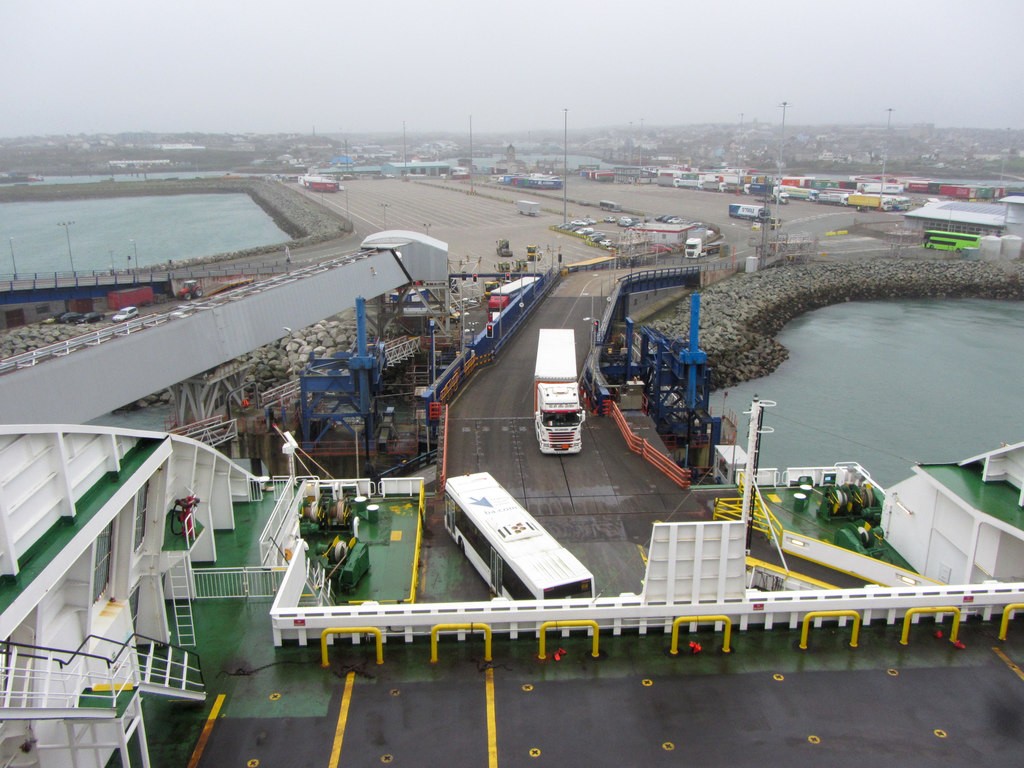
For road transport, the most tangible impact is likely to be on ferry routes. Carriers and drivers moving between the two countries should be prepared for additional document checks and potentially longer processing times at ports.
Why Italy is tightening checks
Italy notified the European Commission that it will reintroduce controls from 1 August to 1 September 2026 on internal air and sea borders with Spain.
Italian authorities said the step responds to a serious risk to public order, internal security and the management of migration flows.
The decision is linked to recent developments in Ceuta, Spain’s autonomous city in North Africa, where large numbers of third-country nationals crossed the border irregularly.
Italy is concerned that some of those arriving could later travel onward to other Schengen countries. In the Commission documentation, this is described as the risk of secondary migration movements.
No checks planned at Italy’s land borders
Italy’s announcement is limited in scope. Only internal air and sea borders with Spain are covered.
That means there will be no blanket, systematic checks across all crossings between Italy and other Schengen states.
From a transport perspective, ferry traffic is the key area to watch. Drivers using maritime services between Spain and Italy may face document inspections on arrival at port or before continuing their journey.
The measure does not automatically imply delays on every sailing or flight. However, during the period it is in force, longer border procedures are possible—particularly at peak times.
Schengen rules allow temporary internal border checks
Internal border checks in Schengen are intended to be exceptional. However, the Schengen Borders Code allows member states to reintroduce them temporarily when there is a serious threat to public order or internal security.
Any such step should be limited to exceptional circumstances and follow the principles of necessity and proportionality. Controls can cover all internal borders of a country or be restricted to specific sections, ports or connections.
The decision is taken at national level, but the country introducing checks must inform the European Commission and other member states.
Germany signals checks will continue after mid-September
Alongside Italy’s decision, Germany has indicated another extension of its own border controls. Federal Interior Minister Alexander Dobrindt said Germany wants to retain the option of internal border checks beyond September 2026.
The current arrangement is set to run until mid-September, but the minister did not provide a new end date.
Dobrindt said the aim is to preserve the results achieved so far in reducing irregular migration. He also argued for flexible controls that can be adjusted to the situation, citing events in Ceuta as one of the factors.
Checks remain in place on all German land borders
Germany introduced controls on all of its land borders on 16 September 2024, and they have been extended several times since.
They apply at the borders with:
- Poland,
- the Czech Republic,
- Austria,
- Switzerland,
- France,
- Luxembourg,
- Belgium,
- the Netherlands,
- Denmark.
In February 2026, Germany’s Interior Ministry extended the controls for another six months, from 15 March until mid-September 2026.
Dobrindt’s latest comments suggest the checks will not end when that deadline expires. For now, however, Berlin has not set out the formal timeframe for the next extension.
More friction points across Schengen
Italy’s short-term controls and Germany’s planned extension show how temporary internal checks have become a recurring feature of the Schengen landscape.
For road hauliers, land-border controls usually have the biggest operational impact, as they can create queues, complicate time planning and disrupt delivery schedules—especially on key freight routes.
Italy’s decision is narrower, focusing on air and sea links with Spain. Even so, it could affect ferry-based operations, including the movement of drivers and heavy goods vehicles between the two countries.
Italy plans to end the checks on 1 September 2026. Germany has already indicated that its controls will continue after mid-September, although a new end date has not yet been announced.
Drivers should also be prepared for additional checks and enforcement risks in neighbouring countries, where automatic fines may apply differently depending on registration.
In August, planning may be further complicated by public holiday HGV bans across Europe.