Key takeaways:
- BdKEP estimates that rates for international transport by light vehicles are currently 35–80% higher.
- Immediately after 1 July, increases of 100–200% or more were reported, although this was a temporary shock.
- Available capacity remains tight, even as more vehicles return to service after tachograph installation.
- On a 1,500-kilometre route, a single driver subject to driving-time rules may need more than 42 hours instead of approximately 27.5 hours.
- BdKEP puts the cost of retrofitting one vehicle with a tachograph at approximately €3,500–€4,700.
- Some operators are considering vehicles below 2.5 tonnes, heavier equipment or leaving the international transport market altogether.
- Industry estimates suggest that the new rules could affect approximately 40,000 vehicles from Poland operating in this segment.
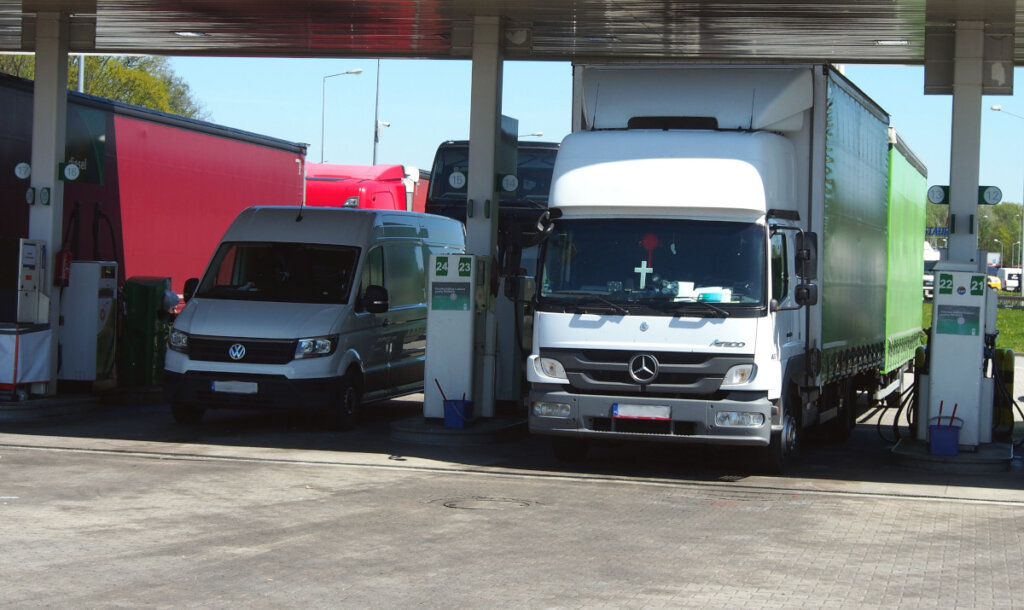
The first weeks under the new rules have made one thing clear: the change involves far more than installing another device in a vehicle. The tachograph requirement has changed a core part of the international light-transport business model: the ability to cover long distances at short notice with one vehicle and one driver.
BdKEP, the German association representing the courier, express and parcel sector, has gathered initial market feedback from Germany, the Netherlands, France, Poland and Romania since 1 July. Its members report restricted capacity, higher prices and early attempts to redesign operations around the new requirements.
The 35–80% figure is not based on a published statistical study. BdKEP has not disclosed a methodology, sample size or dataset that would support treating it as the average increase across the entire market. Andreas Schumann presents it as a current market observation covering international light transport.
The association says the initial spike was even sharper. During the first weeks after 1 July, reported prices were as much as 100–200% higher than before. BdKEP describes this as a temporary shock, driven partly by the limited number of vehicles ready to operate under the new rules.
As workshop backlogs began to ease and retrofitted vehicles returned to the road, availability started to improve. However, BdKEP expects the market’s underlying cost base to remain higher.
Many vehicles were not ready for 1 July
The initial disruption was amplified by the low level of preparation across parts of the fleet. In a survey cited by BdKEP and conducted in mid-May, only 27.7% of companies said they were fully prepared for the new requirements, while 46.5% considered themselves unprepared. At the same time, 88% of vehicles still required retrofitting.
Preparation levels improved shortly before the rules took effect, but the gap did not disappear. In a June survey by Kienzle Automotive, 78% of respondents described themselves as well or very well prepared. Actual implementation lagged behind that confidence: more than one-third had not completed tachograph installations, and 15.6% had not started the process.
BdKEP notes that the Kienzle survey covered 116 customers and was not representative of all German fleets. It nevertheless helps explain why the supply of available vehicles could fall so sharply in the first weeks after 1 July.
The cost of compliance is another obstacle. Figures cited by BdKEP put the price of retrofitting a single vehicle with a tachograph at approximately €3,500–€4,700. For larger fleets, that represents a substantial upfront investment before the additional costs of reorganising driver operations are taken into account.
Why 1,500 km changes the cost equation
The impact is most visible on long-distance express routes. According to an industry simulation, a 1,500-kilometre journey that previously fell outside the driving-time limits applying to this segment took approximately 27.5 hours. With one driver now subject to driving and rest requirements, the same journey can take more than 42 hours. That adds more than 14 hours to the journey.
A carrier that wants to maintain the previous delivery time may need to send two drivers. That keeps the schedule intact but significantly increases the cost of the trip. The economics of express transport are therefore changing after years in which the segment relied on the flexibility of light vehicles.
Vehicles up to 3.5 tonnes could carry relatively small but urgent loads across very long distances while facing fewer restrictions than heavy trucks. Since 1 July, that competitive advantage has been substantially reduced.
Operators may move outside the 2.5–3.5-tonne range
One of the clearest market responses is growing interest in vehicles outside the range covered by the new rules. BdKEP points to vehicles with a gross vehicle weight just below 2.5 tonnes, including models rated at 2,490 kilograms. They offer less payload, but in some types of express transport they may preserve part of the operational flexibility that operators previously had.
The alternative is to move in the opposite direction and use vehicles above 3.5 tonnes. BdKEP says some carriers are considering trucks with a gross vehicle weight of 7.5 tonnes. In that segment, tachographs and drivers’ hours and rest rules have long been a standard part of operations, while the cost can be spread across more pallets and a larger payload.
That approach will not work for every type of shipment. When the load is small, deploying a larger vehicle may make little financial sense.
As a result, the 2.5–3.5-tonne segment may become the most difficult to operate profitably. It once combined substantial payload capacity with more freedom to organise trips than heavy trucks allowed. The regulatory change has removed part of that advantage.
BdKEP identifies a third response: some companies are considering leaving international light transport altogether. The association cites installation costs, additional administrative duties and lower daily mileage caused by mandatory driving and rest periods as key reasons.
Why Poland is particularly exposed to the changes
The change is also highly significant for Polish carriers. Industry estimates cited in the sector suggest that the new rules could affect approximately 40,000 vehicles from Poland operating in this segment. That figure illustrates the scale reached across Europe by the international light-transport model used by Polish companies.
This does not mean those vehicles were being used to circumvent working-time rules. Until 30 June 2026, they simply operated under a different legal regime from heavy trucks. Since 1 July, one of the main features of that model has disappeared.
Germany’s geographic position also matters. A large share of freight moving between Central and Eastern Europe and France, Belgium, the Netherlands or Spain travels through the German road network. In practice, that means vehicles running east–west international routes are frequently exposed to checks there.
German checks began on the first day
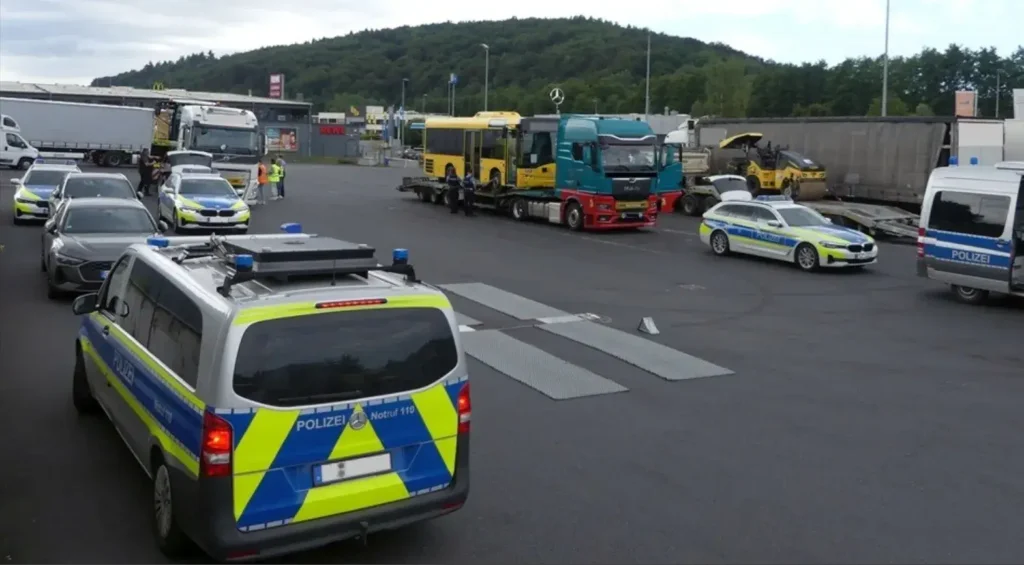
The new requirements have been enforced on the roads from the outset. On 1 July, during checks on the A7 motorway near Kirchheim, German authorities stopped three light vehicles without the required tachograph. The vehicles could not continue until the violations had been corrected. Two months on, however, the more important issue for the market is not the number of fines but how companies are responding.
BdKEP reports limited capacity, rising costs and cases of operators considering an exit from international transport. The association is also examining how the new rules are being applied in several European countries, including exemptions from tachograph requirements.
Express transport is harder to price
For years, international light transport occupied a distinctive position between conventional courier operations and heavy road freight. These vehicles were large enough to handle commercial shipments over long distances, yet faced fewer restrictions than trucks. That flexibility was particularly valuable for urgent consignments, where delivery time was a key commercial factor.
The new rules have narrowed the gap between these segments.
A carrier operating a van from Poland to France must now factor in more than the cost per kilometre. Driver availability, mandatory rest periods and the effect of the rules on the delivery deadline all have a much greater impact on the freight quote.
In some cases, the result will be a higher price. In others, carriers may need a second driver, a different vehicle or may decide to turn down some jobs.
The changes could also shift freight between transport segments. BdKEP notes that some shipments may move to groupage transport, which has long operated under the driving and rest-time rules that apply to heavy road transport. Not every express shipment can be handled this way, particularly when fast delivery and minimal handling are essential.
The market has not stabilised yet
The first market reactions already point to a clear direction. Limited vehicle availability, higher costs on long routes and increased interest in equipment below 2.5 tonnes or above 3.5 tonnes show that operators are changing not only how they work but also the structure of their fleets. July brought a temporary price shock, but improving vehicle availability does not mean a return to the previous conditions. According to BdKEP, structurally higher costs are now part of the new market model for international light transport.
It remains unclear whether the segment will retain its previous scale or whether other vehicle categories and operating models will absorb part of this freight.