
March brought a recovery in several locations, but the results point to an uneven market: stronger flows from parts of Asia and higher liquid-bulk volumes sat alongside weaker European exports, reduced steel traffic and disrupted vessel schedules.
| Port / operator result | Q1 2026 total throughput | Year-on-year change | Container result |
| HHLA terminals | 1.462m TEU | -5.3% | Hamburg terminals: -6.6% to 1.374m TEU |
| Port of Hamburg | 27.8m tonnes | -2.0% | 2.0m TEU, -1.6% |
| Rotterdam | 103.0m tonnes | -0.7% | TEU +0.3%; tonnes -3.2% |
| Antwerp-Bruges | 65.5m tonnes | -3.2% | TEU -2.6%; tonnes -5.5% |
A difficult January, then a partial recovery
Snow, ice and storms were a common feature of the quarter. Hamburg said January conditions made cargo handling more difficult across the North Sea coast, although nautical access to the port remained available. Stronger performance in February and March largely recouped the earlier shortfall.
At HHLA, winter conditions restricted terminal operations and caused rail cancellations and delays through frozen points, track closures and other disruption. Group container handling fell 5.3% to 1.462m TEU, while intermodal transport declined 1.5% to 489,000 TEU. Road transport was down 4.5% to 65,000 TEU, while rail traffic fell 1.1% to 424,000 TEU.
Antwerp-Bruges faced a similar sequence, compounded by severe storms in the Bay of Biscay until mid-February and a four-day strike over pension reform. The port estimates that these disruptions cost around 100,000 TEU, as vessels were diverted and some scheduled calls could not be handled fully. Volumes recovered from mid-February and particularly in March.
Trade patterns remain uneven
Hamburg’s container traffic illustrates the changing geography of demand. Volumes with Malaysia rose 54.5%, India increased 14.8% and Singapore was up 5.2%. Traffic with China, however, fell 3.0%, while US volumes dropped 24.5%. Conventional general cargo declined 9.7%, largely because of lower steel-product exports.
HHLA also reported weaker North American and Far Eastern traffic, particularly China, at its Hamburg terminals. Feeder volumes from Scandinavia, Lithuania and the UK declined, though German and Polish cargo increased. HHLA’s international terminals provided an offset: throughput there rose 21.5% to 88,000 TEU, supported by HHLA PLT Italy and Container Terminal Odessa.
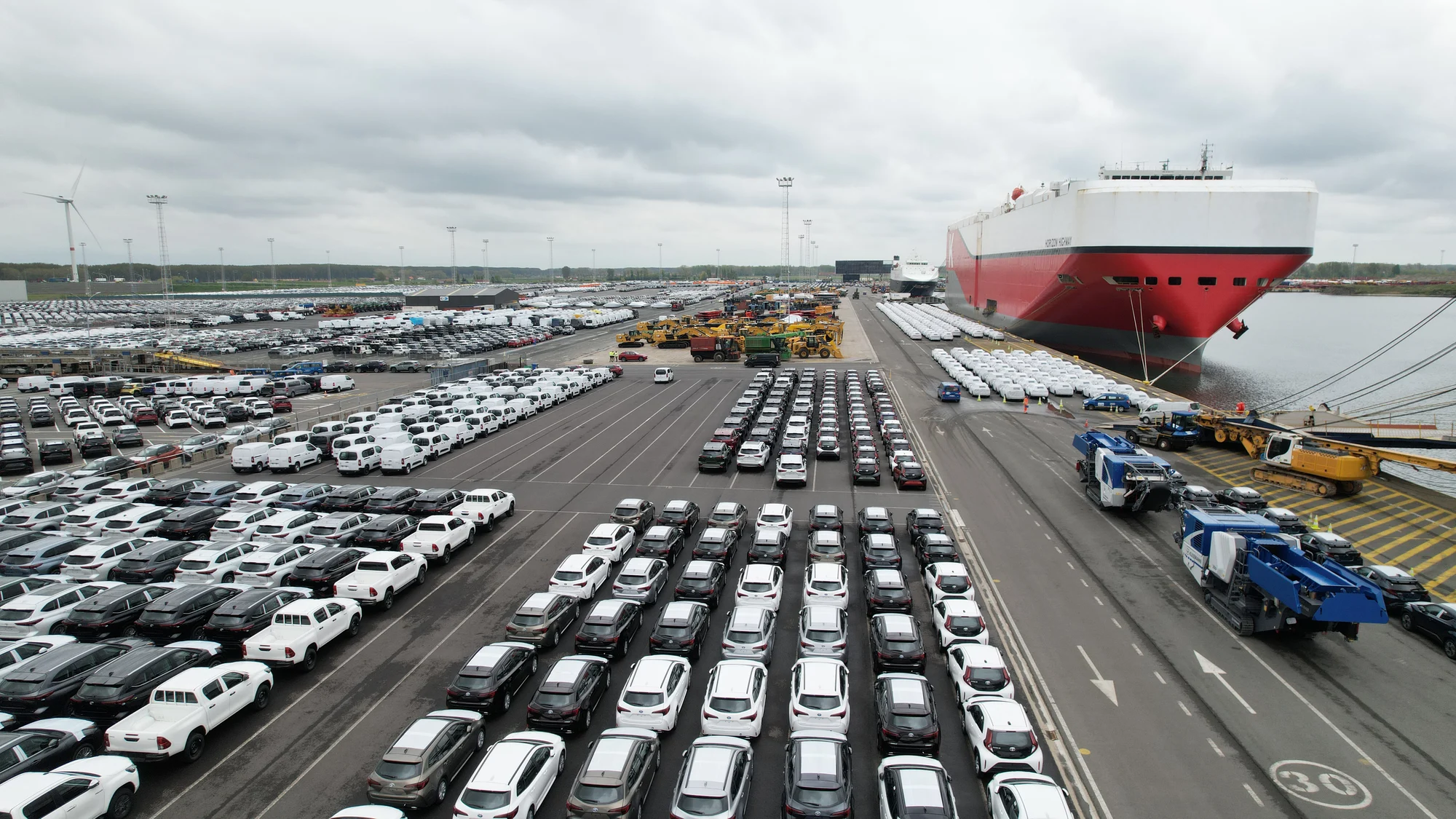
Antwerp-Bruges also cited weak Western European exports and lower steel exports to the US, Mexico and Canada. The port linked the decline in conventional general cargo to lower steel exports and the entry into force of the EU’s Carbon Border Adjustment Mechanism on 1 January 2026. RoRo traffic was an exception, increasing on higher volumes of new vehicles and high & heavy equipment.
Rotterdam’s liquid bulk offsets weaker industrial cargo
Rotterdam was the most stable of the four in overall tonnage terms. Total throughput fell only 0.7% to 103.0m tonnes. Liquid bulk rose 2.2%, led by a 10.3% increase in mineral-oil products and a 1.7% rise in LNG. Crude-oil throughput reached 25.2m tonnes, up 1.7%.
Container throughput increased 0.3% in TEU, but container tonnage fell 3.2% as empty-container exports to Asia rose 14%. The port also said an update to a major terminal’s operating system held volumes below expectations. Inland-container volumes rose 11%, driven by larger calls and expanded services from Asia and North America.
The Strait of Hormuz disruption had little direct effect on first-quarter figures, but Rotterdam expects a clearer impact in Q2. The port said five tankers originally heading for Rotterdam had changed course towards Asia as oil-product prices there rose. Rotterdam obtains 10% of its crude-oil throughput and 14% of oil-product throughput from Persian Gulf countries.
Antwerp-Bruges also expects the conflict’s main initial effect to be indirect: higher energy, bunker and transport costs, alongside further pressure on European industrial competitiveness.