

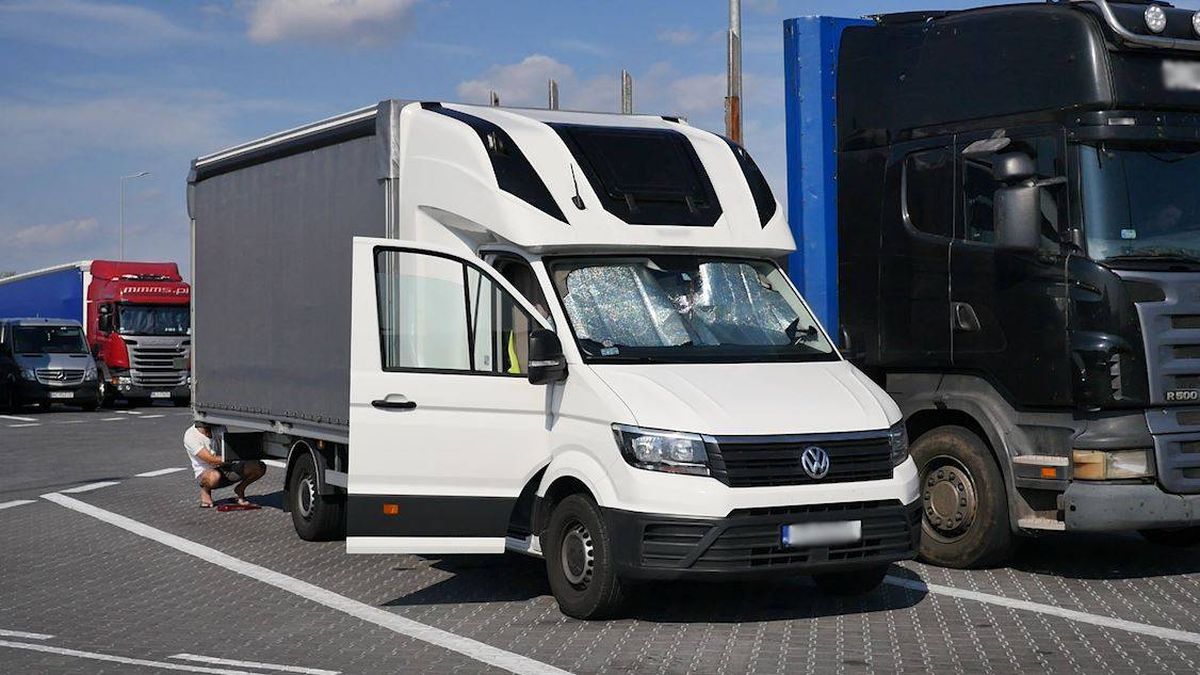

The short answer is that EU-registered vans over 2.5 tonnes and up to 3.5 tonnes will clearly be covered when they are used for international carriage of goods or cabotage for hire or reward. For vans registered outside the EU, the position is more complex. In many cases, the applicable framework is not the EU’s new van rule directly, but AETR, bilateral agreements, market-access rules or national enforcement practice.
For non-EU operators, the key issue is therefore not just the weight of the van. It is where the vehicle is registered, what route it is taking, whether the journey is international or internal EU transport, and whether the operation is legally permitted in the first place.
Below is a practical FAQ for third-country operators.
What exactly changes in the EU on 1 July 2026?
From 1 July 2026, light commercial vehicles with a maximum authorised mass of more than 2.5 tonnes and up to 3.5 tonnes will need a second-generation smart tachograph if they are used for international road transport of goods or cabotage for hire or reward.
The European Commission has described this next step as applying to light commercial vehicles over 2.5 tonnes that are registered in the EU and engaged in international road transport. From the same date, these vehicles also fall within the scope of EU driving and rest time rules.
In practice, this means many EU-registered vans used in cross-border commercial transport will have to use Smart Tachograph Version 2, also known as G2V2.
Does this automatically apply to vans registered outside the EU?
Not automatically.
This is the most important point for non-EU operators. The EU’s 1 July 2026 van rule is clearly framed around EU-registered light commercial vehicles. A van registered in a non-EU country should not automatically be treated in exactly the same way as an EU-registered van simply because it enters EU territory.
For third-country operators, the applicable rules depend on the legal framework governing the journey. For many non-EU countries, especially those that are parties to AETR, international road transport to or through the EU is governed by AETR rather than only by EU law.
What is AETR and why does it matter?
AETR is the European Agreement concerning the work of crews of vehicles engaged in international road transport. It applies to many international road transport operations involving non-EU countries.
Countries such as Albania, North Macedonia and Moldova are AETR contracting parties. So are several other non-EU states whose operators regularly travel to the EU.
AETR matters because it sets rules on driving times, rest periods and control devices for international road transport. For heavy vehicles, it is the key framework that explains why non-EU trucks entering the EU must use tachographs. But AETR has traditionally applied to goods vehicles above 3.5 tonnes, while the EU’s new July 2026 van rule lowers the EU threshold to vehicles over 2.5 tonnes.
That difference is central to the question for non-EU vans.
Do vans from Albania, North Macedonia or Moldova need tachographs after 1 July 2026?
For vans between more than 2.5 tonnes and up to 3.5 tonnes registered in non-EU AETR countries, the answer is not the same as for EU vans.
A 2.5–3.5-tonne van registered in Albania, North Macedonia, Moldova or a similar AETR country should not be assumed to fall automatically under the EU’s July 2026 van tachograph obligation simply because it enters the EU on an international journey.
The reason is that the Commission’s own wording refers to EU-registered LCVs, while AETR has not been aligned with the EU’s new 2.5-tonne LCV threshold in the same way.
In practical terms, this means the operator must check the route, the vehicle’s country of registration, the legal basis for market access and the relevant enforcement rules. The answer may differ depending on whether the journey is from a non-EU country into the EU, transit through the EU, or an operation carried out entirely inside the EU.
So can non-EU van operators simply ignore the July 2026 rule?
No.
Even if the EU van tachograph obligation does not automatically apply to every non-EU-registered 2.5–3.5-tonne van, third-country operators should not treat this as a free pass.
There are three reasons.
First, market-access rules still apply. A non-EU operator must be legally allowed to carry out the transport operation in question.
Second, national authorities may check documentation, permits, driver records, vehicle weight and the legal basis of the journey at the roadside.
Third, if the operation is carried out entirely within the EU, such as cabotage or another internal EU transport movement, the position may be different from a journey between a non-EU country and an EU Member State.
The safest conclusion is this: non-EU operators should not assume they need a Smart Tachograph Version 2 just because an EU van would need one, but they also should not assume they are exempt without checking the applicable agreement and route.
What if a non-EU van performs cabotage inside the EU?
Cabotage is a separate issue from tachographs.
Cabotage means domestic carriage for hire or reward performed by a foreign operator within another country. For EU operators, cabotage is regulated under EU market-access rules. For non-EU operators, cabotage rights depend on the relevant agreement, permit system or national law.
In many cases, a third-country operator may not have the same cabotage rights as an EU operator. Therefore, before asking whether a non-EU van needs a tachograph for cabotage, the first question is whether the cabotage operation is legally allowed at all.
If a non-EU van is legally permitted to perform an operation entirely within the EU, the operator should check whether EU driving-time, tachograph and enforcement rules apply to that internal EU movement.
What about a non-EU van travelling from its home country into the EU?
For an international journey that starts in a non-EU AETR country and enters the EU, such as Albania to Italy, North Macedonia to Germany or Moldova to Romania, AETR will often be the relevant framework.
For vehicles above 3.5 tonnes, AETR clearly brings tachograph and drivers’ hours obligations into the picture. For 2.5–3.5-tonne vans, the position is less straightforward because AETR has not traditionally covered this lower weight category in the same way as the EU’s new rule.
This is why a non-EU van operator should not simply copy the compliance checklist for an EU-registered van. The journey may be governed by a different legal framework.
Does Regulation 561/2006 apply to third-country vehicles?
It can.
EU Regulation 561/2006 applies irrespective of the country of registration when the carriage by road is undertaken exclusively within the EU, or between the EU, Switzerland and the EEA.
That means a third-country vehicle carrying out an operation wholly inside the EU may fall under EU driving and rest time rules, depending on the legality and nature of the operation.
However, where the journey is partly outside that area — for example, from a non-EU AETR country into the EU — AETR will usually be the more relevant framework for AETR-registered vehicles.
Are heavy trucks from non-EU countries required to use tachographs in the EU?
Yes.
For heavy goods vehicles above 3.5 tonnes registered in AETR countries, the position is much clearer than for vans. Albania, North Macedonia and Moldova are examples of AETR countries, and heavy goods vehicles registered there and engaged in international road transport to or through the EU are generally subject to AETR rules.
That means the vehicle must use a control device — in practice, a tachograph — and drivers must follow the relevant driving time, break and rest period rules.
So while the July 2026 van question is legally nuanced, the position for heavy trucks is not: third-country heavy-duty operators cannot ignore tachograph obligations when operating international road transport to or through the EU.
Read more: Germany closes the loophole: every offence by foreign drivers will now be visible instantly
Do non-EU heavy trucks need Smart Tachograph Version 2?
Not under the EU retrofit timetable.
EU-registered international heavy-duty vehicles must meet the EU Smart Tachograph Version 2 retrofit requirements. But vehicles registered in AETR countries outside the EU, EEA, Switzerland and the UK are governed by AETR tachograph requirements.
This means vehicles registered in those AETR countries are not covered by the EU retrofit obligation for Smart Tachograph Version 2. Even when such vehicles operate in the EU, they remain subject to AETR tachograph requirements rather than the EU Smart Tacho 2 retrofit timetable.
In practice, they can continue using tachographs permitted under AETR, including older analogue or digital devices, unless AETR or a specific agreement is updated.
What about UK vans and trucks?
UK operators are a special case because the UK is no longer in the EU but has a separate Trade and Cooperation Agreement with the EU.
For UK goods vehicles over 2.5 tonnes used on international journeys, the UK has also moved towards the July 2026 tachograph requirement for affected light goods vehicles. UK operators travelling to the EU should therefore prepare for similar practical compliance obligations, including Smart Tachograph Version 2 where required.
This UK position should not automatically be applied to all other non-EU countries. The UK has its own post-Brexit framework with the EU, while countries such as Albania, North Macedonia and Moldova are normally assessed through AETR and other market-access rules.
What should non-EU van operators check before entering the EU?
Non-EU operators should check five things before 1 July 2026.
First, the vehicle’s maximum authorised mass. The EU’s new van rule concerns vehicles over 2.5 tonnes and up to 3.5 tonnes, while the traditional AETR threshold for goods vehicles has been above 3.5 tonnes.
Second, the country of registration. EU-registered vans are clearly covered by the new EU LCV tachograph rule when the other conditions are met. Non-EU-registered vans require a separate legal check.
Third, the route. A journey from a non-EU AETR country into the EU may be treated differently from an operation carried out entirely within the EU.
Fourth, the type of operation. International transport, transit, cross-trade and cabotage are not always treated in the same way.
Fifth, the legal basis for market access. For non-EU operators, the right to perform the transport operation is just as important as the tachograph question.
What is the practical conclusion for non-EU operators?
For non-EU heavy trucks above 3.5 tonnes, the answer is clear: tachograph rules apply under AETR when operating international road transport to or through the EU.
For non-EU vans between more than 2.5 tonnes and up to 3.5 tonnes, the answer is more nuanced. The EU’s July 2026 van tachograph rule clearly applies to EU-registered LCVs engaged in international transport or cabotage for hire or reward. It should not automatically be assumed to apply in the same way to vans registered in non-EU AETR countries.
That does not mean non-EU van operators can ignore the change. It means they need to check the legal basis of each operation carefully: vehicle weight, country of registration, route, AETR status, permits, cabotage rights and any national enforcement guidance.
The key message is simple: for non-EU vans, the July 2026 tachograph question is not a simple “EU rule applies to everyone” issue. It depends on the whole transport operation.


