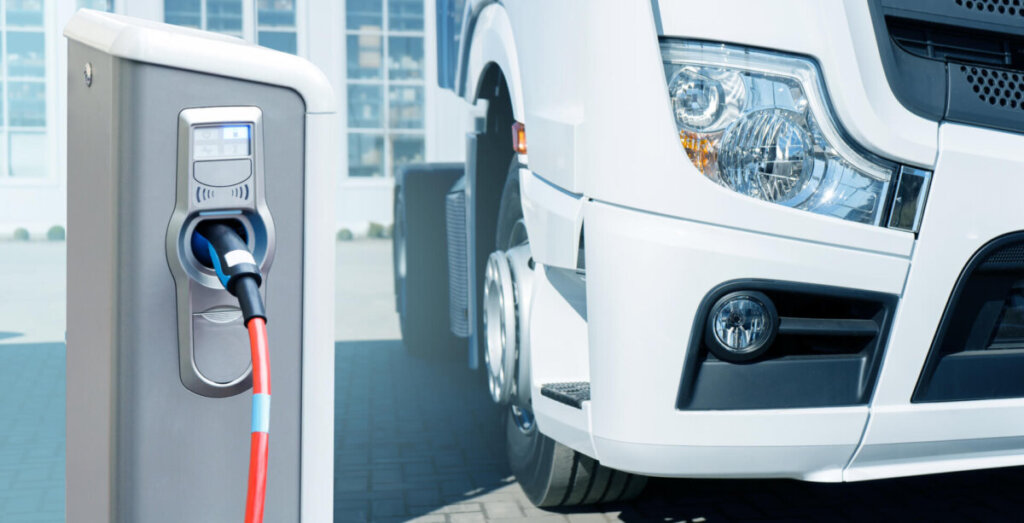
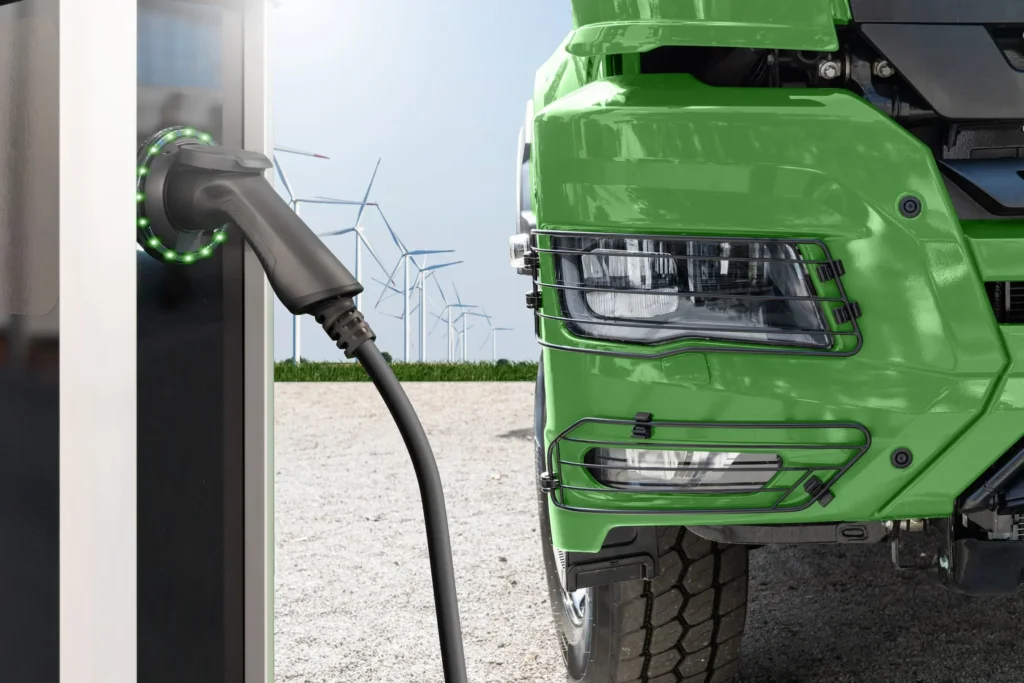
EU transport ministers have agreed on the Council’s position on revised rules governing maximum authorised vehicle weights and dimensions. The updated approach is aimed at supporting the rollout of zero-emission trucks, improving cross-border consistency, and reducing uncertainty around the use of European Modular Systems (EMS) in international transport.
According to the Council, the revision is intended to “ensure the free and efficient movement of goods” across the EU while giving operators clear incentives to invest in battery-electric and hydrogen vehicles.
Weight bonus for zero-emission trucks adjusted by axle count
One of the key changes in the Council text is a revised weight allowance for zero-emission vehicles (ZEVs). While the existing directive already permits limited extra weight for alternative-fuel technologies, the new position differentiates this allowance by axle configuration.
Under the Council proposal, 5-axle and 6-axle ZEVs would receive different weight bonuses, reflecting concerns raised by several member states about the impact of heavier zero-emission technology on infrastructure such as bridges and pavements. This marks a shift from earlier proposals that treated ZEVs more uniformly.
The Council says this approach balances the need to accommodate heavier technologies with the need to avoid additional road wear.
Additional 0.9 metres in vehicle length for ZEVs
The Council position also introduces an additional 0.9 metres of permitted length for zero-emission trucks and combinations. The aim is to give manufacturers space to install batteries or hydrogen systems without reducing payload or cabin space.
This provision sits alongside the existing EU allowances for aerodynamic cabs, which are not affected by today’s decision.
Cross-border rules clarified for intermodal and EMS operations
The Council text confirms that operators may continue to use European Modular Systems across borders where both participating member states allow them. This maintains the current voluntary EMS framework but reinforces legal certainty for cross-border movements.
In addition, zero-emission vehicles involved in intermodal operations—road legs connected to rail or maritime transport—would be allowed to cross internal EU borders even if they exceed the standard maximum weights, provided the weight is legal in both member states concerned.
This clarification is expected to benefit operations in border-adjacent logistics zones and port hinterlands.
Member states retain limited exemptions
The Council maintains existing exemptions for:
- vehicles transporting indivisible loads,
- operations that do not significantly affect international competition, and
- EMS within member states.
However, references to competition have been tightened, signalling an effort to reduce inconsistencies between national exemption schemes.
The position also includes extra length for shuttle services, enabling operators on fixed terminal-to-terminal routes to use longer vehicles where national rules permit.
Following the adoption of the Council’s position, negotiations with the European Parliament can begin. A final agreement will require consensus between the Parliament and the Council before the revised directive can enter into force.
The current weights and dimensions directive dates back to 1996 and has been amended several times. The Commission proposed the latest overhaul in July 2023 to reflect technological developments, including the rapid expansion of zero-emission drivetrains.