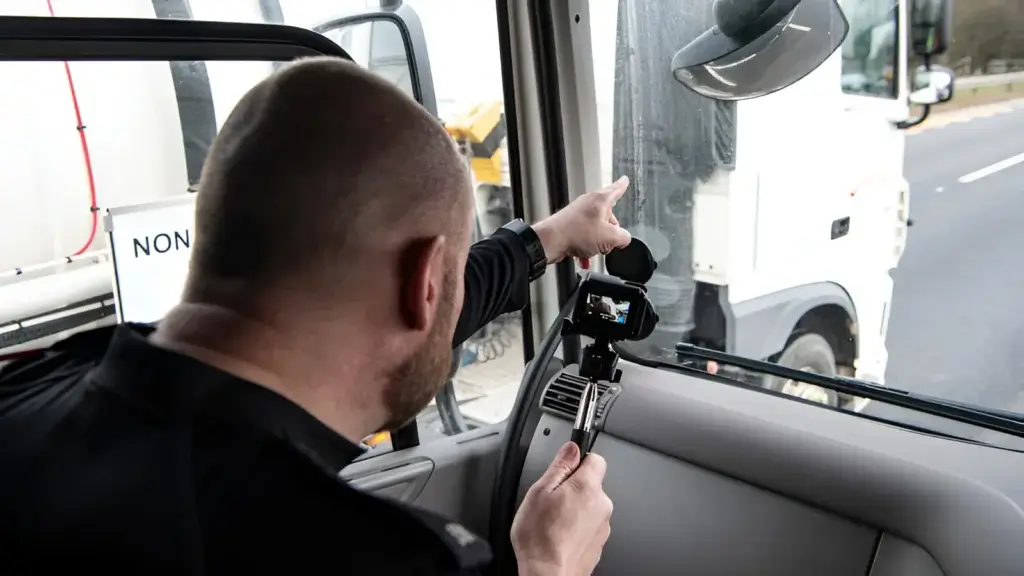
The offence occurred on Church Road in Aldermaston, where a 7.5-tonne weight restriction is in force. An enforcement officer from the Public Protection Partnership (PPP) saw the 26-tonne maximum gross weight HGV using the road on 2 December 2025.
The case subsequently went before East Berkshire Magistrates’ Court. After pleading guilty, the driver was fined £197, ordered to pay £180 in prosecution costs and a £78 victim surcharge, bringing the total to £455.
Three other HGV drivers were dealt with in the same batch of cases for breaching 7.5-tonne restrictions elsewhere in West Berkshire. One of those cases was triggered not by an enforcement officer but by photographs and information submitted by a member of the public.
A 7.5-tonne restriction does not mean today’s actual weight
The Aldermaston case highlights an important distinction for drivers unfamiliar with UK road signs.
A local weight restriction generally applies according to a vehicle’s maximum gross weight – sometimes described as maximum revenue weight – rather than its actual weight at the moment it enters the road.
In other words, an HGV with a maximum permitted weight of 18 or 26 tonnes does not become eligible to use a 7.5-tonne-restricted road simply because it is running empty.
There can, however, be exemptions. In the Berkshire restrictions enforced by PPP, vehicles may enter when they are genuinely collecting or delivering goods within the restricted area.
How heavy can an HGV be in Great Britain?
These local restrictions should not be confused with the legal maximum weights applying to the truck itself.
Government guidance sets out maximum gross weights according to vehicle and axle configuration. Under the Authorised Weight Regulations, the headline limits include:
- 18 tonnes for a two-axle rigid;
- up to 26 tonnes for a three-axle rigid with the required suspension;
- up to 32 tonnes for a rigid with four or more axles;
- generally 40 tonnes for a five-axle articulated combination; and
- up to 44 tonnes for qualifying six-axle combinations.
Individual axle limits and other technical conditions also apply. Crucially, the maximum weights shown on the vehicle’s manufacturer’s plate or ministry plate must not be exceeded.
A truck can therefore be illegal even when its total gross weight is within the overall limit – for example, if too much of the load sits over one axle.
Read more: Truck spotted 467 times without MOT
Overloading is a different offence
If DVSA finds an HGV exceeding its permitted gross, axle or train weight, the enforcement system is different from that used for breaching a locally restricted road.
DVSA’s graduated fixed penalties for overloading are generally £100 where the excess is below 10%, £200 for 10% to under 15%, and £300 where the vehicle is 15% or more overweight. More serious cases can be prosecuted in court, while an overloaded vehicle may be prohibited from continuing until the excess weight has been removed or redistributed.
Operators can face consequences too. Government guidance warns that overloading convictions can contribute to disciplinary action against an operator’s licence.
The lesson from the Berkshire cases is simple but important: a 7.5-tonne sign is not an invitation to calculate how much the truck happens to weigh that day. A vehicle plated above the restriction may still be prohibited from entering, even when empty, unless a specific exemption applies.