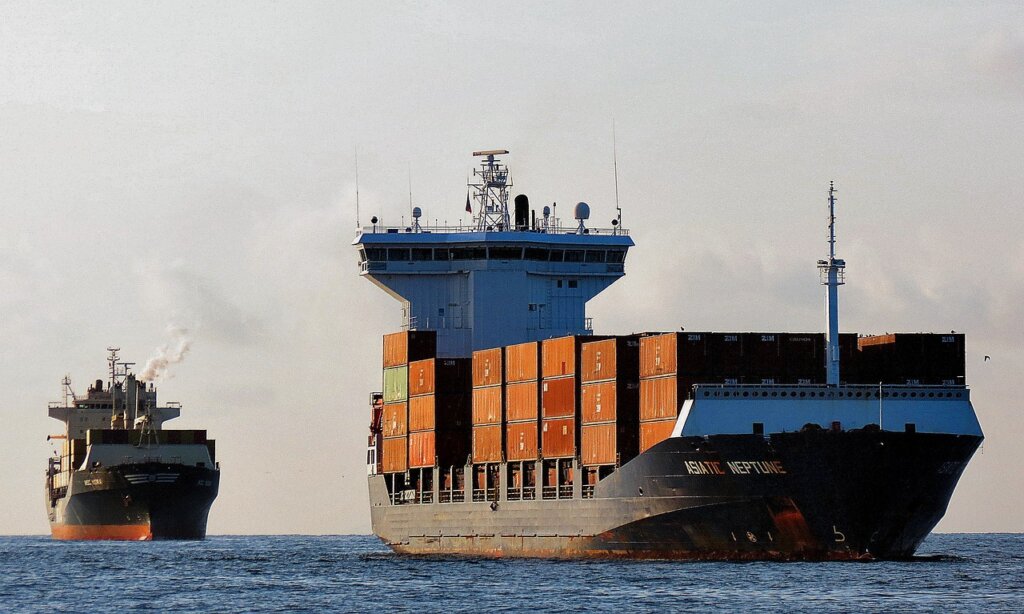
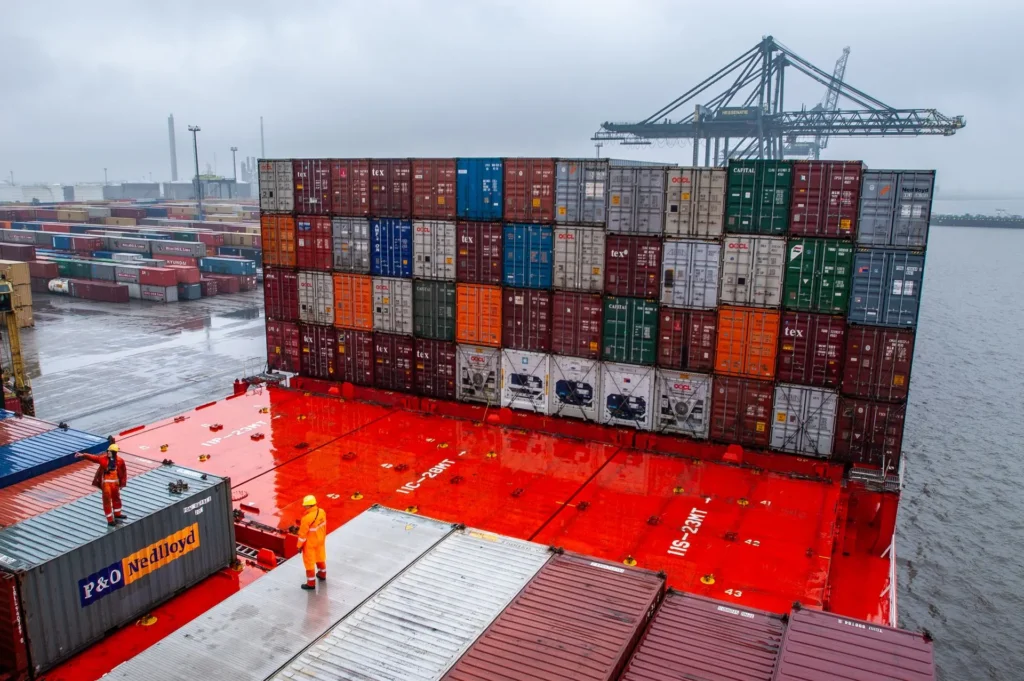
From January 2026, the maritime industry will no longer be able to quietly absorb container losses at sea. A new international reporting obligation has entered into force, making it mandatory for ships to report containers lost overboard or spotted drifting on the water. The change is expected to improve safety at sea, but it also has implications for ports, insurers and inland transport operators waiting for delayed cargo.
The rules were adopted under amendments to the SOLAS Convention by the International Maritime Organization. They respond to long-standing concerns that floating or semi-submerged containers pose a serious navigational hazard and an environmental risk, while inconsistent reporting has left authorities and other vessels unaware of the danger.
Until now, reporting practices varied widely depending on flag state and company policy. From 1 January 2026, the obligation is uniform and global.
Who must report and when
The responsibility rests first with the ship’s master. If containers are lost overboard, or if drifting containers are observed at sea – even if they originate from another vessel – the incident must be reported without delay.
If the master is unable to make the report, for example due to abandonment of the ship, the duty passes to the operating company as defined under the ISM Code.
The aim is to ensure that information reaches coastal authorities and other ships as quickly as possible, even if the full details are not yet known.
What information must be shared
The regulation focuses on safety-critical data rather than formal completeness. Initial reports can be followed by updates as the situation becomes clearer.
The report should include, as far as possible:
- the ship’s name and identification details (IMO number, call sign or MMSI)
- the position of the loss or sighting (actual or estimated)
- date and time of the incident in UTC
- the number of containers lost or observed drifting
- container size and type
- confirmation of any dangerous goods on board the containers, including UN numbers if available
This information is intended to allow other vessels to navigate safely and enable authorities to assess whether recovery or warning measures are needed.
Read more: EU realises Euro 7 truck rules went too far
Why the change matters
Although container losses represent a tiny fraction of global container movements, their impact can be disproportionate. Containers drifting just below the surface are difficult to detect and can cause severe damage in collisions. When hazardous cargo is involved, the environmental risks multiply.
Several high-profile storm incidents in recent years highlighted how little information was sometimes available outside the shipping company itself. The new obligation is designed to close that gap and improve international coordination.
For ports and hinterland operators, earlier and more reliable reporting may also explain sudden disruptions more clearly. If a vessel is forced to divert, slow down or suspend operations following a loss at sea, downstream delays should become easier to trace to their root cause.
Implications beyond shipping
While the regulation applies directly to maritime operators, its effects extend further along the transport chain. Faster reporting may trigger port warnings, temporary route restrictions or recovery operations, all of which can affect arrival times and onward road and rail transport.
For hauliers and freight forwarders, the change does not eliminate delays, but it increases transparency. From 2026, container losses are less likely to remain an unexplained operational issue and more likely to surface as a clearly identified safety incident.
In the longer term, the rule reflects a broader shift towards real-time safety and environmental data sharing in maritime transport. Containers lost at sea are no longer treated as an unfortunate side effect of heavy weather, but as events that must be communicated promptly for the benefit of the entire transport system.