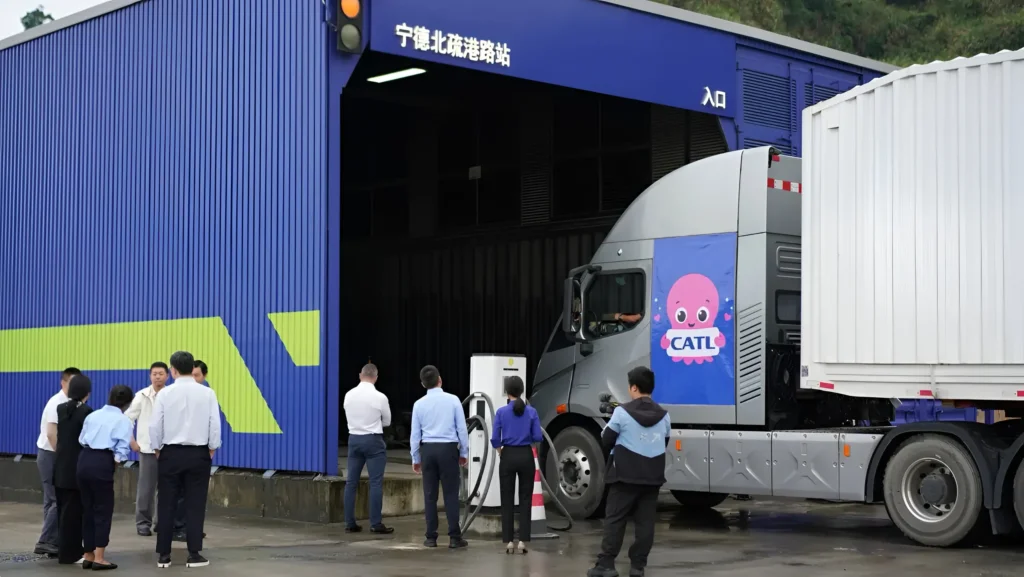
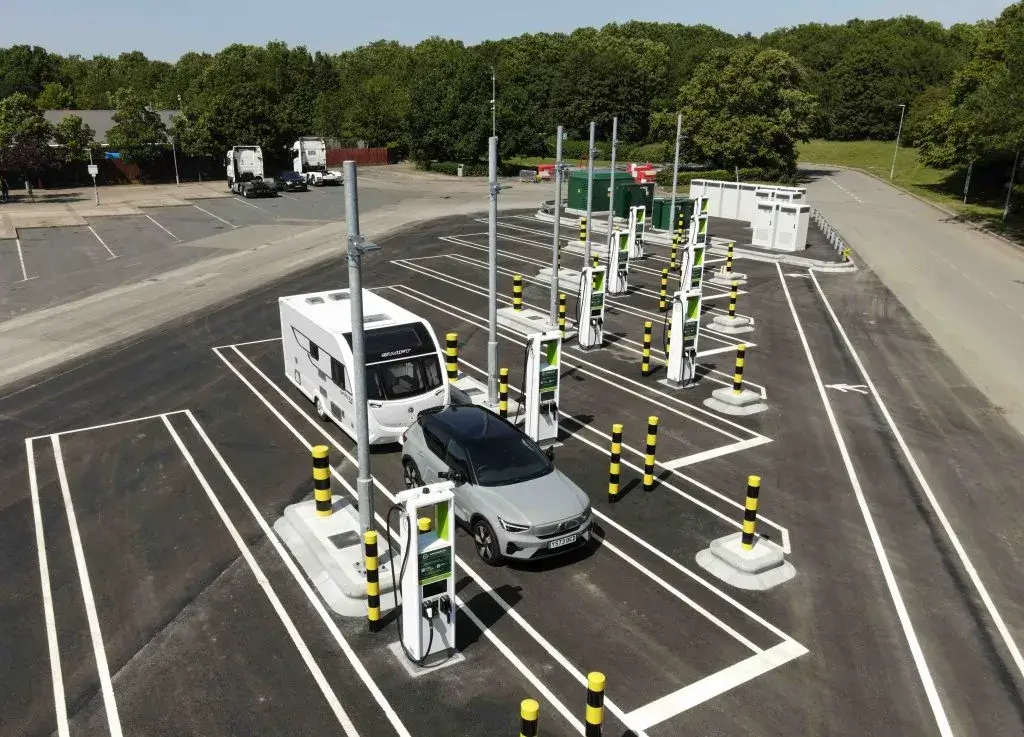
Most conversations about electric trucks focus on one question: can they charge fast enough? Scania has now put a different one on the table: what should trucks do with all that stored energy when they are not moving?
The Swedish truckmaker has demonstrated what it describes as one of the world’s first vehicle-to-grid applications for heavy commercial vehicles, using the Megawatt Charging System. In a test reaching up to 750 kW, the system allowed electricity to flow both into and out of a truck’s battery, turning a parked HGV into something that starts to resemble a distributed energy storage asset.
When the charger works both ways
MCS has mostly been discussed in terms of speed. Scania says the technology can take a truck from 20% to 80% charge in under 30 minutes, fitting within the 45-minute rest break required after 4.5 hours of driving. For long-haul operators, that is the point at which charging begins to fit more naturally into existing driving and rest patterns. But Scania’s demonstration pulls the discussion in another direction.
Rather than asking only how fast a truck can charge before getting back on the road, it asks what happens during the much longer periods when the truck is standing still. For a depot-based fleet, that can mean many hours each day — and a large amount of battery capacity sitting unused.
The first business case is parked at the depot
Scania is clear that V2G is unlikely to begin at public motorway charging sites. The first realistic use case is the depot: trucks return on predictable schedules, dwell times are long enough to be useful, and operators already have energy systems that can be integrated with charging infrastructure.
In that setting, the value stack starts to look more interesting. Charge when electricity is cheaper. Use stored energy during peak tariff periods. Reduce pressure on the depot’s grid connection. Absorb local solar generation when supply exceeds demand. Participate in balancing markets where the rules allow it.
“Electric trucks will not only consume electricity, they can also become an active resource in the energy system,” said Tobias Ejderhamn, Global Manager, Transformation & New Business at Scania. He added that fleet operators could move from being purely transport providers to also offering energy flexibility services.
From transport asset to energy asset
The demonstrated system connects the truck, charger and energy management software in real time, so charging and discharging can respond to both transport schedules and grid conditions. Scania says it supports bidirectional energy flow through the MCS interface, backend-controlled energy management, and integration with external charging and grid systems.

Scania vehicle-to-grid through Megawatt Charging System
It is also worth placing the test in the wider MCS picture. Mercedes-Benz Trucks has already tested eActros 600 prototypes over a 2,400 km multi-country route using MCS infrastructure, looking at interoperability and cold-weather performance. A 1 MW MCS charging point has also opened at the Firmian rest area on Italy’s A22.
Scania’s test adds a layer those trials did not: what the energy in those batteries can do when the truck is not driving.
The uncomfortable questions have not disappeared
V2G does not remove the existing challenges around electric trucks. Vehicle costs, route suitability, depot grid capacity and electricity pricing still matter, and they will continue to shape most procurement decisions.
The harder question for operators is whether V2G revenue or savings can be made predictable. Battery degradation under bidirectional cycling, warranty implications, energy-market access rules and the software complexity of integrating fleet management with grid services are all real considerations.