The coordinated enforcement week will run from Monday, 4 May, to Sunday, 10 May, according to ROADPOL’s 2026 operations calendar. It is the second of three Truck & Bus control weeks scheduled for this year, after the February campaign and ahead of a further operation planned for 16–22 November.
ROADPOL says the checks are aimed at the roadworthiness and compliance of heavy goods vehicles and buses. The organisation says officers will target unsafe practices, including overloading, breaches of driving and rest-time rules, and technical defects that could compromise road safety.
Driving time, rest and defects in focus
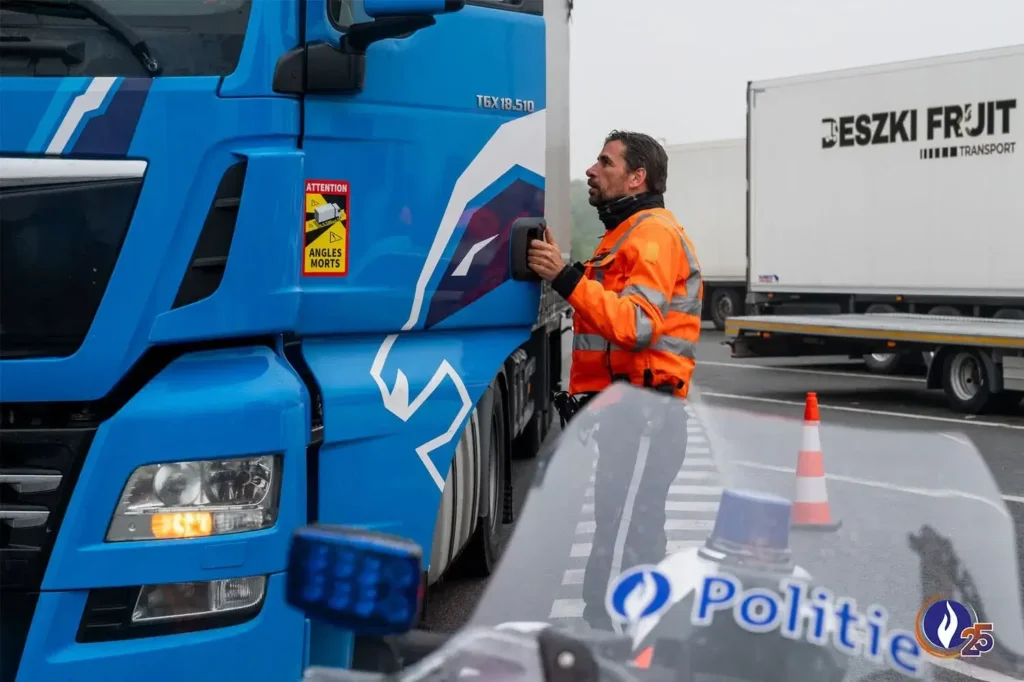
The February campaign showed how wide the checks can be. During a multi-agency action on the E40 motorway in Wetteren, Belgium, officers detected 97 offences from 168 vehicles checked, according to ROADPOL. The action involved Belgian authorities, Dutch police and European Labour Authority agents, and formed part of the coordinated Truck & Bus operation.
The May operation comes as operators are also preparing for a wider compliance change affecting lighter commercial vehicles. From 1 July 2026, EU rules on driving limits, rest times and smart tachographs will apply to light commercial vehicles weighing between 2.5 and 3.5 tonnes used for international goods transport or cabotage for hire or reward. The European Labour Authority says these vehicles will require a second-generation smart tachograph and will fall under driving and rest-time rules.
The ROADPOL operation ends on 10 May, but national authorities may continue targeted checks outside the coordinated enforcement week.