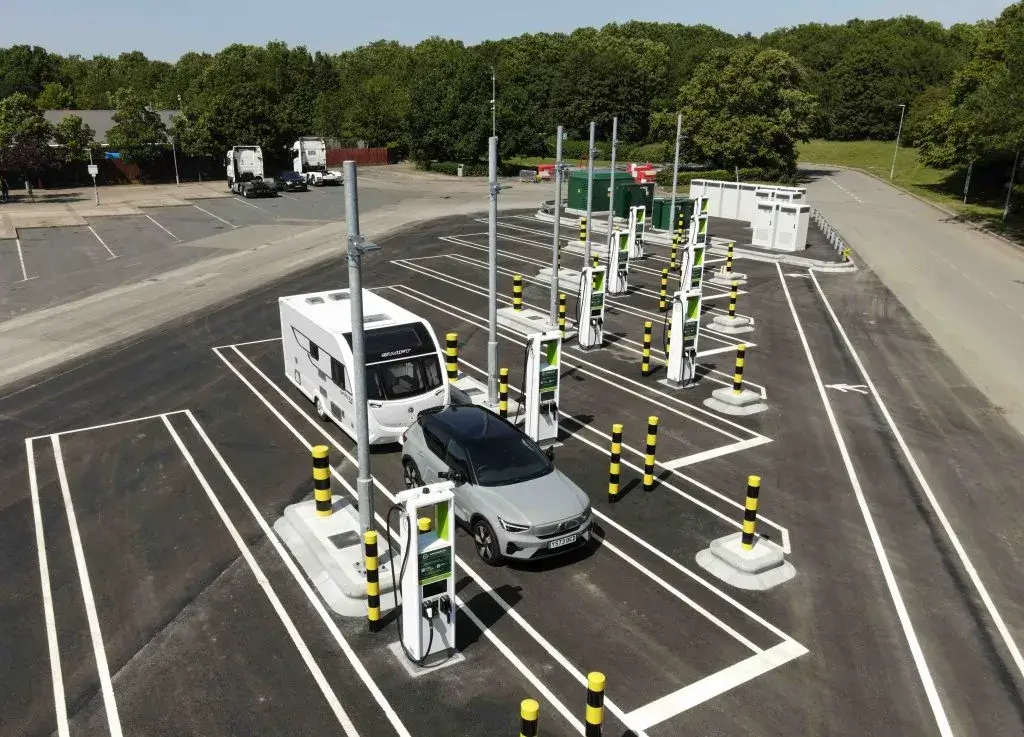
According to VEV, the rollout includes 18 DC chargers and infrastructure allowing up to 36 electric trucks to charge at the same time. The company says charger capacities range from 100kW to 1MW, with total installed capacity across the three sites reaching 5MW.
The charging project forms part of a wider fleet rollout announced by Maritime in March. At that point, the company said 19 electric HGVs had already entered service at Wakefield and Birmingham, with 56 vehicles due to be introduced across 13 depots and rail-connected terminals during 2026. Maritime also said the trucks are expected to achieve ranges of 300 to 500 kilometres per charge, depending on duty cycle.
Maritime has linked the three-site programme to the ZENFreight project. In its March announcement, the company said the programme would deploy 18 electric HGVs and charging points across Wakefield, Doncaster iPort and London Distribution Park in Tilbury, while comparing diesel, battery-electric and hydrogen trucks on live routes.
The three locations are major logistics sites where vehicles can return to base, recharge and go back into planned work. That points to the kind of operation where electric HGVs are currently easiest to deploy: fixed, depot-based routes with predictable turnaround windows. This is an inference based on the site model and fleet deployment described by the companies.
Maritime says it has more than 3,400 employees, 41 depots including nine rail freight terminals, more than 1,300 trucks and over 50 daily rail services. In that context, the charging rollout is part of a broader attempt to integrate battery-electric HGVs into regular operations across its network.
The clearest message from the project is that, for electric haulage, depot power is becoming as important as the truck itself. Maritime’s latest rollout suggests that, at least on hub-based work, some fleets are starting to build enough charging capacity to move beyond small-scale testing. This conclusion is an inference drawn from the reported fleet scale, infrastructure capacity and site network.