The recommendation appears in Making the Numbers Work: The Commercial Case for Electric Freight, published on the back of a 27 March 2026 workshop that brought together fleet operators, a truck financier, an insurance specialist, an energy supplier, charging infrastructure providers, and an OEM representative.
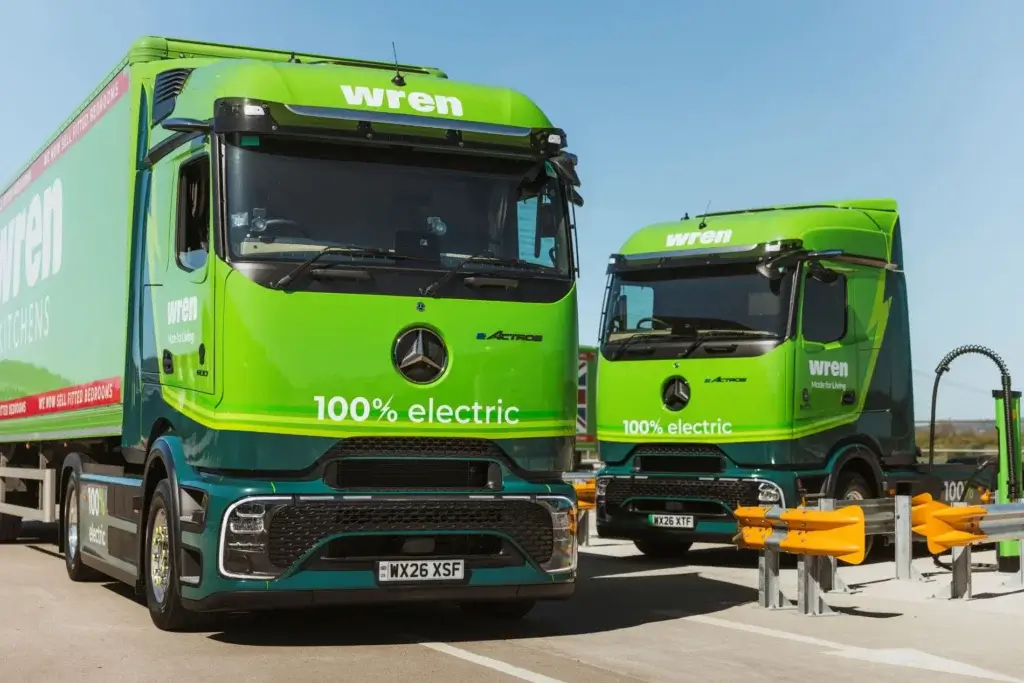
In March 2026, the UK Government announced that businesses can claim up to £81,000 off the heaviest zero-emission trucks, covering up to 40% of the purchase cost. A separate Depot Charging Scheme covers up to 70% of eligible chargepoints and civil engineering costs, capped at £1 million per operator.
More than half of UK HGVs run in fleets of 10 or fewer vehicles, yet the grant system has no mechanism to protect access for smaller operators. The UK has around 60,000 road freight enterprises and typical margins of 2-4%, according to the report, and at those margins a discounted electric truck price does not on its own make the business case workable. One operator quoted in the report described the current system as “favouring people that are already there”.
Larger fleets, TwentyForty argues, tend to have stronger balance sheets and better access to finance. Small hauliers more often run on narrow margins, buy outright and keep vehicles for longer.
Running costs are starting to favour electric
Operating-cost figures in the report point in the right direction. Electric trucks are 15-25% cheaper to run than diesel, excluding capital and charging infrastructure. Energy comes in at around 15-25p per mile at 20p/kWh, against 40-50p per mile for diesel.
The strongest case is depot-based charging. An electric HGV covering 125,000 miles a year on 100% depot charging can deliver a total cost of ownership 10% below an equivalent diesel, with reform of electricity policy costs widening that gap to 25%.
Public charging changes the picture quickly. At current public charging prices, an 80% depot and 20% public charging mix can push the same vehicle 3% above diesel on total cost of ownership.
Depot supply is the binding constraint
Vehicle pricing is only one barrier. TwentyForty identifies on-site electricity supply as the biggest practical block to operators making the switch.
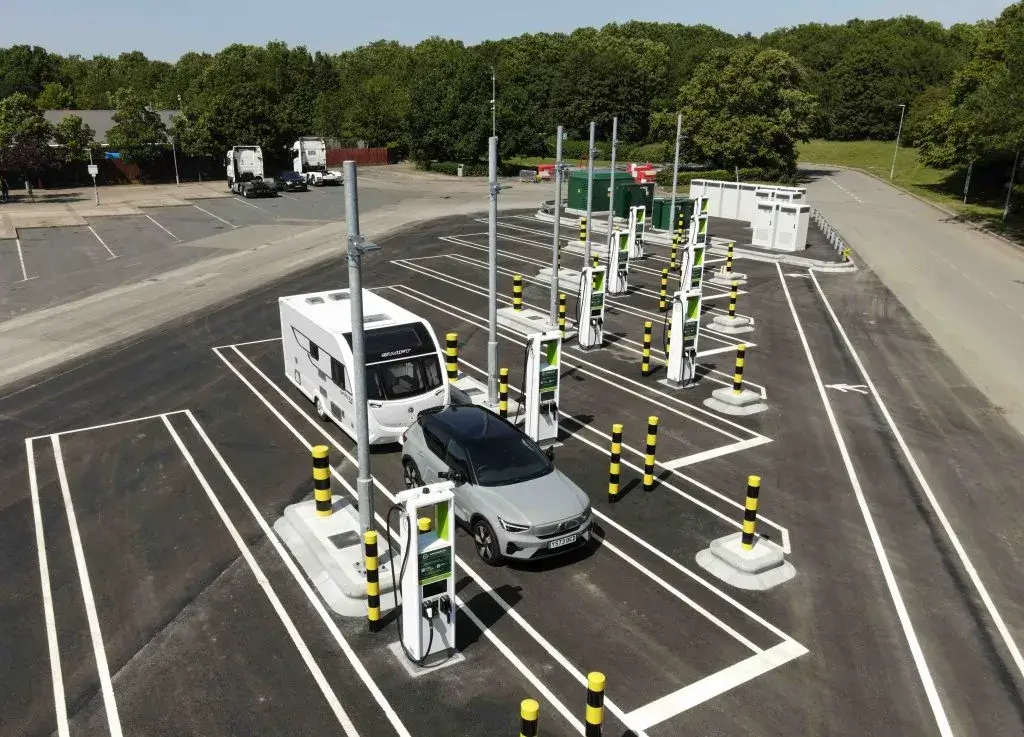
In more than 100 depot trials conducted through a single OEM partner, virtually no operator had sufficient on-site power to support electric truck charging. A standard 200kW DC charger often cannot be supported on existing supplies, leaving operators to downgrade chargers or add battery storage just to charge a single truck.
Grid connection costs vary sharply: a low-voltage connection may cost £10,000-£30,000, a high-voltage upgrade £50,000-£500,000. Major reinforcement involving a new substation can reach £5 million per site. Complex connections take 12 to 36 months, with some operators quoted dates as late as 2035.
Here TwentyForty sees a direct policy gap: the Depot Charging Scheme covers chargepoints and civil works but not DNO grid connection upgrades, which are often the largest single infrastructure cost.
Used market, finance and insurance gaps
Several less visible blockers also feature in the report. Residual values are still uncertain because there is no mature used market for electric trucks in the UK, leaving finance providers pricing risk without reliable data.
Insurance is another concern; workshop participants reported little difference in premiums, although a more serious issue surfaced: repairable electric trucks being written off because insurers and loss adjusters lack the knowledge to assess battery damage.
Ownership patterns may also shift. Several operators described plans to run electric trucks for a decade, replace the battery and run them for another decade. That clashes with finance models built around shorter replacement cycles.
UK behind Germany and the Netherlands
TwentyForty places the UK behind several European markets on zero-emission HGV adoption. Zero-emission HGV registrations reached around 1% of new UK registrations in the first half of 2025, compared with 4.5% in Germany and 14% in the Netherlands, according to figures cited in the report.
Structural differences explain part of the gap. Germany’s HGV toll exemption gives zero-emission trucks a per-kilometre advantage, and Dutch purchase funding has helped drive adoption. UK operators face higher electricity prices and have no equivalent toll-saving mechanism.
TwentyForty’s recommendations include ring-fenced grant funding for smaller operators, support for DNO upgrades under the Depot Charging Scheme, a government-backed residual value guarantee, longer finance terms and better support for shared depot charging.